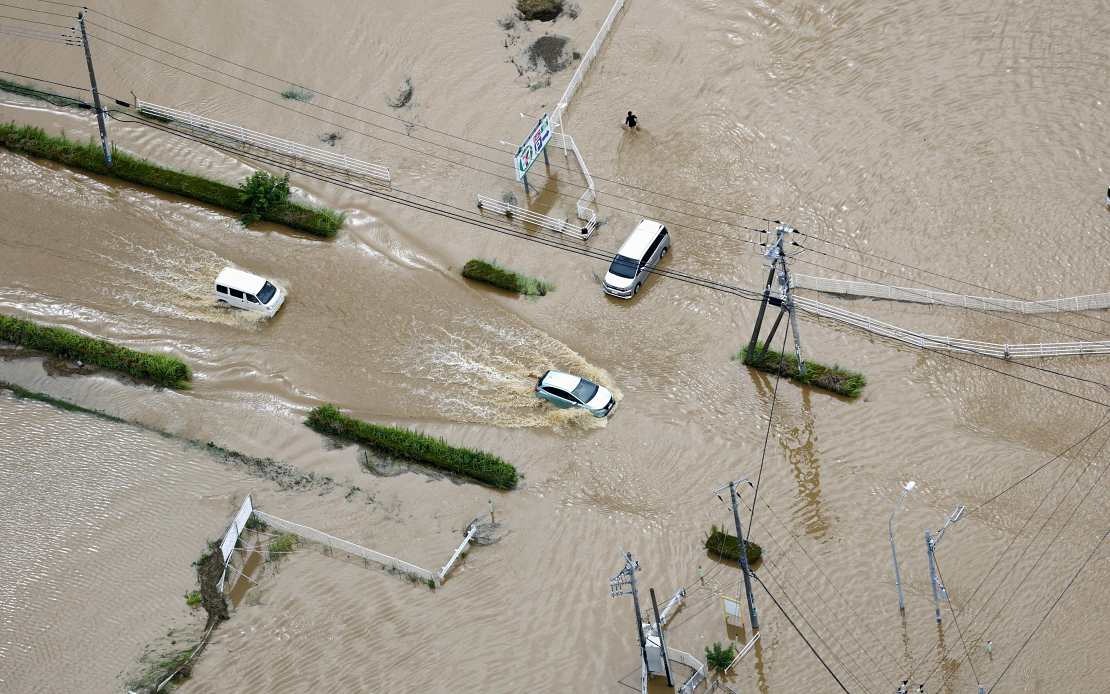
Eight fatalities have been confirmed across Chiba Prefecture following an extraordinary deluge that swept through eastern Japan in the early hours of Friday, marking one of the region's most destructive rainfall events in recent memory. The casualties were scattered across multiple municipalities including Chiba, Kashiwa, Ichikawa, Sakura and Yachiyo, while four additional people sustained minor injuries during the severe weather event, according to statements from the Chiba Prefectural Government.
The meteorological dimensions of this disaster were particularly striking. Chiba City experienced 348 millimetres of rainfall in just 12 hours through 1.40 am on Friday—a level that shattered previous records for the region. To contextualise this exceptional figure, the volume of water that fell in this half-day period represents roughly three times what Chiba typically receives across an entire month of August. Such concentrated precipitation within such a compressed timeframe overwhelmed drainage systems and natural water absorption capacity, transforming streets into torrents and triggering widespread flooding across vulnerable areas.
Japan's meteorological authorities had issued the most severe alert status available to warn residents of impending danger. The Japan Meteorological Agency deployed a Level 5 emergency warning—its highest classification—for heavy rain and landslide risks across portions of Chiba Prefecture before the worst conditions arrived. This maximum-level alert reflected the Agency's assessment that the rainfall event posed an existential threat to public safety. However, by Friday morning, as precipitation subsided, authorities downgraded these warnings to Level 4 or below, though meteorologists cautioned that additional downpours remained possible and advised continuing vigilance among residents.
The immediate aftermath of the storm left an enormous challenge for disaster management officials. The Fire and Disaster Management Agency reported that as of 11 am on Friday, approximately 102,600 people remained under formal evacuation orders throughout Chiba Prefecture. These orders reflected the ongoing risks of secondary flooding, landslides on saturated slopes, and structural damage to homes and infrastructure that had been battered by the relentless downpour. Evacuating such a large population required coordination across multiple agencies and emergency shelters, straining local resources during the critical response phase.
Transportation networks across the region suffered substantial disruption as the rainfall disabled rail and bus services. Narita Airport, a major international gateway located in Chiba Prefecture, experienced particularly acute complications as about 7,000 passengers became stranded overnight when train and shuttle bus operations halted. The disruption illustrated how extreme weather events in Japan's metropolitan regions immediately cascade into broader economic and logistical consequences, affecting not merely local residents but international travellers and supply chains dependent on smooth airport operations.
For Malaysian and Southeast Asian readers, this disaster underscores the mounting intensity of extreme weather phenomena across East Asia. Japan's sophisticated early warning systems and emergency response infrastructure—among the world's most advanced—were fully activated yet still unable to prevent significant loss of life. This reality serves as a sobering reminder for Malaysia and other developing nations in the region about the escalating climate-related risks. While Japan can mobilise extensive resources for disaster response, emerging economies with more constrained budgets face even steeper challenges in protecting populations from intensifying rainfall events.
The rainfall record established in Chiba Prefecture also contributes to a concerning pattern of meteorological extremes documented across Japan in recent years. Climate scientists have increasingly linked such concentrated precipitation events to warming atmospheric conditions that enhance moisture-holding capacity. The August timing of this event is noteworthy, as it occurred outside traditional typhoon season, suggesting that rainfall patterns may be shifting in ways that complicate long-established emergency preparedness plans. Southeast Asian countries similarly accustomed to monsoon-driven rainfall face potential disruption if historical precipitation patterns become unreliable guides for planning.
The distribution of casualties across five separate municipalities suggests that the rainfall's destructive force was geographically widespread rather than concentrated in a single hotspot. This pattern indicates that infrastructure damage, displacement, and recovery needs will likely be dispersed across numerous local jurisdictions, complicating coordination of reconstruction efforts. Multiple municipalities must simultaneously access limited resources and personnel for response and recovery, creating potential bottlenecks in assistance delivery.
Looking forward, the downgrading of alert levels does not signal an end to emergency operations. Evacuated residents face uncertain timelines for returning home while authorities assess structural integrity of buildings and clear debris from streets and waterways. Damage assessments will take days or weeks to complete fully. Schools, hospitals, and other essential services disrupted during the crisis must be restored before normal community functioning resumes. The economic cost of this single weather event—encompassing property damage, lost productivity, emergency response expenditures, and transportation disruption—will likely reach substantial figures once comprehensive assessments are completed.

