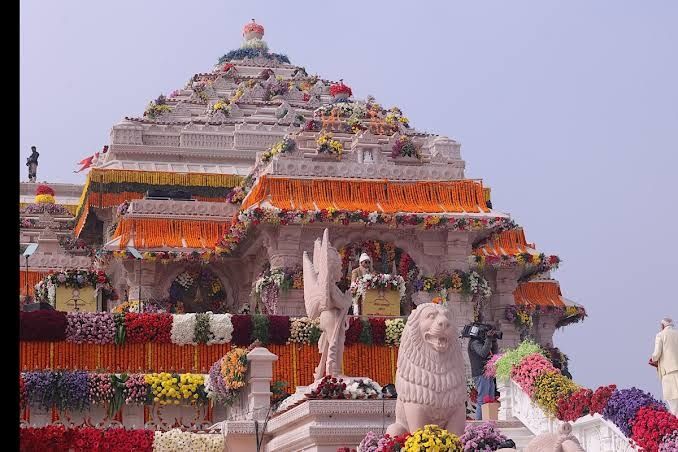
Indian authorities have arrested eight individuals on suspicion of embezzling and misappropriating donations at the Ram Mandir, a sprawling Hindu temple in northern Uttar Pradesh that has become central to Prime Minister Narendra Modi's political identity and vision of Hindu nationalism. The arrests, announced late Thursday (June 25), mark a significant embarrassment for the government and the ruling Bharatiya Janata Party, which has positioned the temple as a defining achievement of Modi's tenure and a symbol of Hindu cultural assertion.
The Ram Mandir stands on a site with profound religious and political significance in India. The temple was constructed where the Babri mosque, which had occupied the location for nearly 400 years following its establishment by a 16th-century Mughal emperor, previously stood. The mosque's demolition in 1992 by Hindu activists became a watershed moment in Indian politics, galvanizing the BJP's rise to electoral dominance and helping propel Modi's party from opposition ranks into a position of overwhelming national influence. The subsequent temple's completion and inauguration in 2024, personally presided over by Modi, was intended to represent the fulfilment of a long-cherished political and religious ambition.
Among those arrested are temple staff members who worked in roles directly connected to managing the inflow of financial contributions. Officials say the accused were primarily involved in counting, sorting, and storing cash along with jewellery and precious metals gifted by pilgrims and worshippers. Police have filed formal charges including criminal breach of trust, theft, criminal conspiracy, and corruption. While the government has refrained from publicly disclosing the precise monetary value of the alleged embezzlement, opposition parties and Indian news organizations have suggested the missing funds could exceed US$20 million—a figure that, if accurate, would constitute a substantial portion of the temple's operational budget.
The scale of the alleged theft threatens to undermine public faith in one of India's most significant religious institutions at a moment when the Modi administration has invested considerable political capital in the temple's symbolic importance. Viti Saxena, a 44-year-old woman who made a personal donation to the temple, expressed dismay at the allegations, questioning whether her contribution actually reached the temple's treasury and describing the situation as a matter of international embarrassment for Hindu believers worldwide. Her sentiments reflect broader concerns among devotees that their acts of religious generosity may have been exploited for personal gain.
The construction of the Ram Mandir itself required more than a decade of planning and fundraising, ultimately consuming approximately US$240 million in total expenditure. The trust managing the temple has maintained that this entire construction budget came exclusively from voluntary public contributions, rather than government funds. This reliance on donations makes the current allegations particularly damaging, as they suggest that systems meant to safeguard and honor the generosity of millions of believers may have been compromised by internal corruption.
Uttar Pradesh Chief Minister Yogi Adityanath, whose state government oversees the temple and established the Special Investigation Team that uncovered the alleged irregularities, has publicly committed to ensuring that all individuals found culpable will face appropriate legal consequences. The state's willingness to investigate and prosecute, despite potential political sensitivity, reflects an attempt to contain the reputational damage and demonstrate that the government prioritizes accountability over political considerations.
The temple's significance extends far beyond its architectural or financial dimensions. For Hindu nationalists and devout believers across India and the diaspora, the Ram Mandir represents validation of a particular historical narrative and theological claim: that the site represents the birthplace of the deity Ram, believed by practitioners to have been born in Ayodhya more than 7,000 years ago. The construction and consecration of the temple has been framed as a form of historical and spiritual rectification, making the current embezzlement scandal particularly damaging to the temple's symbolic purity and moral authority.
The investigation's emergence also carries implications for Modi's broader political standing and the BJP's carefully cultivated brand as custodian of Hindu interests and values. The party's electoral success has been substantially built upon mobilizing Hindu constituencies around cultural and religious narratives, of which the Ram Mandir has become a cornerstone symbol. Allegations of corruption at the temple strike at the heart of this positioning, potentially undermining claims of moral leadership and stewardship. For Malaysian readers, the scandal illustrates how religious institutions, regardless of faith tradition, remain vulnerable to internal corruption and demonstrates the importance of institutional oversight and transparency mechanisms in protecting both public assets and religious integrity.
The arrests represent a testing moment for India's judicial and investigative systems to demonstrate independence and impartiality in addressing alleged wrongdoing at a site of profound political importance. The outcomes will likely signal to citizens whether accountability mechanisms function equally regardless of political patronage or religious significance.

