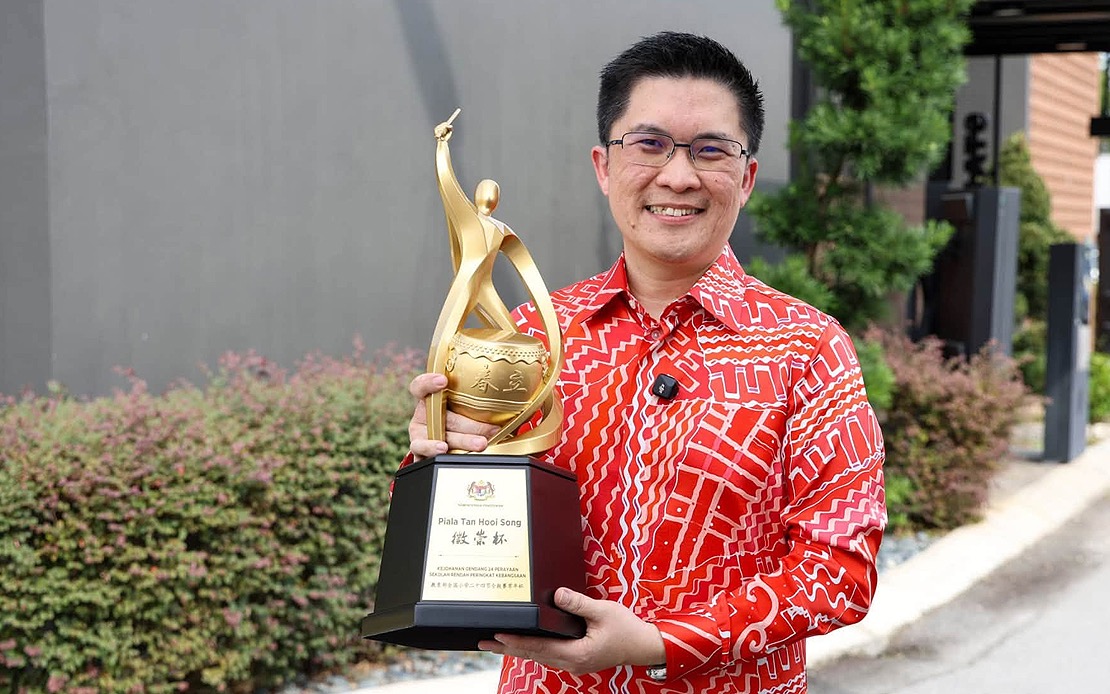
Malaysia's Education Ministry has committed to submitting an application to the United Nations Educational, Scientific and Cultural Organisation for Gendang 24 Perayaan to be recognised as a form of cultural heritage, marking a significant step in the preservation of this distinctive traditional art form. Deputy Education Minister Wong Kah Woh made the announcement during the closing ceremony of the National Primary Schools Gendang 24 Finals Competition at Stadium Indera Mulia in Ipoh, emphasising the ministry's determination to safeguard the percussion-based performance tradition for future generations.
The decision to pursue UNESCO recognition reflects the Malaysian government's broader commitment to documenting and protecting intangible cultural assets that define the nation's identity. Wong highlighted that in May, his ministry had engaged in strategic planning sessions to chart a course for supporting the application process, recognising that such international certification would strengthen preservation efforts and elevate the art form's profile globally. This move sits within a wider framework of initiatives designed to ensure that Gendang 24 Perayaan continues to thrive in contemporary Malaysia, where traditional cultural practices frequently compete with modern entertainment and digital influences for the attention of younger audiences.
The origins of Gendang 24 Perayaan trace back to 1988, when two cultural visionaries, the late Tan Hooi Song and Tan Chai Puan, founded this innovative percussion ensemble. Since its inception, the art form has evolved from a niche cultural pursuit into a performance tradition practised across hundreds of schools nationwide, demonstrating remarkable growth within three decades. In 2009, the Malaysian government formally acknowledged its cultural significance by designating Gendang 24 Perayaan as Intangible National Heritage, a classification that underscores its value within the nation's cultural landscape.
To strengthen the pipeline of educators and practitioners, the Education Ministry has instituted a Train the Trainers programme designed to equip school educators with the knowledge and skills necessary to introduce and develop Gendang 24 Perayaan within their institutions. This cascading model of knowledge transfer represents a pragmatic approach to embedding the art form into Malaysia's educational ecosystem, ensuring that expertise reaches schools in diverse regions and communities. By training educators directly, the ministry aims to create sustainable structures that do not depend solely on external specialists or cultural organisations.
The inaugural National Primary Schools Gendang 24 Finals Competition drew 16 elite teams comprising 417 students from schools across the country, showcasing both the breadth of participation and the depth of commitment among Malaysia's younger generation. The event, jointly organised by the Sports, Co-curricular and Arts Division of the Education Ministry and the Malaysia Gendang 24 Perayaan Association, with backing from Yayasan Sime Darby as principal sponsor, demonstrated the viability of large-scale competitions that celebrate traditional performing arts. Such competitions serve multiple purposes simultaneously: they provide platforms for talented young performers to showcase their abilities, they generate public awareness of cultural heritage, and they reinforce the perception that traditional arts remain relevant and engaging to contemporary youth.
The participation of over 400 students in a single competition underscores a critical point about cultural preservation in Southeast Asia. Unlike tangible heritage, which can be protected through architecture or museums, intangible cultural forms depend entirely on continuous human engagement and transmission. The numbers recorded at this event suggest that Gendang 24 Perayaan has successfully established itself within primary school curricula and extracurricular programming, a prerequisite for its long-term survival as a living tradition. Without such active participation among schoolchildren, even internationally recognised heritage forms risk becoming historical curiosities rather than evolving cultural practices.
For Malaysian policymakers and cultural advocates, the pursuit of UNESCO recognition carries practical implications beyond symbolic validation. International heritage status typically opens pathways to funding, facilitates academic research, attracts tourism attention, and creates opportunities for cultural exchange with other nations. Countries that have secured UNESCO recognition for intangible heritage have frequently leveraged that status to develop cultural tourism economies and strengthen national identity narratives. For Malaysia, where cultural pluralism represents both a strength and an ongoing negotiation, documenting Gendang 24 Perayaan through international frameworks helps establish common ground across diverse communities.
The trajectory of Gendang 24 Perayaan within Malaysian schools reflects broader conversations about how Southeast Asian nations approach cultural transmission in the twenty-first century. As urbanisation accelerates and global media consumption reshapes youth preferences, traditional art forms face genuine challenges in maintaining relevance. The Education Ministry's multi-pronged strategy—combining curriculum integration, teacher training, school competitions, and international certification—represents a comprehensive approach rather than isolated interventions. Each component reinforces the others, creating a network of support that enhances the art form's visibility and accessibility.
UNESCO's Intangible Cultural Heritage programme has become an increasingly prestigious mechanism through which nations affirm the value of non-material cultural expressions. The recognition process typically requires documentation of the art form's history, its role within communities, and evidence of transmission mechanisms ensuring its continuity. By preparing this application, Malaysia would be engaging in detailed archival and analytical work that itself serves preservation purposes, regardless of the eventual outcome. Such documentation creates reference materials for researchers, educators, and cultural enthusiasts, establishing authoritative records that support future preservation efforts.
The involvement of Yayasan Sime Darby as the principal sponsor of the inaugural competition highlights the role of corporate entities in sustaining cultural initiatives. In Malaysia's context, where government budgets face competing demands, private sector participation has become essential for mounting large-scale cultural events. The sponsorship of a 400-plus student competition represents significant investment, suggesting that multinational corporations operating in Malaysia perceive cultural preservation as aligned with their social responsibility objectives and corporate values. Such partnerships provide stability and resources that government-funded programmes alone might struggle to guarantee.
Going forward, the success of the UNESCO application will depend on the quality of documentation presented and the demonstrated sustainability of institutional structures supporting Gendang 24 Perayaan. The existence of the Malaysia Gendang 24 Perayaan Association, combined with ministry integration and now international visibility through competitions, creates a compelling narrative of a heritage art form embedded within contemporary Malaysian life. These factors will likely strengthen the application's prospects, particularly if accompanied by evidence that younger generations continue engaging with the tradition through schools and community organisations rather than viewing it as an obsolete cultural relic.

