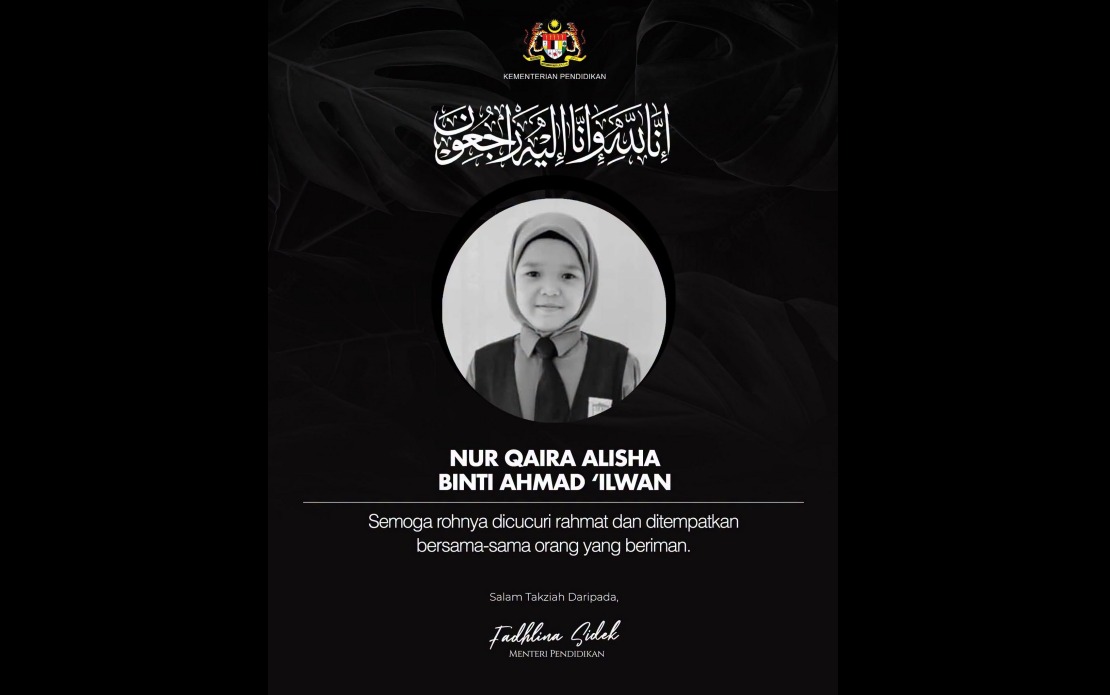
The Ministry of Education has escalated its response to a tragic case involving the death of a young primary school pupil in Kedah, with Education Minister Datuk Seri Fadhlina Sidek ordering the ministry's Integrity Unit to pursue further investigations into circumstances surrounding the incident. The move represents a formal intervention at the federal level following preliminary investigations conducted by the state education department, signalling heightened scrutiny into whether school protocols were properly observed in managing the welfare of vulnerable students.
Nur Qaira Alisha Ahmad Ilwan, a Year Four pupil, passed away following complications traced to exertion during a school sports house selection event in mid-April. The case has prompted serious questions about institutional accountability and the duty of care owed to students with documented medical conditions. Her parents have alleged that despite the school receiving a medical certificate confirming their daughter's heart condition and exemption from strenuous physical activity, teaching staff directed her to participate in a running competition.
The child had lived with a cardiac condition since infancy, diagnosed when she was just three months old. This longstanding medical fragility meant her participation in vigorous sports was considered medically inadvisable. The family had taken the precaution of formally notifying the school of this restriction through official medical documentation, establishing a clear institutional record of the girl's vulnerability to physical strain.
On April 15, the day of the sports house selection, Nur Qaira allegedly participated in the running event despite this documented exemption. Within days, she developed acute symptoms including severe vomiting and facial swelling and required hospital admission at Sultanah Bahiyah Hospital. Subsequent medical evaluation determined she had developed heart failure stemming from decompensated dilated cardiomyopathy—a deterioration of the heart muscle's ability to pump blood effectively. She died while under hospital care.
Minister Fadhlina emphasised that the Education Ministry regards all matters concerning student safety and welfare with utmost seriousness, underscoring the foundational responsibility institutions bear toward children in their custody. She confirmed that the Kedah State Education Department had already conducted its own investigation into the family's formal complaint, though the scope and findings of that preliminary inquiry remain unclear. The involvement of the federal Integrity Unit suggests dissatisfaction with the pace or thoroughness of the state-level response.
The minister stressed that all investigative actions must comply with established regulatory frameworks and be guided by principles of fairness and justice that protect the interests of all stakeholders involved. This measured language reflects the sensitivity of the situation—balancing the family's grievance with the need to avoid prejudging individual educators before facts are fully established. However, it also signals that accountability mechanisms are being activated where they may have previously stalled.
Beyond the formal investigation, Fadhlina communicated expressions of sympathy to Nur Qaira's parents and extended family, acknowledging the profound loss they have experienced. She invoked spiritual comfort, expressing hope that the bereaved family would find resilience and inner strength to bear their grief. Such condolences, while standard ministerial practice, carry particular weight in cases where institutional failures may have contributed to tragedy.
The incident exposes gaps that exist within Malaysia's school system regarding medical documentation protocols and staff training in recognising health vulnerabilities. Schools receive medical letters from families regularly, yet enforcement of exemptions appears inconsistent across institutions. The question of whether Nur Qaira's teacher was properly informed of her condition, or whether the exemption was overlooked amid the routine chaos of school sports events, remains central to understanding how such a preventable incident occurred.
The case also highlights the informal power dynamics that can operate within schools. A student's verbal protest or explanation might carry insufficient weight against a teacher's direct instruction to participate in an activity. Year Four pupils typically range from nine to ten years old—old enough to understand their limitations but often too young to confidently challenge adult authority, particularly that of educators. This developmental reality means schools must implement robust administrative safeguards rather than relying on child-initiated advocacy.
For Malaysian families managing children with chronic medical conditions, the incident raises concerns about whether educational institutions take documented medical restrictions seriously. Parents across the country will be watching to see whether the investigation identifies systemic failures or frames the incident as an isolated error by a single individual. The credibility of Malaysia's education system depends partly on transparent accountability when students come to harm under school supervision.
The involvement of the federal Integrity Unit signals that this case has risen beyond routine administrative handling. Such units typically investigate allegations of misconduct, corruption, or breach of duty by public servants. Their engagement suggests the Education Ministry recognises this incident may involve serious lapses in professional responsibility rather than mere accident or misfortune.
Looking forward, this investigation will likely influence policy discussions about how schools should verify that staff have read and understood medical exemptions, how to ensure exemptions are communicated across all relevant staff members, and what training teachers should receive regarding recognition of medical emergencies. Whether those conversations lead to concrete systemic reforms or remain confined to this single case will reflect the ministry's genuine commitment to preventing recurrence.
The tragedy underscores that student welfare transcends academic and athletic performance. When schools receive formal medical guidance, institutional culture and procedures must ensure that guidance becomes actionable constraint on all activities affecting that student, not merely paper filed away in administrative records.

