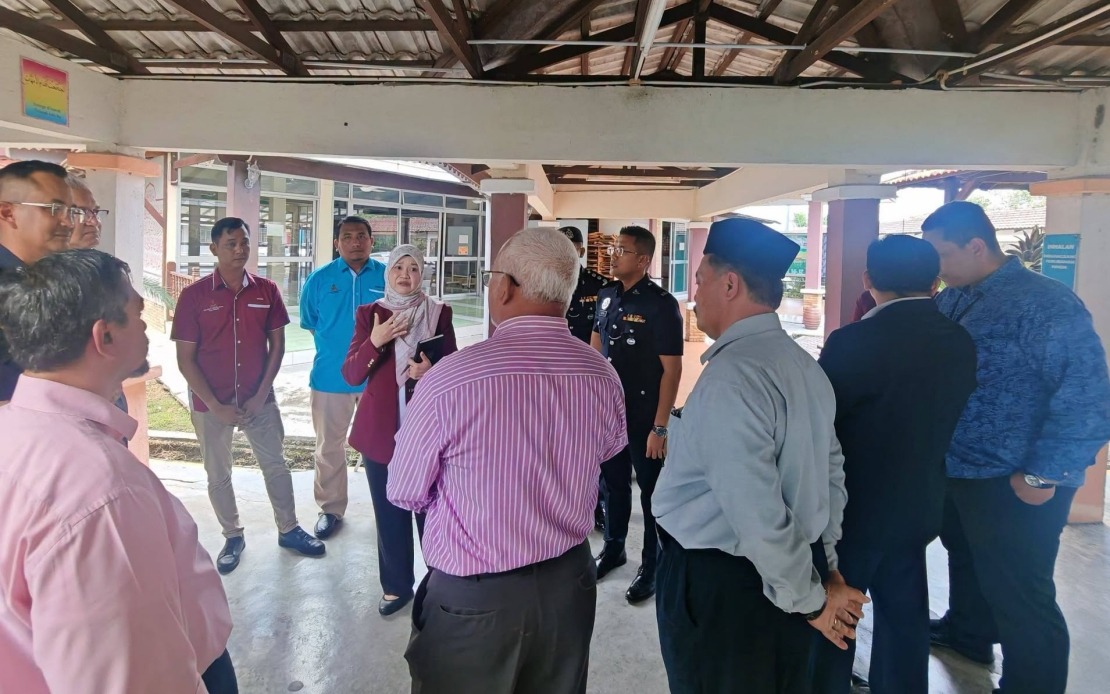
Education Minister Fadhlina Sidek travelled to a secondary school in Banting, Kuala Langat, on July 6 to assess the situation following a serious stabbing incident involving a Form Three student that occurred earlier in the day. The minister arrived at the campus at 1.20 pm and spent time with school management to gather comprehensive details about what had transpired and the response measures being undertaken.
According to police records, the incident unfolded at 9.50 am when authorities received notification of the stabbing. Officers from the Kuala Langat district police headquarters, led by district chief Supt Mohd Akmalrizal Radzi, quickly secured the scene. The circumstances that emerged from initial investigations revealed that the victim, a Form Three student, had been wounded with a knife by another female student at the school. The suspect was swiftly apprehended and taken into police custody for further questioning and investigation.
The stabbed student was transported to Banting Hospital, where medical personnel confirmed that her condition had stabilised under their care. Although the severity of the injuries warrants ongoing medical monitoring, hospital officials indicated that the victim's prognosis appeared positive. The swift response from emergency services and the school's initial protocols prevented what could have been a far more catastrophic outcome.
Fadhlina's statement following her visit underscored the administration's immediate priorities in managing the aftermath of such a traumatic event. She emphasised that securing proper medical treatment for the injured student represented the foremost concern, while simultaneously recognising the profound psychological impact that such violence inevitably exerts on the broader school community. Alongside medical interventions, she stressed the critical importance of mobilising psychological support services for both students and teaching staff who had witnessed or been affected by the incident.
The minister took the opportunity to appeal to the public to exercise restraint and responsibility during the police investigation. She cautioned against the spread of unverified information or speculation on social media platforms, recognising how rumours and misinformation can amplify anxiety and distract from the serious investigative work underway. Her message reflected growing concerns across Malaysian schools about how rapidly false narratives can spread during crises, potentially compromising investigations and further traumatising affected communities.
Selangor's Human Resources and Poverty Eradication Committee chairman V. Paparaidu, who represents the Banting constituency, commended the State Education Department for mobilising immediate psychosocial support and counselling services to the victim, her family, and other impacted students. His statement acknowledged the multi-faceted nature of recovery following such incidents, recognising that psychological healing extends far beyond the individual victim to encompass family members and the entire student body.
Pararaidu used the incident as a springboard to renew calls for enhanced school security measures across Selangor. He stressed that maintaining vigilant security personnel at entrances represented an essential safeguard, with guards requiring sufficient training and attentiveness to monitor all individuals entering and exiting the premises. Particular emphasis was placed on the critical periods when students arrive for classes in the morning and depart in the afternoon, when security breaches are most likely to occur undetected.
The assemblyman further advocated for strengthened access control protocols at school gates, arguing that tighter screening procedures could substantially reduce the risk of unauthorised individuals gaining access to school grounds. His comments reflected broader policy discussions in Malaysia regarding the appropriate balance between maintaining open, welcoming educational environments and implementing robust security frameworks. The challenge for schools increasingly involves creating spaces where students feel protected without becoming fortress-like institutions that engender fear or inhibit normal social development.
The stabbing incident at a Banting secondary school raises troubling questions about emerging patterns of school violence in Malaysia. While serious incidents of this magnitude remain statistically uncommon, recent years have witnessed periodic reports of violence within educational institutions, prompting education authorities to reassess existing safety protocols. The involvement of another student as the perpetrator, rather than an external intruder, adds another dimension to discussions about peer conflict resolution, mental health support, and early intervention mechanisms within schools.
Educational psychologists and violence prevention specialists argue that such incidents often reflect underlying tensions, personal conflicts, or undiagnosed mental health concerns that schools may not have detected or adequately addressed. This suggests that complementary approaches extending beyond physical security—such as improved counselling services, conflict mediation programmes, and enhanced teacher training in identifying at-risk students—warrant equal priority alongside infrastructure-based security improvements.
For Malaysian parents and guardians, this incident inevitably reignites concerns about whether schools can guarantee the safety of their children. These anxieties are neither irrational nor unfounded, though they must be contextualised within the reality that serious violent incidents at Malaysian schools remain rare relative to the millions of students attending classes daily. Nevertheless, the psychological impact of such events extends far beyond the immediate school community, influencing public confidence in educational institutions and raising questions about institutional preparedness for crisis situations.
The swift police response and school management's apparent cooperation with authorities demonstrate that existing emergency protocols functioned reasonably well in containing the immediate threat. However, whether these systems prove equally effective at early prevention—identifying warning signs before violence erupts—remains a separate and more challenging question. Addressing this preventative dimension will likely occupy education policymakers as they deliberate upon lessons from this incident and consider strengthening the broader ecosystem of student welfare and mental health support across Malaysian schools.

