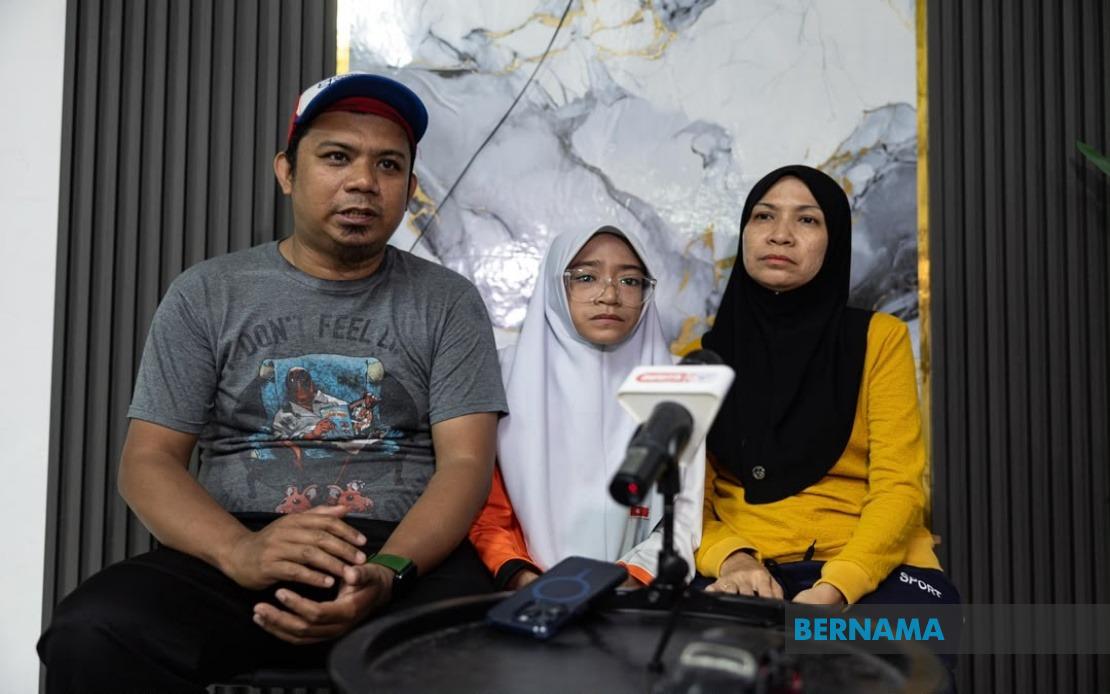
Education Minister Fadhlina Sidek has announced that the Tun Hussein Onn Teachers' Foundation (YGTHO) will jointly contribute RM10,000 to fund corrective spinal surgery for 13-year-old Arissa El Zahra Reduan. The procedure, slated for September 8, will take place at Raja Permaisuri Bainun Hospital in Ipoh, marking a significant intervention in a case that has drawn public attention to the financial barriers facing families managing serious medical conditions in Malaysia.
The announcement came through a series of social media updates in which Fadhlina revealed her direct engagement with Arissa and her family, describing the emotional weight of encountering a young person whose educational aspirations were being jeopardised by untreated scoliosis. Her public acknowledgment of the family's struggle underscores a growing ministerial focus on ensuring that medical circumstances do not become barriers to school attendance and academic progression, particularly among lower-income households where surgical expenses can prove prohibitive.
Scoliosis, an abnormal curvature of the spine, often requires surgical correction in adolescence to prevent long-term complications including respiratory difficulties, mobility restrictions, and chronic pain. For families without comprehensive insurance coverage or substantial savings, the cost of such procedures—which can easily exceed RM10,000 when considering pre-operative assessments, anaesthesia, surgical fees, and post-operative care—remains a formidable obstacle. The intervention by the Education Ministry and YGTHO addresses not merely the immediate medical need but also the underlying concern that educational discontinuity during treatment and recovery could derail academic progress.
In a video call shared publicly, Fadhlina conveyed the news directly to Arissa and her mother, a communication strategy that served both to reassure the family and to demonstrate the government's responsiveness to citizen appeals. Her emphasis on enabling Arissa's return to school alongside peer group members reflects Ministry priorities around educational continuity and the psychological importance of maintaining social connections during medical treatment. The minister's framing of the financial burden as a surmountable challenge rather than an insurmountable obstacle carries particular significance for Malaysian families navigating the healthcare system's cost structures.
The Tun Hussein Onn Teachers' Foundation, named after Malaysia's third Prime Minister, operates as a philanthropic institution supporting education-related causes and beneficiaries within the teaching profession and student communities. Their co-contribution to this case signals institutional commitment to addressing welfare gaps that might otherwise prevent capable students from completing their schooling. Such interventions, while individually beneficial, also highlight systemic questions about the adequacy of government healthcare subsidies and whether current provisions sufficiently cover critical procedures for young patients from economically vulnerable backgrounds.
Arissa's father, Reduan Saad, had publicly appealed for financial assistance after the scoliosis diagnosis necessitated surgical intervention. The family's decision to seek help through public channels reflects both the severity of the situation and the limited alternative mechanisms available to ordinary Malaysians when facing extraordinary medical expenses. This case exemplifies a pattern seen across the country where families resort to media appeals, crowdfunding, or government charity to access treatments considered essential by medical professionals but positioned beyond family reach through conventional healthcare financing.
The September 8 surgery date provides a concrete timeline for the intervention, allowing Arissa's family to proceed with pre-operative preparations with financial certainty. The coordination required to arrange such assistance—from ministerial approval through to hospital scheduling and fund transfer—demonstrates bureaucratic responsiveness when cases attract sufficient political and media attention. However, the reliance on such high-profile interventions raises broader questions about whether systematic support mechanisms should be strengthened to address similar situations proactively rather than reactively.
For Malaysian healthcare observers, this case illustrates the mixed landscape of public and private sector coverage in the country's medical system. While Raja Permaisuri Bainun Hospital, as a government institution, offers more affordable care than private alternatives, even subsidised procedures require patient cost-sharing. The intervention by the Education Ministry suggests recognition that educational sector workers and students warrant particular institutional support, though parallel support structures for other vulnerable populations remain inconsistently developed.
Fadhlina's public commitment to ensuring Arissa's smooth recovery and full health restoration extends beyond the immediate financial contribution to encompass Ministry oversight of the treatment process. This assurance carries practical implications—facilitating communication between hospital, school, and family to ensure appropriate post-operative accommodations during Arissa's return to education. The minister's acknowledgment of media's role in bridging community concerns with government resources also reflects contemporary governance approaches where public visibility functions as accountability mechanism.
The broader context for this intervention includes Malaysia's ongoing efforts to strengthen social safety nets and ensure that medical circumstances do not perpetuate educational inequality. While the RM10,000 contribution represents meaningful assistance for this particular family, similar cases across the country may lack equivalent access to ministerial attention and foundation support. The visibility of this case may prompt comparable requests from other families facing significant medical expenses, potentially expanding awareness of available support mechanisms while also revealing gaps in systematic provision.
Moving forward, Arissa's case may serve as a reference point for discussions about preventive health financing, school-based health screening programmes, and early intervention strategies that could identify and address scoliosis before progression requires expensive surgical correction. The successful navigation of this case—from public appeal through ministerial intervention to scheduled treatment—provides a documented pathway that other families might follow, while simultaneously raising expectations about government responsiveness to medical hardship cases affecting students.

