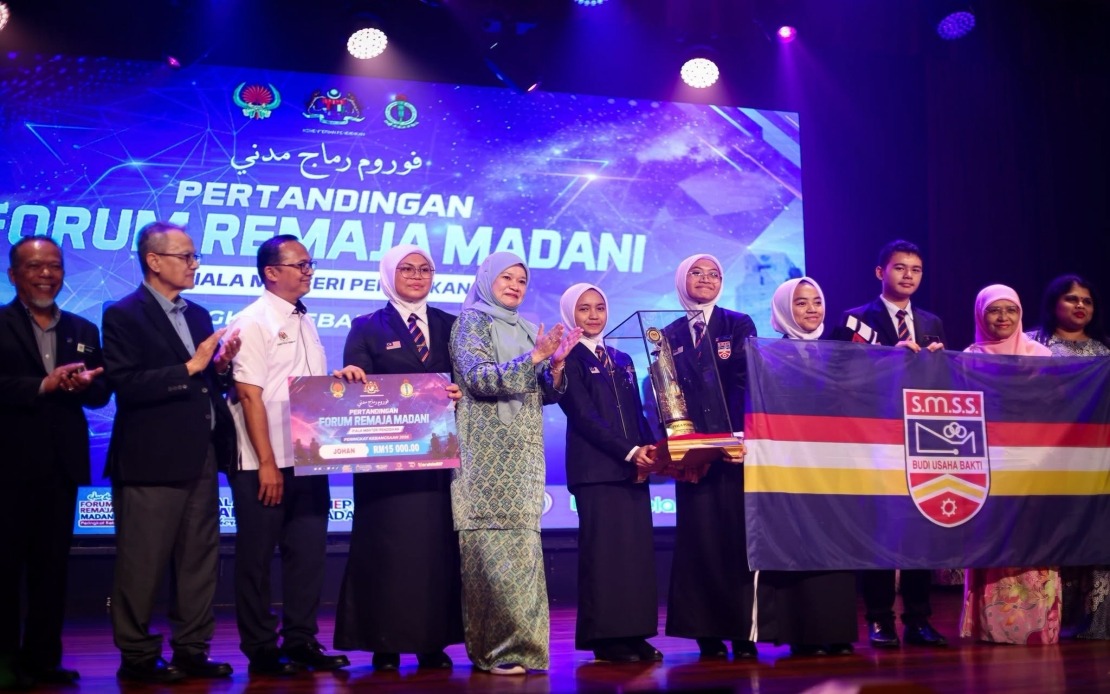
Education Minister Fadhlina Sidek has articulated a refreshed approach to character development in Malaysian schools, one that moves beyond traditional moral instruction to encompass civic engagement and intellectual rigour. Speaking after observing participants at the National MADANI Youth Forum, Fadhlina outlined how contemporary character education should cultivate the ability to articulate positions with conviction whilst remaining open to contrary perspectives. The vision represents a deliberate shift in pedagogical philosophy, recognising that effective citizenship requires not merely compliance but thoughtful participation in democratic discourse.
The minister's comments underscore growing recognition within Malaysia's education establishment that young people need preparation for a world characterised by ideological diversity and competing narratives. Rather than prescribing what students should believe, the approach centres on equipping them with communication skills, analytical tools, and emotional intelligence to engage across difference. At the MADANI Youth Forum, Fadhlina observed tangible examples of this methodology in action—participants articulating viewpoints, defending arguments, and considering alternative positions without abandoning their own convictions. This model reflects international best practices in civic education, where exposure to diverse thinking strengthens rather than weakens social cohesion.
Central to Fadhlina's framework is the proposition that national maturity emerges not from enforced consensus but from generational competence in constructive disagreement. A society where citizens mechanically align with prevailing orthodoxy, she suggests, remains fundamentally fragile and brittle. Conversely, a nation where populations possess the vocabulary, reasoning capacity, and interpersonal skills to contest ideas whilst maintaining respect develops institutional resilience and adaptive capacity. This conception challenges older models of character formation that prioritised unquestioning obedience and social conformity, instead valuing the capacity to question, defend, and compromise intelligently.
The minister's emphasis on the Malay language as a vehicle for intellectual expression adds another dimension to the character education agenda. She argues that the language's contemporary vitality depends on younger generations perceiving it as a medium capable of sophisticated thought and vigorous debate, not merely ceremonial or administrative communication. When Malay becomes associated with authentic intellectual life—university seminars, policy discussions, cultural criticism, scientific discourse—it naturally becomes the default language for serious expression. Conversely, if young Malaysians associate Malay with rote learning and prescribed views, they will gravitate toward English or other languages for meaningful discourse, gradually eroding the language's functional scope and prestige.
For Malaysian educators and policymakers, this framework addresses a persistent tension within the education system. Traditional emphases on respect for authority and social harmony, whilst culturally rooted and valuable, can inadvertently suppress the questioning impulse essential for knowledge advancement and innovation. Students schooled primarily to absorb and comply may struggle to generate novel ideas, challenge outdated practices, or adapt to rapidly changing technological and economic landscapes. Fadhlina's intervention suggests the education ministry recognises this constraint and seeks pathways toward preserving cultural values whilst nurturing the intellectual independence increasingly demanded by contemporary economies and democratic societies.
The practical implementation of this philosophy will determine its effectiveness. Character education curricula must move beyond conventional modules on ethics and morality to incorporate structured practice in argumentation, debate, and perspective-taking. Teachers require professional development in facilitation techniques that create psychological safety for dissent whilst maintaining classroom order and mutual respect. Assessment systems must evaluate not merely factual knowledge but reasoning quality and capacity to sustain respectful engagement across disagreement. Without such structural support, ministerial rhetoric risks remaining aspirational rather than transformative.
Regional context renders this initiative particularly significant for Southeast Asia more broadly. The region encompasses countries grappling with rising polarisation, democratic consolidation, and generational transitions in political participation. Malaysia's approach—if successfully implemented—could offer a model for other nations seeking to balance cultural preservation with democratic development. Young people across the region increasingly question traditional hierarchies and demand authentic participation in decisions affecting their futures. Governments that respond by enabling critical engagement, channelled through locally resonant languages and culturally sensitive frameworks, may build more durable social contracts than those attempting to suppress or ignore youth agency.
Fadhlina's vision also implicitly acknowledges Malaysia's religious and ethnic diversity as an asset rather than merely a challenge to be managed. When young people develop genuine capacity to understand and respectfully contest opposing viewpoints—including those rooted in differing religious or ethnic perspectives—the nation's pluralism becomes a source of intellectual vibrancy rather than perpetual anxiety. Students practising respectful disagreement within schools create foundations for more mature interethnic and interreligious relations at societal level. The character education framework thus connects intimate pedagogical choices to larger national cohesion objectives.
Looking forward, the education ministry's emphasis on critical thinking, articulate expression, and respectful difference will require sustained commitment amid competing pressures. Standardised testing regimes emphasising factual recall, parental expectations for prescribed moral instruction, and political sensitivities around curriculum content all potentially constrain implementation. Successful realisation depends on leadership consistency, adequate teacher training investment, and willingness to evaluate success through measures extending beyond examination results. If Malaysia's education system can authentically embed these capacities, it will produce generations equipped not merely to inherit the nation but to renew and reimagine it thoughtfully and collectively.

