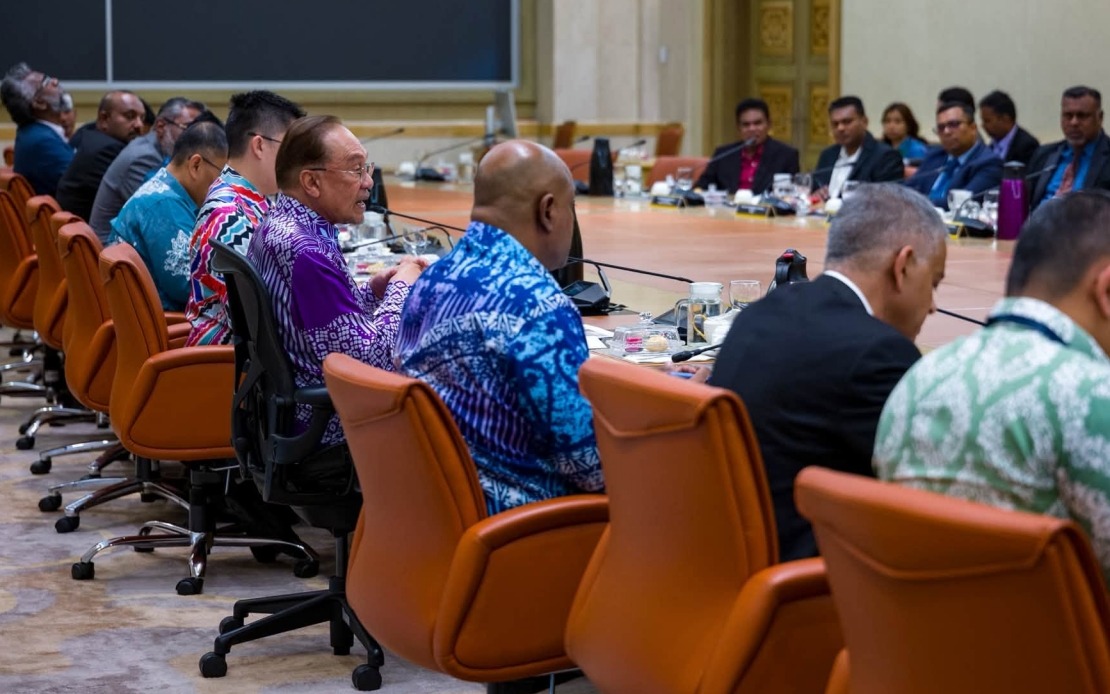
Prime Minister Datuk Seri Anwar Ibrahim has outlined a comprehensive agenda centred on education and social welfare to drive meaningful advancement within Malaysia's Indian community. Speaking through a Facebook post on July 23, Anwar stressed that sustainable empowerment requires a multifaceted approach addressing quality education, robust welfare systems, skills development and expanded job prospects for Indian Malaysians seeking to improve their economic circumstances.
Anwar's remarks came following a consultation session with leaders representing the Indian community, during which he reiterated the government's commitment to tangible, results-driven interventions. The Prime Minister, who simultaneously holds the Finance portfolio, signalled that policymaking in this area demands more than rhetorical support—it requires coordinated action across multiple government departments and community organisations working in concert towards shared objectives.
Central to Anwar's message was a direct call for the Malaysian Indian Transformation Unit (MITRA) and related government agencies to strengthen their presence and engagement at community level. Rather than operating from ministerial offices in Kuala Lumpur, these bodies must venture into neighbourhoods and villages to understand the lived realities of Indian Malaysians, identify unmet needs and design programmes that genuinely serve vulnerable populations rather than missing their target beneficiaries.
The emphasis on accountability reflects growing recognition that previous initiatives, however well-intentioned, have sometimes failed to reach those most in need. Anwar instructed MITRA and partner agencies to maintain continuous dialogue with community stakeholders, ensuring that planned interventions are grounded in grassroots understanding rather than bureaucratic assumptions about what Indian Malaysians require.
For Malaysian readers familiar with the challenges facing minority communities, Anwar's focus on education carries particular weight. Quality schooling has long been identified as the gateway to social mobility across Southeast Asia, yet disparities in educational outcomes persist between urban and rural areas, and between different socioeconomic groups. By positioning education as foundational to community empowerment, Anwar is signalling that the government views long-term human capital development as more essential than short-term welfare distributions alone.
The inclusion of skills development and employment opportunity creation in Anwar's framework addresses a critical gap in Malaysia's economic integration. Many Indian Malaysians, particularly in smaller towns and rural regions, face limited access to vocational training programmes or job placement services that could unlock better-paying positions. Strategic investment in these areas could reduce structural unemployment and underemployment affecting this demographic.
Anwar's invocation of "compassion, accountability and good governance" as guiding principles suggests an attempt to reframe how the government approaches minority empowerment. Rather than viewing such programmes as patronage or charity, this language positions them as obligations of inclusive governance—the responsibility of the state to ensure equitable development across all communities regardless of ethnic or religious background.
The Prime Minister's broader assertion that no segment of society should be left behind carries implications beyond the Indian community alone. This principle, if genuinely operationalised across government departments, could reshape how Malaysia approaches development in Orang Asli settlements, economically marginalised Malay-Muslim areas, and other underserved regions. The question now centres on whether MITRA and related agencies will translate these directives into concrete programmes with measurable outcomes and adequate funding.
For the Malaysian Indian diaspora and community organisations, Anwar's public commitment offers an opportunity to hold government accountable through monitoring implementation. Civil society can track whether educational initiatives expand access to quality schooling, whether welfare programmes reach intended recipients, and whether employment schemes create sustainable livelihoods rather than temporary assistance.
The timing of these remarks also merits consideration. As Malaysia navigates post-pandemic economic recovery, questions about inclusive growth and equitable development have intensified. Anwar's emphasis on empowerment through education and employment speaks to a vision of Malaysia where economic advancement is not confined to particular regions or communities but distributed across the nation's diverse population.
Looking forward, the success of this agenda will depend heavily on resource allocation and institutional coordination. Education quality improvements require investment in teacher training, infrastructure and curriculum development. Welfare systems must be designed to avoid bureaucratic delays or eligibility barriers that discourage uptake. Skills programmes must align with actual labour market demands, ensuring graduates gain employment rather than completing courses with limited prospects.
For regional observers, Malaysia's approach to minority community development carries significance beyond its borders. Southeast Asian nations with diverse populations face similar questions about equitable resource distribution and inclusive growth strategies. How Malaysia implements these principles could offer lessons—positive or cautionary—for neighbouring countries navigating comparable challenges.

