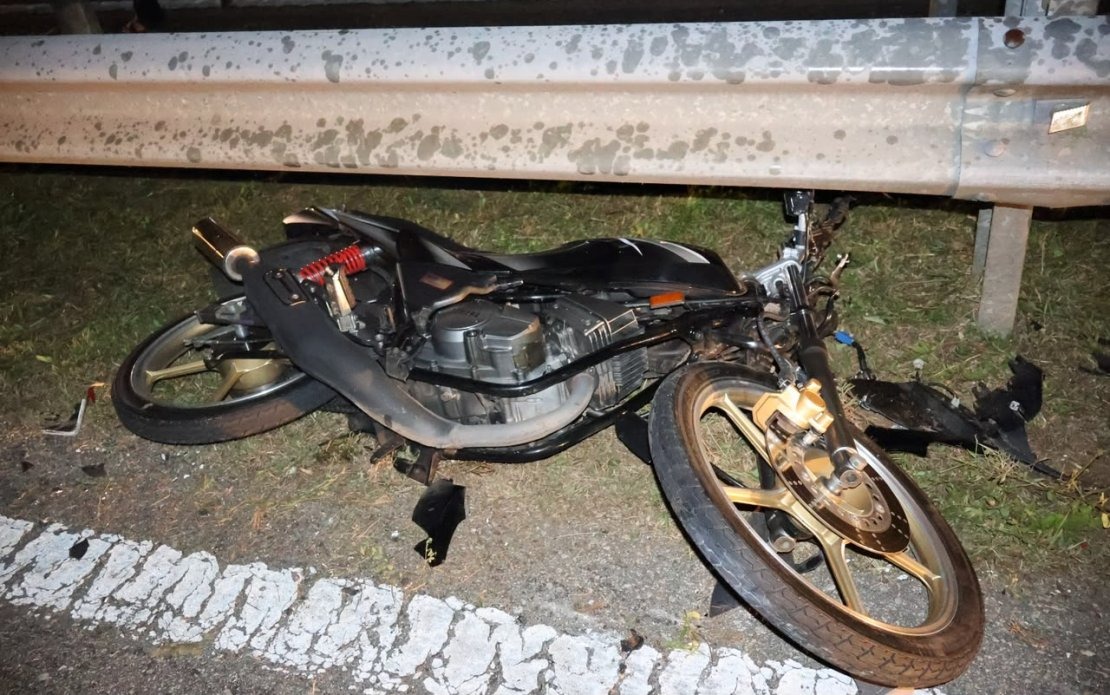
Enforcement operations by themselves cannot solve Malaysia's road safety crisis, according to Bukit Aman Traffic Investigation and Enforcement Department (JSPT) director Datuk Seri Muhammed Hasbullah Ali, who argues that a fundamental shift in public attitudes is necessary to protect lives on the nation's highways.
Speaking in the wake of a tragic collision on the East Coast Expressway (LPT) that killed four motorcyclists and injured twenty others, Muhammed Hasbullah highlighted the need for stronger road safety education and advocacy campaigns that reach beyond traditional enforcement measures. His comments reflect growing recognition among Malaysian law enforcement that the country's persistent accident rates require a multi-dimensional approach addressing the deeper behavioural and cultural factors driving dangerous riding practices.
The JSPT director stressed that preventing road accidents depends fundamentally on mobilising broader social support, including parents, families, schools, and community organisations. These stakeholders, he argued, bear shared responsibility for instilling responsible attitudes among road users from an early age. This perspective aligns with international best practices in traffic safety, where countries have successfully reduced accident rates through comprehensive public education initiatives that begin in schools and extend into community settings.
Motorcyclists present a particular challenge for Malaysian authorities. Muhammed Hasbullah noted that accidents involving two-wheeled vehicles often stem not from ignorance of traffic laws but from deliberate choices by riders who prioritise personal gratification or peer recognition over safety. This distinction is significant: it suggests that many dangerous riders understand the rules but consciously reject them, making traditional enforcement insufficient without accompanying behavioural interventions.
The pattern of irresponsible riding documented by JSPT demonstrates this attitudinal dimension clearly. Despite continuous police operations, some individuals persist in reckless riding, organising or participating in illegal street races, and performing stunts on expressways that endanger themselves and other road users. These activities reflect a subset of riders who view traffic regulations as arbitrary constraints rather than protective frameworks, suggesting that changing outcomes requires changing mindsets, not merely increasing fines or penalties.
The morning's LPT incident exemplifies the stakes involved. Four riders lost their lives, and twenty additional people—other motorists—faced risk of serious injury, property loss, and lasting psychological trauma. Muhammed Hasbullah emphasised this broader harm: public roads are shared spaces where individual choices have consequences extending far beyond the rider. When someone performs dangerous stunts or races illegally on an expressway, they impose costs on innocent drivers who may be injured or killed through no fault of their own, creating a powerful argument for community-wide responsibility.
For Malaysia, where motorcycle accidents consistently rank among the leading causes of traffic fatalities, addressing this through education represents a pragmatic investment. Schools, religious institutions, and community centres can disseminate messages about road safety risks specific to motorcycling—blind spots, stopping distances, the physics of high-speed braking—in ways that resonate emotionally and intellectually. Family discussions about responsible riding may prove more persuasive than police warnings, particularly for younger riders influenced by peer groups.
Simultaneously, JSPT will maintain strict enforcement against dangerous riders. Muhammed Hasbullah made clear that stern action will continue against those caught riding recklessly, engaging in illegal racing, or performing stunts that endanger others. This dual approach—combining consequences with education—reflects research suggesting that enforcement and education are mutually reinforcing rather than alternatives.
The challenge facing Malaysian authorities extends beyond individual behaviour to include infrastructure and vehicle regulation. However, Muhammed Hasbullah's public emphasis on education and community engagement signals a shift in how the police frame the road safety problem domestically. Rather than positioning enforcement as the primary tool, the JSPT director has positioned it as one component of a broader ecosystem where families, schools, and communities share accountability for developing responsible drivers and riders.
For Malaysian road users, particularly motorcyclists and young drivers, this message carries implications worth considering. Road safety ultimately depends not on police presence but on personal choices made thousands of times daily—the decision to wear a helmet, observe speed limits, avoid distraction, and respect other road users. Creating a culture where these choices feel natural and valued requires effort from everyone: enforcement agencies, educational institutions, families, and riders themselves.
The LPT tragedy underscores the urgency of this multifaceted approach. Malaysia's road fatality rate remains a significant public health challenge, and solving it requires moving beyond reactive enforcement to proactive cultivation of safer attitudes and behaviours. As Muhammed Hasbullah's remarks suggest, the police recognise their limitations and are calling on Malaysian society to recognise its shared responsibility in protecting lives on the nation's roads.

