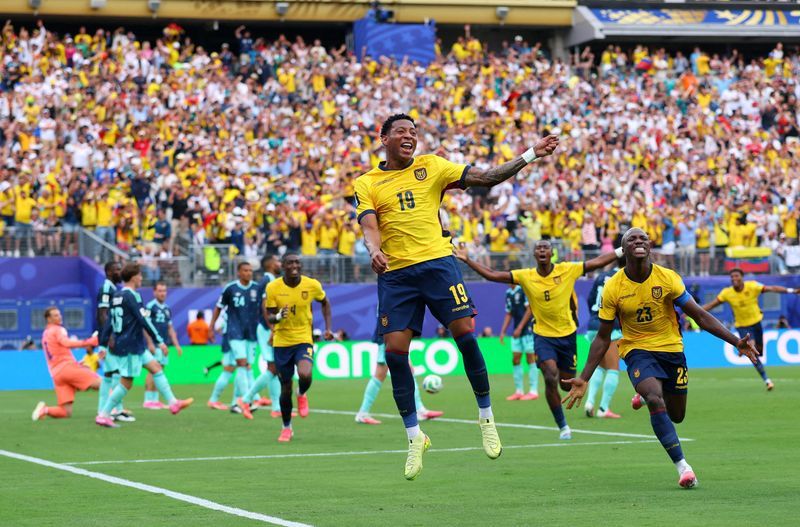
Ecuador pulled off one of the tournament's most unlikely turnarounds on Thursday, defeating Germany 2-1 in their Group E climax at the sold-out stadium in East Rutherford, New Jersey. The South American side's survival had appeared to be slipping away after disappointing results, but they delivered a spirited performance when it mattered most to claim a spot among the last 32 teams. Their victory came against an opponent who had already secured group progression, creating a dramatic narrative of desperation meeting complacency.
The match began catastrophically for Ecuador's ambitions when Germany struck within two minutes. Florian Wirtz's intelligent play from a quick throw-in allowed him to locate Leroy Sane in the box, where the winger finished left-footed with clinical precision. It was Sane's first goal at a major international tournament despite 15 previous appearances, and the early breakthrough seemed to confirm Germany's superiority. Ecuador's coaching staff faced the prospect of needing not merely another goal but potentially two, given their opponents' attacking potential and already-secured qualification status.
Ecuador's task grew even more complicated by refereeing controversy surrounding the opening goal. The South American team protested that Aleksandar Pavlovic had committed a foul with a raised foot against Pedro Vite during the buildup, but referee Tori Penso allowed the goal to stand without intervention. The decision would later be overshadowed by Ecuador's response, though it highlighted the contentious nature of officiating decisions throughout the encounter.
What made Ecuador's situation extraordinary was their complete lack of cutting edge in preceding matches. The team had managed 39 attempts across their opening two games without finding the back of the net, a statistic that had made their qualification odds increasingly grim. However, just seven minutes after falling behind, Nilson Angulo provided the breakthrough everyone had been waiting for. The midfielder's curled effort from distance deceived goalkeeper Manuel Neuer, who appeared slow to react to the ball's trajectory. The goal sparked jubilation among Ecuador's supporters, transforming the atmosphere and giving their team genuine hope.
The second half brought further controversy when the referee awarded Germany a penalty after Felix Nmecha played in Kai Havertz, who appeared to be brought down by Joel Ordonez. However, a VAR intervention proved decisive in Ecuador's favour. Upon review, officials identified a foul committed by Germany in the buildup, prompting Penso to overturn the penalty decision. This reversal proved pivotal, as converting the spot-kick would have made Ecuador's task substantially more difficult.
Ecuador's path to victory became clear in the closing stages when Gonzalo Plata struck the decisive blow in the 78th minute. Substitute Kevin Rodriguez flicked a corner towards the near post, and Plata demonstrated superior positioning to react quickest, stabbing the ball past Neuer into the net. The goal sent the stadium into uproar as Ecuador's fans, predominantly dressed in yellow, celebrated what had seemed impossible just minutes earlier.
Germany's defeat marked a concerning pattern throughout their group campaign. Despite qualifying as group winners with six points, the side conceded in all three matches, a defensive vulnerability that will concern their coaching staff as the tournament progresses. The team finished ahead of Ivory Coast only on goal difference, with the African nation's 2-0 victory over Curacao earlier in the day creating genuine jeopardy. Germany had entered the match chasing a 12th successive victory and their third consecutive win in Group E, expectations that Ecuador's performance thoroughly undermined.
Ecuador's qualification came at the expense of their own historical struggles and external circumstances. They had arrived in New Jersey under considerable pressure following a defeat by Ivory Coast and a draw against Curacao, matches that had left their campaign teetering. The team needed victory or nothing, and their players responded with the intensity and execution that had eluded them throughout the tournament. Their qualification as one of the best eight third-placed teams represents a remarkable recovery from the brink of elimination.
The result carries significant implications for Southeast Asian perspectives on tournament dynamics. Ecuador's comeback demonstrates how group-stage matches maintain unpredictability even when participating nations carry different levels of perceived quality and pressure. For regional observers, the victory illustrates that desperation combined with tactical adjustment can overcome opponents who may feel they have already secured their objectives. Ecuador's emergence from what appeared to be a failing campaign provides a template for how teams facing elimination can harness remaining opportunities with maximum intensity and focus.

