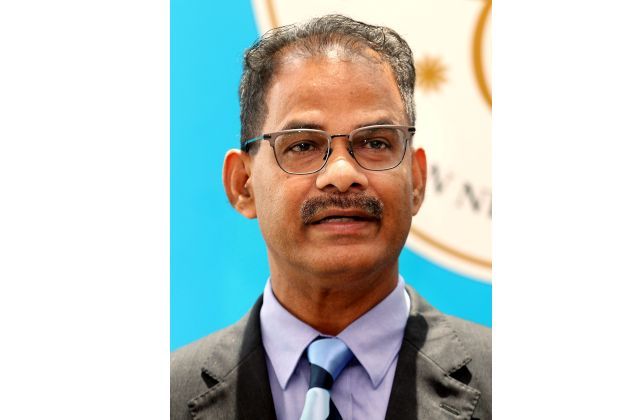
The ongoing East Coast Rail Link (ECRL), a RM50.27 billion national infrastructure megaproject, is poised to unlock significant employment prospects for Selangor's workforce, particularly within the locomotive and rail manufacturing ecosystem. According to V. Papparaidu, the state's human resources and poverty eradication committee chairman, the venture could generate approximately 2,000 job positions throughout Selangor, with the overwhelming majority—roughly 80 percent—designated for local workers. This employment ratio underscores the project's domestic focus and potential to address joblessness across the state's manufacturing heartland.
Speaking during the state assembly proceedings at Bangunan Dewan Negeri Selangor in Shah Alam on Tuesday, August 11, Papparaidu highlighted that this employment surge represents a meaningful opportunity for Selangor's youth population. The state administration is actively preparing the ground to ensure young Malaysians can compete for these positions by establishing educational and vocational pathways tailored to industry specifications. By coordinating comprehensive training and certification programmes through the Technical and Vocational Education and Training (TVET) framework, the state aims to bridge the widening skills gap between job-seekers and employers in high-tech sectors.
Papparaidu's remarks emerged in response to Nushi Mahfodz, the Semenyih assemblyman from Perikatan Nasional, who raised concerns about whether Selangor was adequately deploying TVET-qualified graduates to fill openings in the locomotive, semiconductor and broader manufacturing sectors. The question reflected growing anxiety among policymakers about talent alignment in a state where industrial development is rapidly outpacing workforce preparation. Rather than relying solely on conventional hiring channels, the state has pioneered several targeted initiatives designed to connect qualified applicants with receptive employers.
Among these programmes is Kerjaya Selangor, a joint venture involving the state government and the Social Security Organisation (PERKESO) that harnesses the MyFuture Jobs digital platform to match job-seekers with vacancies. This online ecosystem evaluates candidates across multiple dimensions—formal qualifications, technical competencies, and sector-specific requirements—to facilitate informed recruitment decisions. Complementing this technological approach, Selangor has also organised JobCare Selangor recruitment fairs, which bring employers and applicants together for on-the-spot interviews, substantially reducing the time between application and employment.
The statistical backdrop reveals encouraging momentum in TVET graduate production across Selangor. Between January 10 and July 10 this year, the state generated 10,111 TVET graduates entering the labour market. This production rate signals sustained capacity within vocational colleges and training institutes, though questions persist about whether output matches demand and distribution across occupational fields. Simultaneously, the broader job market in Selangor posted 78,030 vacancies requiring diploma-level qualifications or higher during the same period, indicating robust economic activity but also an apparent mismatch between graduate profiles and employer expectations.
Within this wider employment landscape, high-skilled industries warrant particular attention. A subset of 3,965 vacancies materialised specifically in advanced sectors including automotive manufacturing, semiconductor fabrication and electronic assembly—domains that Malaysia has strategically positioned as future economic pillars. The available roles span positions such as automotive engineers, data scientists and software developers, all demanding rigorous technical training that conventional secondary education cannot adequately provide. Papparaidu stressed that TVET pathways, when properly structured and delivered, can successfully equip graduates with the precise competencies these cutting-edge industries demand.
The ECRL initiative carries particular significance for Selangor given the state's established manufacturing base and proximity to critical transport infrastructure. Unlike agricultural economies or tourism-dependent regions, Selangor's competitive advantage rests substantially on technical expertise and industrial sophistication. The rail-link project amplifies this advantage by generating demand for rail engineers, maintenance technicians, logistics coordinators and supply-chain specialists—occupations that pay above-median wages and offer career advancement. For young Malaysians, particularly those without university degrees, these positions represent viable pathways to middle-class stability.
However, the geographic diversity within Selangor complicates workforce planning. The state encompasses distinct economic zones with divergent industry profiles: Shah Alam functions as an automotive and electronics hub; Pelabuhan Klang (Port Klang) anchors maritime and logistics operations; areas surrounding Kuala Lumpur cater to services and finance. When Nushi Mahfodz queried whether the state government intended to conduct district-by-district skills mapping exercises, Papparaidu acknowledged the necessity but also the complexity. Effective labour-market intelligence requires granular data collection from universities, polytechnics and private training institutions regarding graduate concentrations in specific fields.
This data-gathering challenge reflects a systemic weakness in Malaysia's vocational ecosystem. Universities and technical institutions traditionally operated with limited coordination, often producing graduates whose specialisations misaligned with emerging employment clusters. Mapping exercises would enable state planners to identify supply bottlenecks—for instance, if automotive engineering graduates concentrate in Kuala Lumpur's universities while manufacturing opportunities expand in the Klang Valley—and propose corrective interventions. Papparaidu's indication that the state will pursue such analysis suggests growing recognition that economic growth, without corresponding human capital planning, inevitably generates both unemployment and labour shortages simultaneously.
The ECRL initiative intersects with broader Southeast Asian infrastructure trends. Across the region, mega-projects are catalysing similar employment discussions: Thailand's eastern industrial corridor, Vietnam's semiconductor expansion and Indonesia's new capital development all grapple with identical challenges of matching vocational training to infrastructure-driven job creation. Selangor's response—combining digital job-matching platforms with traditional recruitment fairs and sector-specific skills assessment—offers a replicable model within the ASEAN context. Success here could establish a template for other Malaysian states and neighbouring economies facing analogous workforce transitions.
Looking forward, the state's commitment to TVET expansion appears genuine but contingent on sustained investment and employer engagement. The 2,000 ECRL-related opportunities, while substantial, represent only a fraction of the 78,030 diploma-level vacancies already circulating across Selangor's economy. This disparity suggests that generic vocational training, without alignment to specific industry needs and geographic clusters, risks producing graduates who remain structurally unemployed despite formal qualifications. As Malaysia's economy continues its transition away from low-cost manufacturing toward high-value production, states like Selangor must increasingly position TVET not as a consolation prize for students unable to access university, but as an equally rigorous and economically valuable pathway to prosperity.

