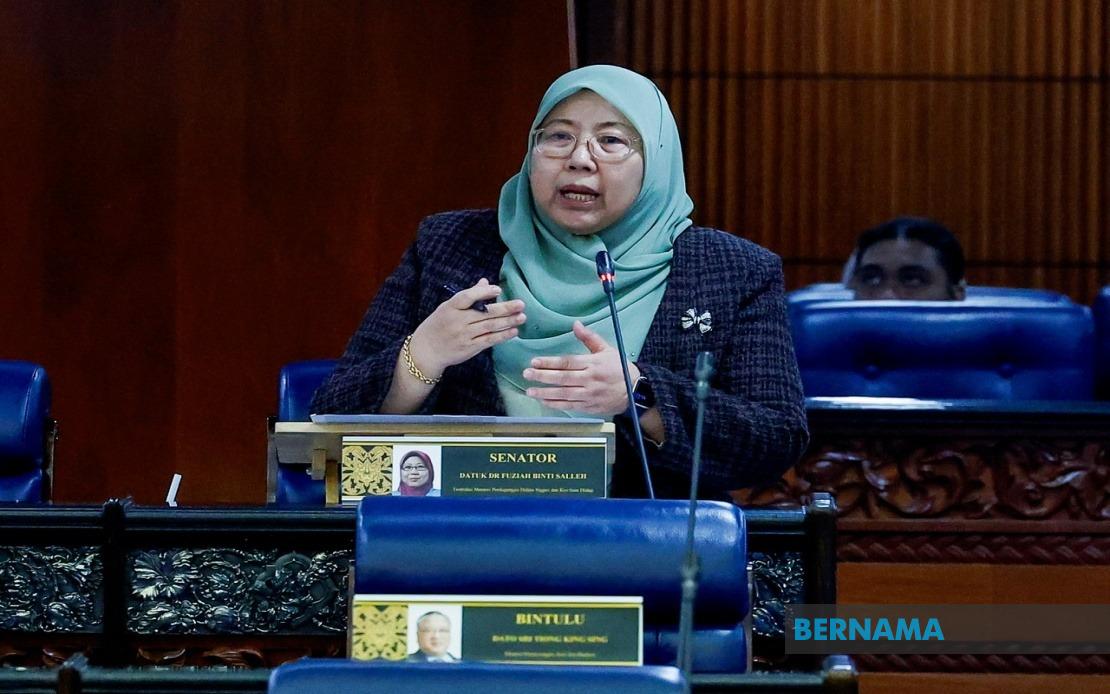
Malaysia's digital initiative to police its subsidised cooking oil supply chain has delivered tangible results, with government officials declaring the eCOSS mobile application successful in curtailing illegal diversion of the one-kilogramme packets intended for domestic consumers. Deputy Domestic Trade and Cost of Living Minister Datuk Dr Fuziah Salleh presented Parliament with evidence of the scheme's efficacy on July 6, citing both market stability indicators and the sharply reduced volume of consumer grievances as proof that the technology-based tracking system is working as intended.
The eCOSS initiative represents a sophisticated response to a longstanding structural problem affecting Malaysia's subsidy apparatus. Subsidised cooking oil has historically been vulnerable to leakage, with unscrupulous traders and middlemen diverting packets across borders or into parallel markets where they command higher prices. By introducing a digital registration layer between government refineries and household consumers, the system creates an auditable trail that makes such diversion substantially riskier and more detectable. The government's decision to require Malaysians to register through a mobile application before purchasing subsidised oil at participating retailers has effectively erected a verification checkpoint at the point of sale.
Statistics presented by Fuziah underscore the programme's reach and traction within the Malaysian consumer base. As of early July, the application had attracted 5.261 million registered users, a penetration figure suggesting substantial market acceptance despite Malaysia's diverse demographic composition and varying degrees of digital familiarity. The corresponding data on purchasing patterns—averaging 18 million packets of subsidised cooking oil transacted monthly through the system—indicates that the scheme has integrated smoothly into retail operations and consumer behaviour without provoking widespread resistance or market distortion.
Johor, which served as one of the pilot jurisdictions for eCOSS implementation, provides a microcosm of the broader success story. The state recorded 580,000 application downloads among its consumer population, with nearly 1,100 of its 2,822 registered retailers integrating the digital payment and tracking mechanism into their operations. Most tellingly, complaints alleging shortages of subsidised cooking oil in Johor declined precipitously from nine reports in June 2025 to merely two in June of the following year—a reduction that ministry officials interpret as evidence that the supply chain is functioning more efficiently and that leakage has diminished substantially.
Yet the government's rollout of eCOSS has not occurred without awareness of potential equity concerns. The application's reliance on smartphone access and digital literacy immediately raises questions about elderly Malaysians and residents of rural or remote communities where internet penetration remains patchy and technological adoption lags urban centres. Fuziah acknowledged this demographic challenge by confirming that the ministry had implemented several support mechanisms designed to ensure that digital exclusion does not translate into subsidy exclusion. Point-of-sale assistance at retail outlets, public awareness campaigns, instructional videos, and the preservation of manual purchasing options for consumers without smartphones represent an attempt to maintain universal access whilst deploying cutting-edge technology.
The broader architecture of eCOSS extends beyond the mobile application itself. The system functions as an integrated supply-chain transparency tool that tracks subsidised cooking oil from government refineries through repackaging facilities, wholesalers, and retailers, terminating at individual end consumers. By creating digitised checkpoints at each stage of this distribution network, eCOSS makes it substantially more difficult for packets to disappear into informal channels or cross international borders undetected. The supplementary information provided by Fuziah clarified that the mobile application constitutes the consumer-facing component of a larger technological infrastructure designed to create comprehensive visibility over the journey of subsidised product.
Implementation of eCOSS represents a departure from traditional enforcement approaches to subsidy management. Rather than relying primarily on customs officers, licensing inspectors, and other regulatory personnel to conduct physical investigations into suspicious trading patterns, the government has created a data-generating mechanism that flags irregularities at source. Consumer complaints and monitoring data collected through the application are analysed to identify systemic weaknesses or suspicious concentrations of activity that warrant investigation. This approach harnesses digital infrastructure to amplify the effectiveness of enforcement personnel rather than attempting to substitute technology for human oversight entirely.
The Malaysian experience with eCOSS carries relevance for other developing economies grappling with subsidy leakage and seeking cost-effective solutions to protect their fiscal commitments to price support programmes. Many nations across Southeast Asia, South Asia, and beyond face similar pressures—balancing the political necessity of keeping essential commodity prices affordable for low-income households against the budgetary burden of financing such subsidies whilst preventing their exploitation by smugglers, hoarders, and the merchants who profit from artificial price differentials. The apparent success of Malaysia's digitised approach suggests that mobile-based registration and tracking systems merit serious consideration by policymakers elsewhere, particularly in economies with rising smartphone penetration and improving digital infrastructure.
Government evaluation of eCOSS remains ongoing, with officials systematically reviewing user feedback to identify refinements that might enhance the system's efficiency or address implementation challenges that have emerged during the rollout phase. This iterative approach reflects recognition that even successful technology deployments typically benefit from continuous calibration based on real-world usage patterns and consumer experience. As the application matures and accumulates a longer track record of data on supply patterns, pricing anomalies, and geographic disparities in availability, the government will likely uncover additional opportunities to optimise the scheme's design and broaden its preventive impact.
The eCOSS initiative also illustrates a broader trend toward digital governance in Malaysia's domestic trade administration. Policymakers have increasingly recognised that technology can enhance transparency, reduce corruption, and improve the targeting of government assistance by creating automated verification systems that operate continuously rather than relying on episodic regulatory inspections. For the cooking oil subsidy programme specifically, this shift promises to make the benefit more genuinely universal—reserved exclusively for Malaysian consumers—whilst simultaneously reducing the fiscal leakage that has historically inflated the true cost of maintaining price stability.

