Malaysia's Economy Ministry has signalled its commitment to extending the People's Income Initiative – Food Entrepreneur Initiative (IPR-Insan) programme, citing substantial benefits accruing to both low-income entrepreneurs and consumers across the country. Economy Minister Akmal Nasrullah Mohd Nasir announced that the ministry has formally requested an extension from the Ministry of Finance, underpinning the government's broader agenda to uplift the bottom 40 per cent (B40) income segment through innovative business platforms. The move represents a strategic effort to institutionalise programmes that demonstrate measurable socioeconomic impact beyond their initial pilot phases.
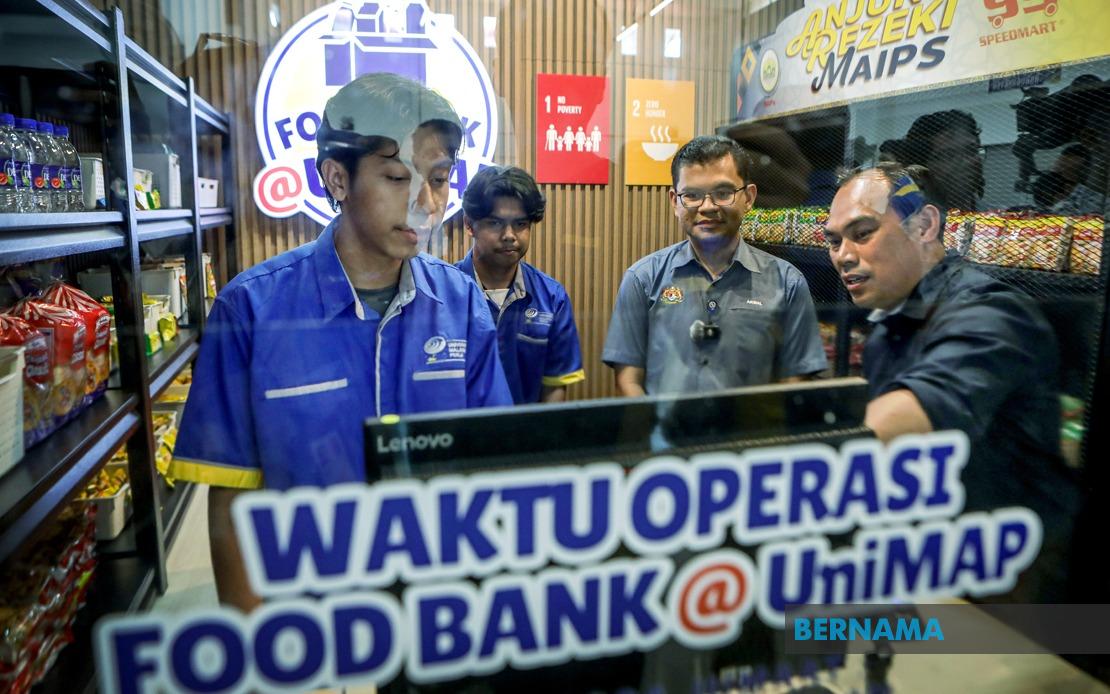
During a working visit to Universiti Malaysia Perlis (UniMAP) in Arau, Akmal Nasrullah examined the ground-level implementation of IPR-Insan through two vending machines deployed on campus, offering home-prepared meals to the university community. The minister's direct observation of operations at the Food Bank and MADANI Dapur Siswa (student kitchen) provided him with firsthand evidence of how these initiatives address dual objectives: creating income-generation opportunities for struggling entrepreneurs whilst simultaneously improving food security and affordability for vulnerable student populations. This dual-benefit approach has become increasingly central to Malaysia's poverty alleviation strategy, recognising that sustainable development requires solutions benefiting both supply and demand sides of the economic spectrum.
The vending machine model represents a departure from conventional entrepreneurship support, leveraging technology to reduce operational barriers that traditionally prevent B40 individuals from scaling their businesses. Rather than requiring substantial capital investment, rental premises, or complex licensing procedures, participating entrepreneurs utilise university-based vending infrastructure to reach a captive consumer base. This democratisation of market access has particular resonance in Malaysia's urban context, where informal food vendors often struggle to secure permitted trading locations. The approach also addresses a broader challenge in Southeast Asia: how to formalise informal sector operations without displacing vulnerable workers.
UniMAP's involvement demonstrates how higher education institutions can function as social laboratories for policy innovation. The two vending machine locations—at Tuanku Abdul Rahman Residential College and Tuanku Tengku Fauziah Residential College—have generated compelling evidence of programme efficacy. Entrepreneur Norleyana Nordin, operating from the first location, achieved average monthly sales of RM2,178.80, with peak earnings reaching RM4,905 in January. Her counterpart, Noor Hasfalela Mohd Noor, demonstrated even stronger performance, averaging RM4,595 monthly with exceptional earnings of RM10,012 in January, RM5,049 in February 2026, and RM4,868 in April 2026.
These financial metrics warrant scrutiny beyond surface-level celebration. Monthly sales in the RM4,000–RM10,000 range represent meaningful supplementary income for B40 households, potentially increasing family income by 30–50 per cent depending on baseline earnings. However, the seasonal variation—notably the January peak—suggests earnings volatility tied to academic calendars, with lower revenue during semester breaks when campus populations diminish. Understanding this cyclical pattern becomes crucial for programme sustainability and for advising participants on cash flow management and reserve accumulation during peak periods.
The IPR-Insan programme addresses a specific challenge in Malaysia's dual economy, where formal employment pathways remain constrained whilst informal sector workers lack institutional support. B40 entrepreneurs typically lack collateral for bank financing, business training, market research capabilities, and negotiating power with suppliers. By providing vending infrastructure, the programme effectively subsidises fixed costs whilst channelling entrepreneurs toward consumers with demonstrated purchasing power. University campuses offer particular advantages: captive audiences with regular spending patterns, quality control oversight, and branding association with educational institutions that enhances consumer confidence in food safety.
The student welfare dimension deserves emphasis in Malaysia's contemporary context. Rising living costs have strained student finances, with accommodation, transportation, and meals consuming substantial portions of household budgets. Access to affordable, quality meals through campus vending reduces financial stress and allows students to allocate resources toward academic materials and living expenses. The accompanying Food Bank and MADANI Dapur Siswa initiatives create complementary support layers, recognising that food insecurity among university students—whilst often invisible—undermines academic performance and mental wellbeing.
Extending IPR-Insan requires addressing several operational questions that the Ministry of Finance will likely scrutinise. Scaling from two vending machines at a single university to multiple campuses nationwide demands investment in infrastructure, training, quality control systems, and participant selection mechanisms. The ministry must establish criteria for identifying genuine B40 entrepreneurs, preventing capture by better-resourced individuals seeking additional income streams. Similarly, replicating campus success in non-institutional settings—markets, transport hubs, office parks—presents different challenges around space allocation, foot traffic patterns, and regulatory coordination.
Regionally, Malaysia's approach holds implications for other Southeast Asian nations grappling with similar poverty dynamics. Thailand, Vietnam, and Indonesia face comparable challenges in formalising informal sector workers whilst maintaining livelihood opportunities. The IPR-Insan model demonstrates how technology (vending machines) combined with institutional anchoring (universities) and targeted beneficiary selection (B40 entrepreneurs) can create scalable, replicable solutions. Regional development banks and international organisations increasingly advocate precisely this type of pilot-to-scale pathway rather than top-down, one-size-fits-all programmes.
Akmal Nasrullah's emphasis on monitoring and ground-truthing reflects evolving Malaysian governance approaches that prioritise evidence-based programme continuation over automatic renewal. By conducting site visits and examining performance data, the ministry demonstrates that extension decisions derive from demonstrated impact rather than political convenience. This practice-oriented approach builds public confidence that government resources flow toward effective interventions, particularly important given persistent scepticism about poverty alleviation programme efficacy.
The extension request signals confidence in the programme's potential whilst acknowledging that two locations provide insufficient data for nationwide scaling. The Ministry of Finance will likely condition extension approval on specific performance targets, expansion timelines, and accountability mechanisms. Alternatively, extension might proceed on a phased basis, gradually increasing vending machine locations whilst monitoring implementation quality and beneficiary outcomes. Such conditionality ensures that popularity does not outpace operational capacity.
For entrepreneurs like Norleyana Nordin and Noor Hasfalela Mohd Noor, programme extension promises income stability and potential for business growth. Beyond immediate earnings, participation builds business fundamentals: inventory management, customer service, financial record-keeping, and competitive positioning. These capabilities, acquired through vending machine operation, create foundations for eventual independent entrepreneurship or advancement within formalised food service sectors. The programme thus functions as both immediate income support and human capital development intervention.
As Malaysia navigates post-pandemic economic recovery with persistent inflation pressuring B40 households, programmes demonstrating clear poverty impact warrant expansion. The IPR-Insan extension request represents a rational response to evidence suggesting that innovation combined with institutional support creates sustainable livelihood pathways. Whether the Ministry of Finance approves depends partly on budgetary capacity and competing priorities, but the initiative has established a compelling case grounded in tangible beneficiary outcomes and institutional endorsement from universities positioned at the programme's frontlines.

