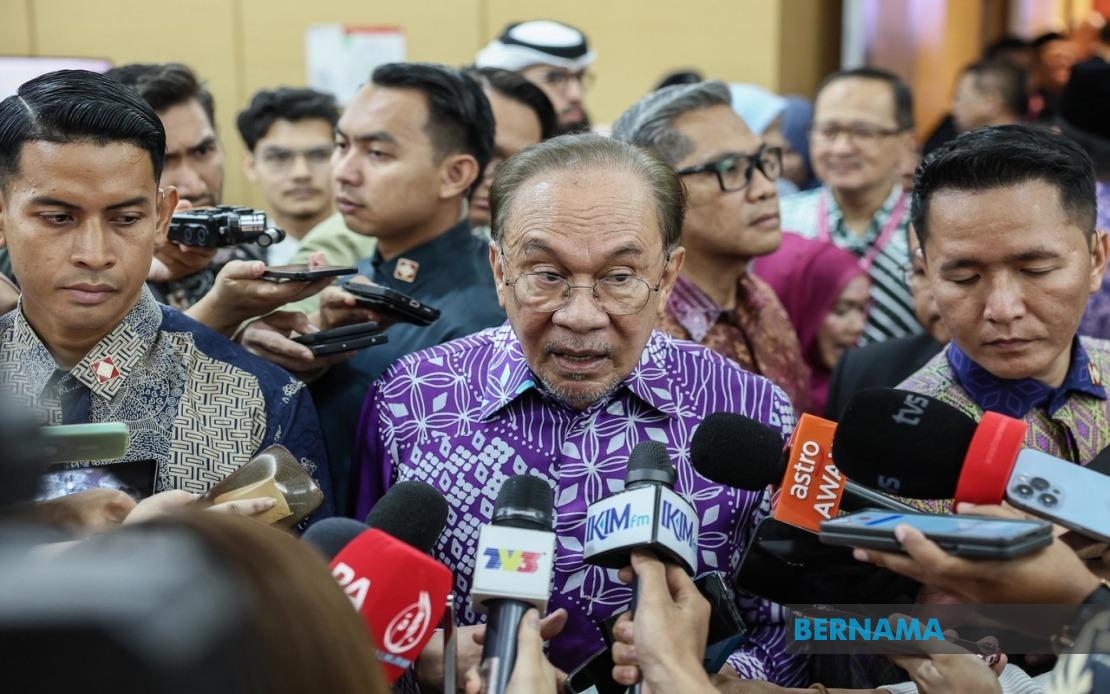
Prime Minister Datuk Seri Anwar Ibrahim has articulated a vision for Malaysian economic development that places human dignity at the centre of policymaking, arguing that sustained growth divorced from ethical considerations ultimately weakens rather than strengthens national prosperity. Speaking at the Humane Economy Global Discourse 2026 in Kuala Lumpur, Anwar stressed that the nation's pursuit of technological advancement, public investment and competitive positioning must be fundamentally reoriented toward enhancing the material and spiritual welfare of ordinary citizens rather than treating economic expansion as an end in itself.
The Prime Minister's remarks reflect a philosophical departure from purely technocratic approaches to development that have dominated policy discussions across Southeast Asia over the past two decades. By framing economic strategy through the lens of human flourishing rather than GDP expansion, Anwar appears to be signalling an attempt to reshape how Malaysian government evaluates the success of its policies and investments. This framing carries particular relevance as the nation transitions through a period of significant political and administrative change, seeking to establish a governing narrative that distinguishes its approach from previous administrations.
Anwar contextualised his message within the broader global backdrop of technological disruption, noting that the world stands at the threshold of transformative change driven by artificial intelligence, renewable energy systems, advanced manufacturing capabilities and biotechnology innovation. Rather than viewing these developments as external forces to which Malaysia must reactively adapt, he positioned them as tools that should be deliberately harnessed to serve explicitly human-centred objectives. The distinction matters considerably for how Malaysia approaches industrial policy, infrastructure investment and workforce development in coming years.
The phrase "to reclaim humanity is to recover a simple but too often neglected truth" encapsulates the core philosophical argument Anwar advanced. This framing suggests that technological societies and market economies have gradually lost sight of foundational principles regarding the relationship between economic activity and human purpose. The Prime Minister implied that this disconnection has real consequences—not merely spiritual or moral ones, but practical implications for social cohesion, political stability and long-term economic sustainability. For Malaysian policymakers and business leaders, this amounts to a call for conscious reintegration of ethical frameworks into strategic planning.
Malaysia's competitive positioning in the region depends substantially on maintaining investor confidence and technological capability, a tension Anwar acknowledged directly by stating that the nation must "remain competitive, productive and open to investment." Yet he established clear boundaries around what forms of competitiveness and investment Malaysia should pursue. By insisting that economic life must be "once again connected to moral purpose," Anwar invoked a historical precedent suggesting that Malaysia's earlier development phases involved stronger ethical moorings. This historical reference, whether historically accurate or rhetorically constructed, attempts to position contemporary ethical concerns as continuity rather than rupture with Malaysian economic tradition.
The presence of Minister in the Prime Minister's Department (Religious Affairs) Dr Zulkifli Hasan at this forum underscores government intent to integrate religious and ethical frameworks into economic policy discussions. This institutional positioning suggests that moral and spiritual considerations are not peripheral to Malaysia's economic strategy but should occupy central positions in cabinet deliberations. Such an approach may prove particularly influential in shaping how Malaysia's Islamic finance sector develops, how sovereign wealth funds allocate capital, and how government-linked companies structure their operations and stakeholder relationships.
Chairman of Forum Ekonomi Manusiawi Prof Datuk Dr Saadiah Mohamad's role as HEGD 2026 director indicates that civil society and academic institutions are being mobilised to develop intellectual and practical frameworks for implementing a more humanistic approach to economic governance. The establishment of dedicated forums and discourse platforms around this concept suggests government recognition that reshaping economic priorities requires sustained intellectual engagement and coalition-building beyond executive directives alone. For Malaysian researchers, think tanks and policy advocates, this opens space for developing alternative metrics and evaluation frameworks for assessing economic policy success.
The challenge facing Malaysian implementation of this vision lies in translation from philosophical principle to concrete policy adjustments. How should ministries responsible for trade, investment, labour and taxation calibrate their priorities to reflect this reorientation? What concrete measures would distinguish a "humane economy" approach from conventional development policy? These operational questions will determine whether Anwar's rhetoric translates into measurable changes in how government allocates resources, regulates markets and sets performance targets for state institutions. Without explicit mechanisms and accountability frameworks, the risk exists that the humane economy concept becomes ceremonial rather than transformative.
Regionally, Anwar's emphasis on moral grounding for economic policy positions Malaysia within broader Southeast Asian conversations about development models and societal values. Countries across the region increasingly grapple with questions about whether rapid growth has adequately served vulnerable populations, whether technological change benefits have been equitably distributed, and whether environmental and social costs have been properly internalised into national accounting. Malaysia's articulation of these concerns at a high-level forum may influence how peer nations conceptualise their own development challenges and priorities.
For multinational investors considering Malaysian operations, Anwar's statements introduce variables beyond traditional risk assessments. Companies must now consider how their proposed investments align with government expectations regarding human dignity, social benefit and moral purpose. This potentially affects corporate governance requirements, labour standards, technology transfer arrangements and community engagement obligations. Malaysian policymakers will need to translate these expectations into explicit regulatory frameworks, creating clarity for businesses about what "morally grounded" investment actually entails in practical terms.
The sustainability of this policy direction depends on Anwar's political capacity to maintain support among ruling coalition partners and government institutions accustomed to more conventional economic reasoning. Bureaucratic machinery focused on growth metrics, fiscal discipline and international competitiveness may resist reorientation toward diffuse concepts like human dignity unless supported by clear incentive structures and performance measures. Internal government coordination challenges will likely emerge as different agencies interpret and prioritise humanistic economic principles in ways that conflict with their traditional mandates.
Looking forward, Malaysian citizens and businesses will watch whether this rhetorical commitment to humanity-centred economics produces tangible policy changes in areas directly affecting their lives—wage levels, housing affordability, healthcare access, educational opportunity and environmental protection. The gap between aspirational statements and institutional implementation often proves substantial in developing economies where resource constraints, competing priorities and political pressures create friction. How effectively Anwar's government narrows this gap will largely determine the success of this announced policy reorientation.

