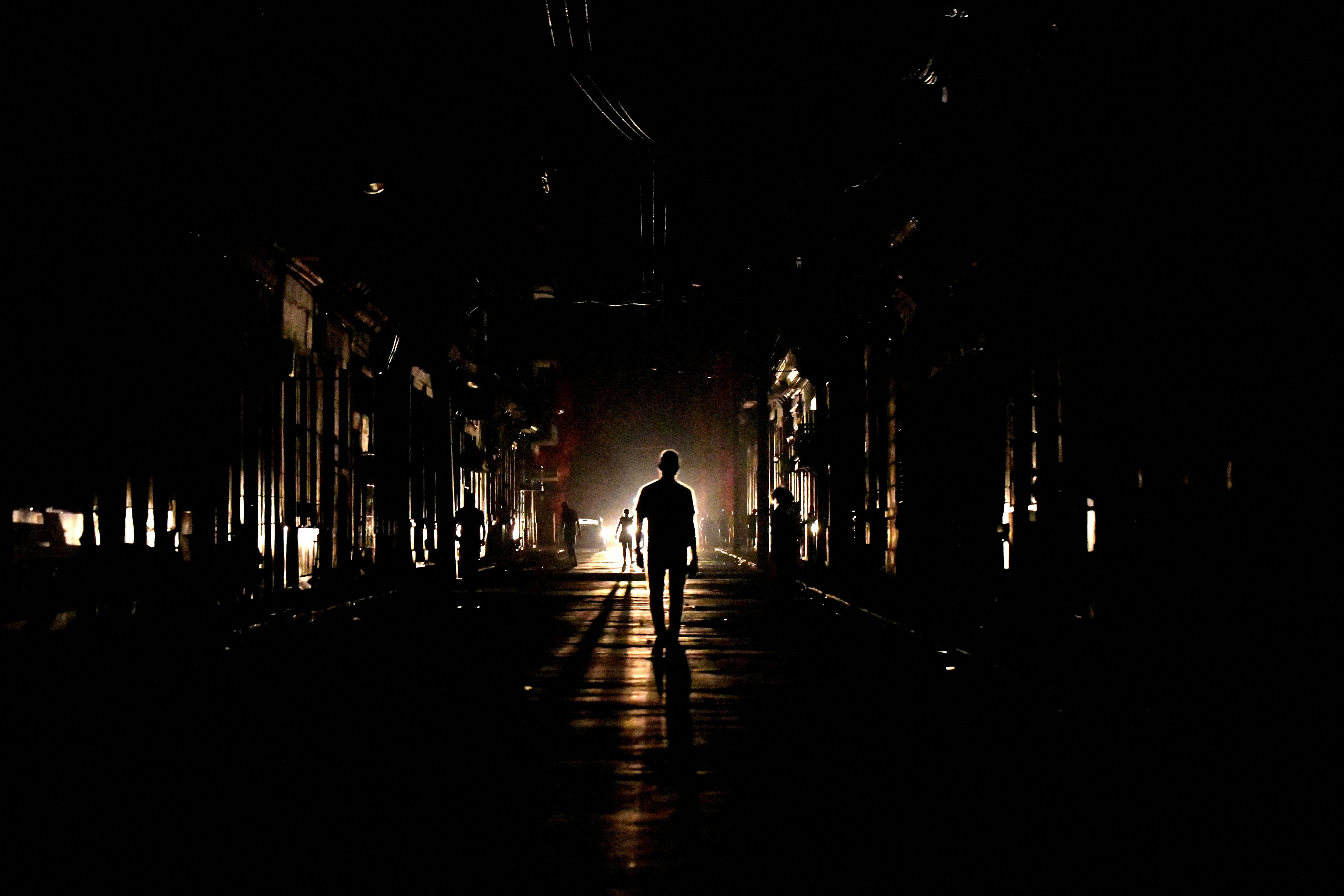
Eastern Libya experienced a dramatic power collapse on Thursday evening when a widespread blackout swept across the region, leaving cities including Benghazi and Marj without electricity. The outage affected a substantial portion of the territory and disrupted daily life for residents across multiple urban centres and surrounding neighbourhoods, according to local news reports and visual evidence from affected areas.
Benghazi, Libya's largest eastern city, bore the brunt of the blackout, with large sections plunged into complete darkness. Footage circulating from the city and surrounding areas, including the town of Marj, showed streets and residential neighbourhoods devoid of lighting and electrical services. The scale of the outage underscored the fragility of Libya's electricity infrastructure and its vulnerability to systemic failures that can cascade rapidly across interconnected power networks.
The Electricity Ministry, representing Libya's eastern-based administration appointed by the House of Representatives, responded by announcing that several generation units had been brought back into operation following the blackout. This partial restoration marked the beginning of a gradual recovery process designed to carefully manage the reintroduction of power across the network. The ministry prioritised critical infrastructure, restoring electricity to Benghazi's 1,200-bed hospital and several neighbourhoods on the city's southern edge to ensure essential medical services remained operational.
Technical teams deployed across generation facilities, transmission infrastructure, and distribution networks to systematically address damage and faults causing the blackout. The ministry stressed that power loads would be restored incrementally rather than suddenly, a precautionary measure essential for preventing secondary grid instability that could trigger cascading failures across the entire system. This methodical approach, though slow to restore full service, represents standard protocol for managing large-scale electrical outages in complex networks.
Libya's electricity crisis reflects far broader institutional and security challenges facing the North African nation. Beyond the immediate blackout, eastern Libya has endured escalating instability including armed clashes in western cities such as Zawiya and Sorman, coordinated drone strikes targeting oil production facilities in the Zawiya region, and the chronic electricity shortages that have plagued residents for months. These converging crises demonstrate how security fragmentation directly undermines the government's capacity to deliver basic services and maintain critical infrastructure.
The root cause of Thursday's blackout remained under investigation as technical teams gathered data from across the power system. Early indications pointed to failures in generation capacity or transmission infrastructure, though definitive conclusions would emerge only after comprehensive assessment. The incident highlights the systemic vulnerabilities in Libya's power sector resulting from years of underinvestment, deferred maintenance, and the operational disruptions stemming from ongoing conflict.
Libya's political paralysis has proven particularly destructive to infrastructure resilience. The country remains bifurcated between two competing power centres: Prime Minister Abdul Hamid Dbeibah's internationally recognised Government of National Unity, headquartered in Tripoli and controlling western Libya, and a rival administration appointed by the House of Representatives and led by Osama Hammad operating from Benghazi in the east. This division of authority has fragmented institutional capacity, duplicated bureaucracies, and created competing claims on scarce resources.
The persistence of dual government structures has effectively prevented unified national policy on critical issues including infrastructure development and maintenance. The Electricity Ministry's ability to coordinate and fund repairs across the entire national grid remains compromised by the absence of a single, legitimate central authority. This institutional fracture means that major repairs and system upgrades proceed haltingly, if at all, and emergency responses to crises like Thursday's blackout lack the resources and coordination that a unified government could mobilise.
International diplomatic efforts to resolve Libya's political deadlock have stalled for years. The UN Support Mission in Libya (UNSMIL) continues attempting to mediate between rival factions and facilitate resolution of disputes that have repeatedly postponed national elections. Libyans themselves view elections as potentially transformative, offering hope that competitive democratic processes might bridge political divisions and terminate cycles of armed conflict that have persisted since the 2011 uprising that overthrew Muammar Gaddafi. The delay in holding elections has only entrenched rival governance structures and diminished prospects for institutional reform.
For Malaysian observers and Southeast Asian policymakers, Libya's experience offers instructive lessons about the intimate connection between political legitimacy, institutional capacity, and infrastructure provision. The failure to establish singular, broadly-accepted governmental authority has cascading consequences for citizens' material welfare. When competing power centres lack the political will or the resources to cooperate on technical questions, even essential systems like electricity networks deteriorate. The blackout affecting eastern Libya represents not merely a technical failure but a symptom of deeper state fragmentation.
The gradual restoration of power to Benghazi and surrounding areas provides temporary relief, yet addresses neither the underlying political dysfunction nor the infrastructure deficit that produced the blackout. Without resolution of Libya's governance crisis and sustained investment in power generation and transmission capacity, citizens will likely experience recurring outages and service interruptions. The episode underscores how unresolved political conflicts ultimately harm ordinary people through degraded public services, even as political elites pursue abstract power contests.

