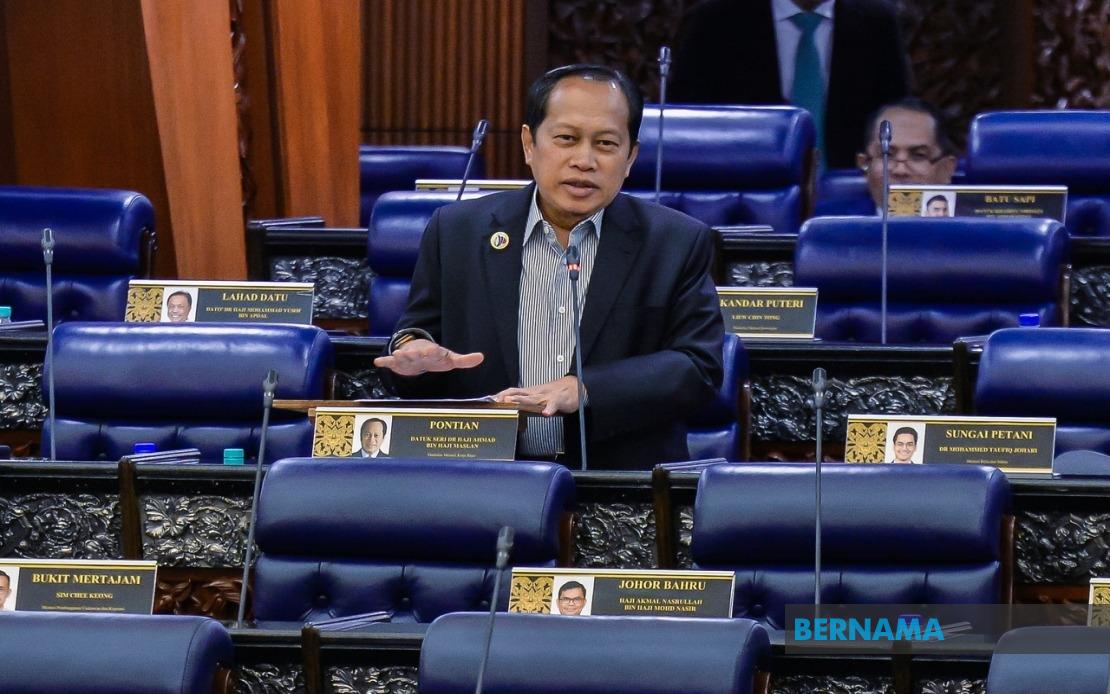
The Federal Government will develop the East Coast Expressway Phase 3 (LPT3) through a public-private partnership arrangement, Deputy Works Minister Datuk Seri Dr Ahmad Maslan revealed in Parliament, reflecting mounting budgetary pressures on infrastructure spending. The decision to shift away from conventional government-funded development signals a broader strategic pivot as Malaysian authorities increasingly turn to the private sector to shoulder development costs for major transport corridors. Speaking during a question-and-answer session in the Dewan Rakyat, Ahmad explained that the financial constraints confronting the Federal Government made the PPP model the most pragmatic route forward for delivering this critical regional infrastructure project.
The implementation framework centres on a Request for Proposal process, whereby a successful private bidder will assume full responsibility for development expenditure from conception through completion. This approach transfers the financial burden and execution risk to the private operator, allowing government to preserve capital for other spending priorities whilst still advancing connectivity across the East Coast region. The selected concessionaire will bear all upfront costs, a structure that distinguishes this project from traditional government-delivered expressway schemes that have historically required substantial direct public investment.
The proposed expressway will traverse a 122-kilometre corridor, featuring dual two-lane carriageways stretching from Kampung Gemuruh in Kuala Terengganu to Tunjung in Kota Bharu. The infrastructure plan incorporates five interchange points to facilitate traffic management and regional connectivity. Based on a 2022 feasibility study, development costs are estimated at RM9.8 billion, though this figure may shift once detailed design work commences and market conditions are assessed during the bidding phase. The significant capital outlay underscores why private funding became necessary given current fiscal constraints.
Ahmad positioned LPT3 as a complementary addition to an expanding network of East Coast transport infrastructure rather than a standalone priority. The expressway would function as a third travel option for residents moving between the East Coast and Klang Valley regions, supplementing the soon-to-be-operational East Coast Rail Link and future road connections including the Kota Bharu-Kuala Krai Expressway and Lingkaran Tengah Utama Expressway. This staggered approach to transport development suggests the government recognises that existing routes currently cope adequately with regular traffic demands, experiencing meaningful congestion primarily during peak holiday periods such as Hari Raya and school holidays.
The toll pricing structure remains fluid pending final determination of multiple variables. Ahmad indicated that rates would ultimately reflect construction expenses, financing costs, operational and maintenance requirements, anticipated traffic volumes, and the length of the concession period agreed between government and the operator. This graduated approach to pricing illustrates how PPP schemes distribute risk and revenue across project lifecycles. The absence of finalised toll parameters demonstrates that significant planning work remains before the RFP process can be launched.
Concession arrangements, including the duration of the operator's exclusive rights, toll collection systems, and physical toll gantry infrastructure, have yet to be crystallised. These details will be determined through negotiations with the winning bidder and require careful calibration to ensure the private investor achieves acceptable returns whilst maintaining public acceptance of toll charges. The extended timeline for settling these terms reflects the complexity inherent in structuring long-term infrastructure partnerships that must balance commercial viability with public utility objectives.
For Malaysian observers, this pivot towards PPP funding models highlights growing fiscal strain on government infrastructure budgets despite development ambitions across multiple regions. The decision to externalize LPT3 financing follows similar arrangements for other major projects, suggesting that public-private partnerships will increasingly become the default delivery mechanism for major transport infrastructure rather than an exceptional alternative. This shift has implications for toll rates, service quality, and long-term cost recovery expectations that users should understand.
The broader transport landscape emerging across the East Coast reflects deliberate policy sequencing rather than simultaneous mega-project rollout. By spacing the introduction of the ECRL, regional expressways, and now LPT3, government hopes to manage infrastructure delivery whilst allowing market conditions to stabilise. The rationale for LPT3's positioning as a supplementary corridor rather than an urgent priority suggests traffic modelling indicates existing capacity will remain adequate for foreseeable demand, particularly given complementary transport options coming online through 2025 and beyond.
From a Southeast Asian perspective, Malaysia's reliance on PPP mechanisms for tier-two transport infrastructure mirrors regional trends as governments face competing demands on limited capital budgets. The model enables expansion of connectivity networks whilst preserving fiscal space for social expenditure and development priorities in underserved regions. However, PPP structures typically result in higher user costs through toll charges than government-funded alternatives, creating equity considerations that policymakers must weigh against infrastructure expansion objectives.

