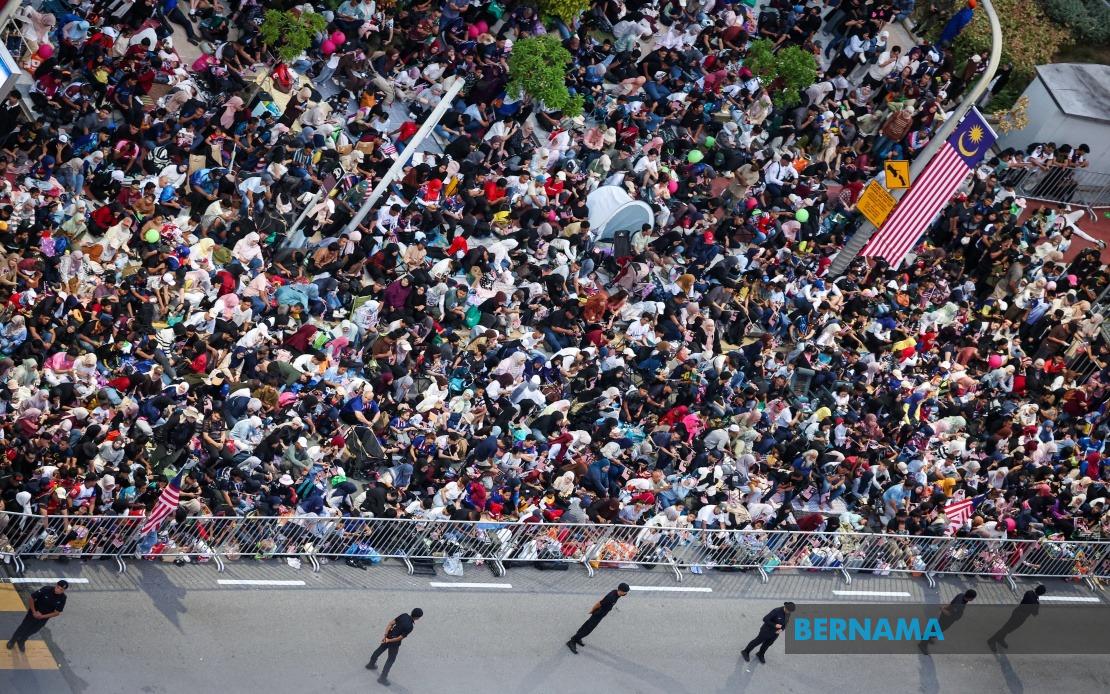
Thousands of Malaysians converged on Dataran Putrajaya ahead of the 69th National Day celebration, with eager spectators pitching camp from late evening onwards in a determined bid to claim premium positions along the parade route. The anticipated gathering reflected the continued appeal of witnessing the nation's flagship patriotic event in person, particularly after two years of scaled-back arrangements during the pandemic period.
Among the early arrivals was Mock Wei Qi, a 23-year-old freelance photographer who reached the venue with friends at 11 pm to position himself strategically for capturing the day's proceedings. His motivation extended beyond mere spectatorship; the group sought to harness the pageantry as creative material for their cinematography portfolio. By documenting Malaysia's distinctive cultural and national characteristics through high-quality visual content, they aimed to present an authentic portrait of the country to audiences beyond its borders. For emerging creative professionals like Mock Wei Qi, such high-profile national events represent valuable opportunities to refine technical skills whilst contributing to positive narratives about Malaysia.
Family groups equally demonstrated their commitment to attending, with many prioritising the experience as part of school holiday activities for their children. One couple known as As and Adib made the deliberate decision to arrive by 5 pm, having learned from their previous year's experience when late arrival relegated them to distant vantage points. Their determination reflected a broader sentiment among Malaysian families seeking to create memorable moments and deepen their children's connection to national traditions during formative years.
Ahmad Azri Onn, 55, transformed what could have been an uncomfortable overnight wait into an engaging family camping experience. Arriving at approximately 5.30 pm with his wife and three children aged between 10 and 15, he discovered that favourable weather conditions—including brief drizzle that provided relief from daytime heat—actually enhanced the occasion rather than detracting from it. His account revealed how families increasingly view National Day observance not as a passive viewing exercise but as an interactive experience that bonds generations around shared national pride.
The 69th National Day celebration carried particular significance in 2024, operating under the theme "Malaysia MADANI: Kesejahteraan Dinikmati," a phrase reflecting the government's broader policy framework emphasising shared prosperity and collective wellbeing. This thematic orientation resonated with diverse segments of Malaysian society, from urban professionals documenting the event through creative media to provincial families seeking cultural connection and national affirmation during holiday periods.
Dataran Putrajaya's role as the official venue underscored the ceremonial importance assigned to the capital's purpose-built civic space. The concentration of spectators throughout the morning hours in anticipation of the 8 am commencement demonstrated how National Day celebrations maintain their capacity to mobilise public participation across demographic categories. The phenomenon of pre-dawn and overnight camping, once associated primarily with entertainment events or product launches, had become normalised within the patriotic observance context.
From a sociological perspective, the mass gathering illuminated how Malaysians, despite their diversity and occasional political divisions, converge around symbols of national identity and occasion. The diversity of motivations—from photographers seeking creative expression to families building intergenerational memories to individuals simply affirming belonging within the national community—underscored the multifaceted appeal of such observances. National Day served simultaneously as cultural spectacle, family occasion, professional opportunity, and patriotic obligation.
The crowd management requirements generated by such concentrated gatherings posed logistical challenges that reflected broader patterns within Malaysian civic life. Dataran Putrajaya's expansion and infrastructure development in preceding years specifically accommodated large-scale public assemblies, indicating forward planning by authorities to enable such demonstrations of national engagement. The successful accommodation of thousands of overnight campers without reported significant incidents suggested effective coordination among security, public health, and event management agencies.
For many Malaysian observers, the spectacle represented something beyond ceremonial tradition. The participation of content creators, tourists, families, and patriots suggested that National Day celebrations had evolved into comprehensive social events serving multiple functions within the national calendar. The themed messaging around Malaysia MADANI added contemporary relevance to what might otherwise constitute merely historical commemoration, embedding the 69th National Day within ongoing conversations about national direction and collective aspirations.
The early morning activity visible at Dataran Putrajaya reflected broader patterns of Malaysian civic engagement, suggesting that despite contemporary polarisation in political discourse, significant numbers of citizens remained invested in public participation around national symbols and observances. Whether motivated by patriotic sentiment, family values, professional interests, or cultural attachment, the diverse participants who arrived at Dataran Putrajaya that morning demonstrated the continued resonance of Malaysia's founding narrative and the enduring appeal of collective commemoration. Their presence, camped beneath tropical skies in the pre-dawn darkness, constituted a form of civic participation that reaffirmed national bonds across generations and communities.

