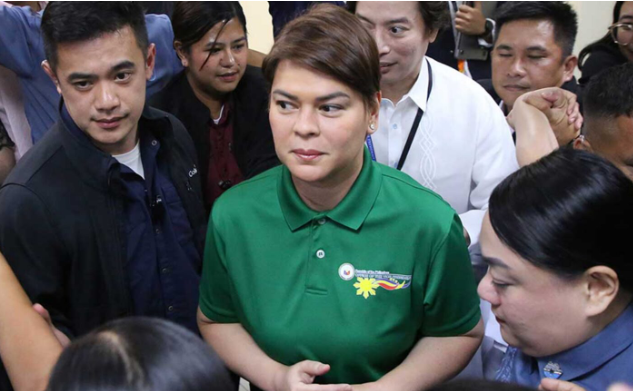
The impeachment trial of Vice President Sara Duterte entered a critical phase on Tuesday as she doubled down on assertions that the case against her—involving allegations of an assassination plot targeting President Ferdinand R. Marcos Jr, First Lady Liza Marcos and former Speaker Martin Romualdez—rests on a foundation of unverified claims rather than solid factual grounds. Speaking before the day's proceedings commenced, Duterte seized on developments from the fourth day of hearings to reinforce her defence narrative, suggesting that inconsistencies uncovered by her legal team had vindicated her position that the entire complaint represents a fabrication rather than a genuine threat assessment.
The prosecution's presentation reached a critical juncture when Duterte's chief of staff, Zuleika Lopez, was summoned as the House prosecution panel's third witness, an appearance that carried particular significance given Lopez's proximity to the Vice President and her potential knowledge of any communications or meetings central to the allegations. The timing of Lopez's testimony coincided with growing scrutiny of the prosecution's evidentiary foundation, particularly following defence counsel Mark Vinluan's cross-examination of the previous witness. During this exchange, Vinluan exposed what appeared to be structural problems in the documentation process, highlighting mismatches between the dates recorded in affidavits and the corresponding docket numbers maintained by the National Bureau of Investigation.
Duterte's statement on Tuesday crystallised her core defence strategy: that the complaint conflates unsupported allegations with legitimate evidence, essentially asking the Senate to convict her based on narrative rather than documentation. She characterised the prosecution's approach as involving "repeatedly claiming that there were threats when none existed, inventing an assassin where there was none, and fabricating evidence to support those claims." This framing transforms the impeachment from a legal proceeding into what Duterte presents as an institutional credibility crisis, one in which the normal safeguards protecting the rule of law have been abandoned in pursuit of a predetermined outcome.
The technical inconsistencies uncovered during cross-examination carry significance beyond mere procedural nitpicking. Dating discrepancies and incorrect docket references in official National Bureau of Investigation documentation raise fundamental questions about the care with which evidence was compiled and presented to the House of Representatives. For Malaysian observers familiar with Southeast Asian legal systems, such evidentiary gaps would typically trigger serious judicial concerns about chain of custody and the reliability of investigative work. Duterte's team has weaponised these gaps strategically, using them to suggest that sloppiness in documentation reflects deeper problems with the substantive claims themselves.
The proceeding currently focuses on Article IV of the impeachment complaints, which centres on the kill plot revelation that Duterte herself disclosed, making this the most explosive and sensitive aspect of the entire case. Rather than disputing whether she discussed such matters, Duterte's defence appears centred on the contention that any discussion involved hypothetical scenario-planning rather than actual assassination intentions, and that the prosecution has extrapolated wildly from these conversations to construct criminal allegations unsupported by evidence of concrete planning or capability. This distinction—between discussing worst-case scenarios and actually plotting them—may prove crucial to the Senate's eventual determination.
The pace of the trial underscores the monumental task ahead for all parties involved. The House prosecution team has presented only two witnesses while tackling Article IV, yet they have already consumed a substantial portion of their allocated eleven days for this segment. With 92 days provisionally scheduled for the entire trial, impeachment proceedings may well extend into early 2027, creating an extended period of political uncertainty that could complicate governance and policy implementation. For a nation already navigating complex political dynamics, such prolonged constitutional drama carries costs beyond the immediate courtroom conflict.
Duterte's absence from the trial proceedings represents another dimension of the ongoing dispute. Her decision not to attend in person contrasts sharply with traditional expectations for constitutional trials, where the accused typically maintains a visible presence. This strategic choice may reflect her legal team's assessment that her presence adds little evidentiary value while potentially exposing her to procedural pitfalls or unfavourable visual narratives. Alternatively, it signals confidence that her defence can succeed through documentary and witness testimony without requiring her personal participation.
The broader implications for Philippine governance extend beyond Duterte's individual fate. The trial has already consumed significant institutional attention and resources at both the House and Senate levels, diverting focus from legislative and oversight functions. From a Malaysian perspective, where executive-legislative relations have experienced their own turbulence, the Philippines' extended impeachment process demonstrates how constitutional mechanisms designed to check executive power can themselves become vehicles for political conflict, with uncertain results for institutional stability and public confidence.
Duterte's characterisation of the proceedings as undermining "the integrity of public institutions, eroding public trust, and wasting public resources" appeals to a broader constituency beyond her immediate political base—namely, citizens concerned about institutional functionality regardless of their views on the Vice President herself. By framing her defence as a stand for evidentiary rigor and the rule of law, she positions herself not merely as a defendant but as a guardian of constitutional principle, arguing that convicting her without solid evidence would represent a dangerous precedent for all future office-holders.
The Senate's task remains formidable: weighing the prosecution's narrative against the defence's technical objections while maintaining constitutional propriety. As the trial grinds forward through early 2027, each day of proceedings will continue generating ammunition for both sides of the Philippine's deepening political divide, with regional implications for how Southeast Asian democracies navigate high-stakes constitutional conflicts between competing branches of government.

