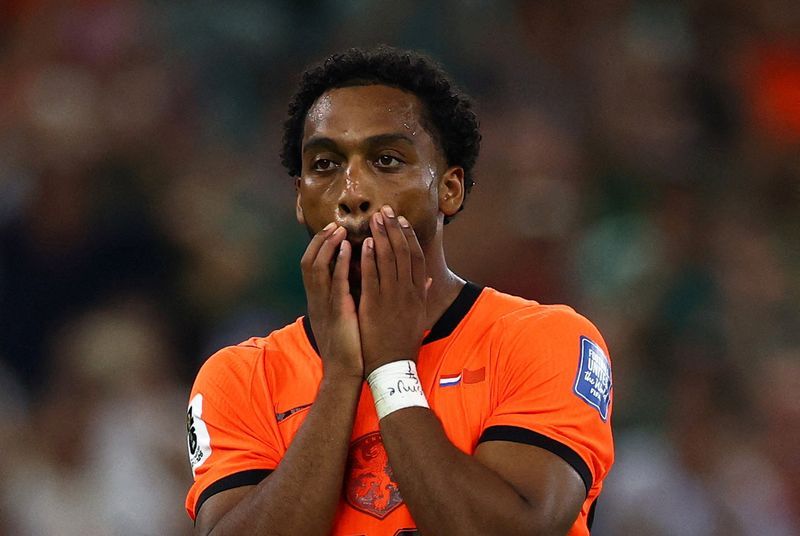
The Netherlands football association responded swiftly on Tuesday to a troubling wave of online harassment directed at three of its players following their team's World Cup elimination at the hands of Morocco. The incident unfolded after a tense last-32 encounter in Monterrey that went to penalties, with the Dutch ultimately falling short 3-2 after the match ended 1-1 following extra time. Justin Kluivert, Quinten Timber, and Crysencio Summerville, who each failed to convert their spot-kicks during the shootout, became targets for coordinated discriminatory attacks across social media platforms in the immediate aftermath of the match.
The KNVB's public condemnation of the abuse marks an institutional acknowledgment of a problem that has become distressingly common in professional football over recent years. The association stated unequivocally that such conduct is unacceptable and announced it would escalate the matter by filing a formal report with Meld Online Discriminatie, an organization specializing in documenting and addressing online discrimination. This step represents more than symbolic gesture; it initiates a procedural chain that could result in serious legal consequences for those responsible. The organization's legal team undertakes assessment of whether reported comments meet the threshold for criminal offense under Dutch law, with positive determinations potentially leading to complaints being submitted to the Public Prosecution Service, which retains authority to launch criminal investigations into perpetrators.
The incident involving the Dutch players is unfortunately not an anomaly in modern sports culture. A particularly vivid precedent occurred following England's heartbreaking loss to Italy in the 2021 European Championship final. Marcus Rashford, Bukayo Saka, and Jadon Sancho all endured torrents of racist invective on social media platforms after their penalty misses in that match. The response from British authorities was notably vigorous, with police launching what observers characterized as a widespread crackdown on online hate speech targeting the players. The legal consequences were tangible: two individuals received custodial sentences while another received a suspended prison term, sending a signal that such behavior carried real criminal liability.
The repetition of this pattern across multiple major tournaments raises broader questions about the structural vulnerability of players of color in high-pressure competitive situations. The phenomenon appears linked to the intense emotional investment surrounding penalty shootouts combined with algorithmic amplification on social media platforms that can rapidly concentrate hateful content. Penalty misses in knockout competitions represent moments of heightened vulnerability for players, as they bear individual responsibility for outcomes in collective competitions. This individualization of blame appears to create psychological opportunity for bad-faith actors to weaponize racialized abuse in ways less common following defeats attributed to collective factors.
The KNVB's statement emphasized a philosophical argument about football's fundamental nature and values. The association articulated that the sport functions as a unifying force capable of bringing together millions of individuals from vastly different backgrounds, cultures, and experiences. Discrimination, by contrast, operates as a centrifugal force, actively fragmenting communities and undermining social cohesion. This tension between football's integrative potential and the divisive behavior of some observers remains unresolved despite years of awareness campaigns and enforcement actions. The association's framing positions online racism not merely as a matter of individual player welfare but as an assault on football's core identity and universal appeal.
For Malaysian and Southeast Asian readers, this episode carries particular resonance given the region's own complex history with racial dynamics in sports. The problem of online abuse targeting athletes of different ethnic backgrounds resonates across the region's multicultural societies. Malaysian football fans have witnessed similar incidents targeting domestic players on social media platforms, reflecting broader patterns of how digital technologies can amplify pre-existing societal prejudices. The Dutch response—moving beyond statement-making to formal legal mechanisms—provides a potential template for how sporting bodies and governments across Southeast Asia might approach similar challenges within their own jurisdictions.
The World Cup setting amplifies the significance of such incidents. Unlike domestic league competition, World Cup knockouts attract massive global audiences and generate intense emotional responses transcending typical sporting interest. The concentration of vast audiences watching simultaneously creates conditions where hateful rhetoric can achieve extraordinary scale and velocity on social platforms. For players participating in these contests, the stakes extend beyond sporting achievement to questions of personal dignity and safety in the digital sphere. This became apparent following the England-Italy match, where the psychological impact on affected players proved substantial enough to warrant public discussion and therapeutic intervention.
The question of platform responsibility remains conspicuously absent from the KNVB's public statement, though it looms importantly behind the scenes. Social media companies have faced sustained criticism for inadequate responsiveness to reports of discriminatory content, particularly when such content targets individuals who are disproportionately harassed based on race or ethnicity. The mechanics of algorithmic amplification mean that hateful posts can achieve exponential reach within hours, inflicting reputational damage and psychological harm before removal mechanisms engage. The legal approach—criminal investigation of individual posters—addresses symptoms rather than the systemic features that enable such content to flourish at scale.
Looking forward, the incident involving the Dutch players may prompt deeper institutional conversations about how football can better protect players in the digital age. Some governing bodies have explored partnerships with technology companies to develop rapid response mechanisms for discriminatory content. Others have investigated ways to shield players from social media exposure during particularly vulnerable moments, such as immediately following major competition eliminations. The Netherlands' decision to pursue formal legal remedies establishes that state machinery remains available to address the most severe cases, even as broader preventive strategies receive development at organizational and technological levels.

