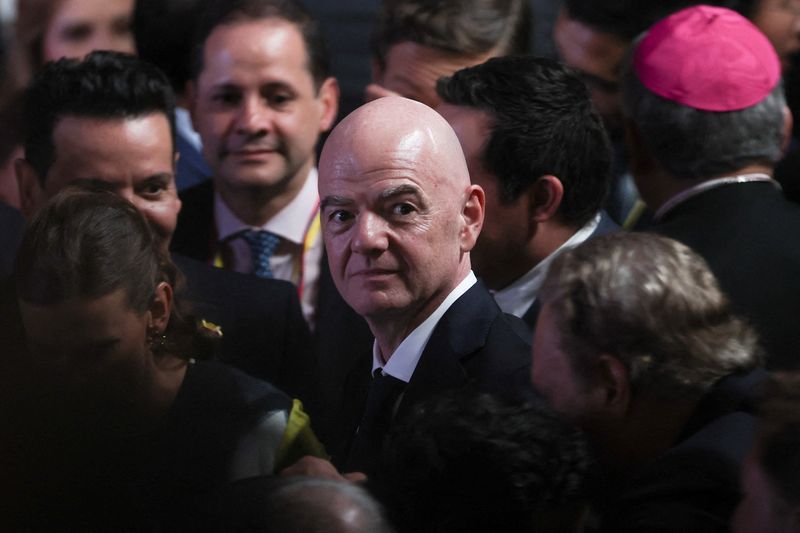
The Royal Dutch Football Association (KNVB), one of FIFA's oldest member organisations, has formally lost confidence in the leadership of President Gianni Infantino and is pushing for a wholesale transformation of international football's governance structures. In a statement released on Sunday, the KNVB—which has been part of FIFA since its founding in 1904—announced plans to convene an International Summit on the Future of FIFA in Amsterdam, with the explicit goal of replacing Infantino and implementing deep institutional reforms before 2027.
The Dutch association's withdrawal of support marks a significant turning point in the growing international pressure facing Infantino ahead of his scheduled re-election in March next year. The move reflects broader unease among major football confederations following Infantino's controversial proposal to sell stakes in FIFA's flagship events, including the World Cup, to private equity investors—a scheme that ultimately foundered after fierce resistance from world football's established powers.
What distinguishes the KNVB's position from typical leadership challenges is its emphasis that changing the president alone will not suffice to address FIFA's systemic problems. The Dutch body argues that the fundamental architecture of FIFA governance has become too concentrated around a single individual, creating what it characterises as excessive centralisation of power. This concern resonates across European and other football confederations, which have grown increasingly frustrated with decision-making processes they view as opaque and unaccountable.
The KNVB's three-pillar reform agenda addresses governance, human rights, and international cooperation. On governance specifically, the association demands stronger checks and balances to prevent the accumulation of power in the presidential office and greater separation between the president and FIFA's administrative apparatus. This reflects a broader pattern in international organisations toward distributing authority and creating institutional safeguards against individual overreach.
A second dimension of the proposed reforms concerns FIFA's commitment to human rights and sustainability standards in its operations and tournament hosting decisions. The KNVB wants these principles embedded at the centre of FIFA decision-making rather than treated as peripheral considerations. For Southeast Asian football federations observing this debate, stronger human rights frameworks could have implications for how tournaments are allocated and how workers' rights are protected during major football events.
The Dutch association also champions a more collaborative model of international cooperation within FIFA's sprawling membership of 211 national associations. Rather than top-down directives emanating from FIFA headquarters in Zurich, the KNVB proposes that major strategic decisions be developed in genuine consultation with confederations representing all geographical regions. This emphasis on inclusive global dialogue carries particular significance for developing football nations, which often feel sidelined in major decision-making processes.
Financial redistribution forms another cornerstone of the KNVB's vision. The association advocates for FIFA to redirect up to 90 percent of its distributable revenue back into grassroots football development and capacity-building. This proposal challenges Infantino's tenure, during which FIFA has accumulated substantial reserves and operated with revenue retention patterns that some confederations view as insufficient reinvestment in global football's expansion. For Malaysian football and the broader Southeast Asian football ecosystem, greater redistribution could unlock funding for development programmes, youth academies, and infrastructure improvement.
The KNVB's statement pointedly notes that it previously supported Infantino's election but made clear that such support was never unconditional. This language signals that even historical allies can withdraw backing when governance concerns become sufficiently acute. The association's emphasis that the Amsterdam summit must address "what kind of FIFA we want" before identifying replacement leadership suggests a desire to establish reform principles that would bind any successor administration.
Crucially, the KNVB frames its initiative as a global process rather than a European project, explicitly stating it welcomes participation from confederations across all regions. This framing acknowledges the political sensitivity around wealthy European associations appearing to impose their governance preferences on developing football nations. By positioning the summit as genuinely inclusive rather than a European power play, the KNVB strengthens its coalition-building potential.
The timing of this intervention intersects with separate legal pressures on Infantino. UEFA has sought permission from a United States federal court to obtain testimony and documents from FIFA entities based in Florida, materials that would support a planned criminal complaint against Infantino in Switzerland. While the KNVB's governance initiative operates on a separate track from these legal matters, the convergence of institutional and legal pressure creates a challenging environment for Infantino's presidency.
For Malaysian football administrators and Southeast Asian confederations, the unfolding FIFA governance crisis carries practical implications. The outcome will shape not only how future World Cups and continental tournaments are organised, but also how development funding flows to smaller football markets, how human rights standards are enforced, and whether major decisions reflect consensus among football's genuine global community or remain concentrated in a handful of wealthy federations' hands. The KNVB's call for systemic reform, if successful, could establish precedents for greater democratic accountability within international sports governance structures more broadly.

