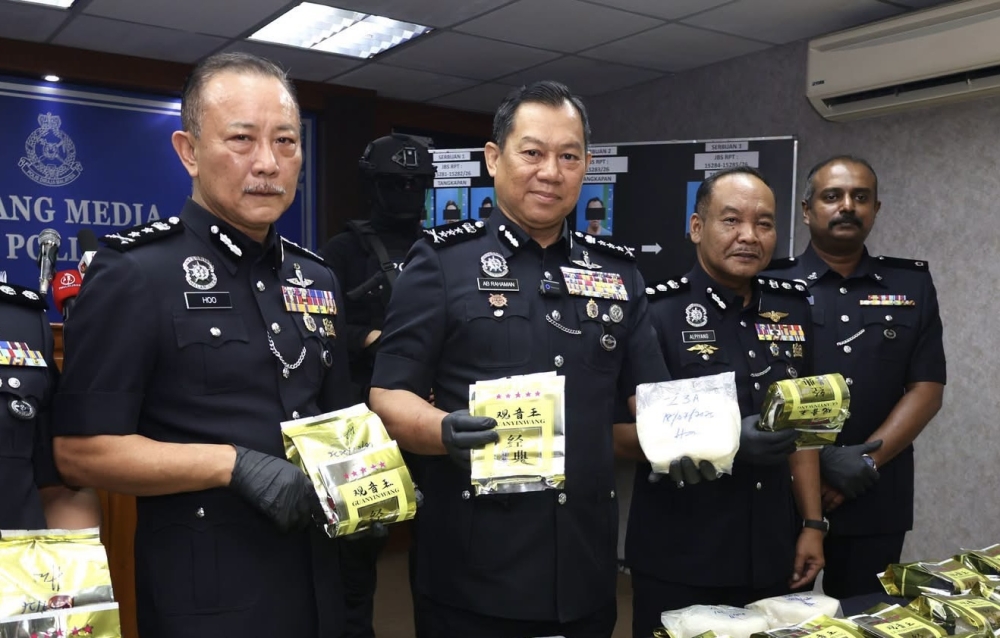
Law enforcement authorities in Johor Bahru have dealt a significant blow to organised drug trafficking operations in the southern state, securing eight arrests during a carefully coordinated series of raids. The operation, which concluded in late July, disrupted what police characterised as a functioning synthetic drug distribution network that had been operating across multiple locations in the city. The ages and circumstances of those detained reveal how narcotics organisations increasingly recruit younger individuals into their supply chains, raising fresh concerns about drug-related crime in the state.
Among those apprehended was a 16-year-old whose involvement exemplifies a troubling pattern within the region's drug trade. Rather than operating from conventional premises, the suspected trafficking group had exploited personal assets—specifically an elderly relative's vehicle—to store and distribute controlled substances. The use of family members' cars as mobile storage facilities demonstrates the adaptability of criminal networks in circumventing traditional law enforcement surveillance and detection methods. This approach allows distributors to maintain apparent normalcy while conducting illicit business across the city's residential and commercial areas.
The coordinated nature of the police response, involving simultaneous operations at multiple addresses, suggests substantial investigative groundwork had preceded the enforcement action. Such raids require advance intelligence gathering, surveillance, and operational coordination between various police divisions. The intelligence likely pointed to specific individuals and locations, enabling officers to execute search warrants strategically timed to maximise impact and prevent suspects from destroying evidence or fleeing the jurisdiction. The success of the operation demonstrates the Johor police's capacity to mount complex, multi-target investigations into organised crime.
Synthetic drugs remain among the most pressing law enforcement challenges across Malaysia and Southeast Asia more broadly. These substances—encompassing methamphetamine, MDMA, and emerging designer drugs—command high street values and attract substantial criminal investment. Unlike traditional narcotics requiring cultivation, synthetic drugs can be manufactured covertly in small laboratory spaces, making supply networks harder to dismantle at source. The distributed nature of production and distribution, combined with constantly evolving chemical formulations designed to circumvent drug scheduling laws, creates persistent enforcement difficulties.
The recovery of substances and cash during the raids underscores the scale of the operation's commercial activity. Financial assets seized provide evidence of money laundering and trafficking proceeds, crucial to prosecution cases and asset forfeiture procedures. The quantities of drugs recovered indicate this was not merely casual trafficking among friends but a structured distribution network with multiple tiers and regular turnover. For Malaysian authorities, disrupting such networks requires not only arrest and prosecution but also sophisticated financial investigation to trace money flows and identify senior organisers who may remain insulated from direct involvement in street-level transactions.
Youth involvement in drug distribution presents particular challenges for policymakers and law enforcement. Younger recruits often face lower sentencing if prosecuted and may be perceived as more expendable by criminal organisations managing supply chains. The 16-year-old's presence among the arrested highlights how drug organisations target vulnerable youth who may face economic pressures or lack alternative employment opportunities. Understanding the pathways through which adolescents become entangled in these networks—whether through peer pressure, economic desperation, or family connections—remains essential for prevention and intervention strategies.
The incident reflects broader crime trends within Johor Bahru, a major urban centre serving as a commercial hub and regional transit point. Its geographic proximity to Singapore and position within established shipping and logistics corridors make it attractive to trafficking organisations. Supply lines moving through the city connect to regional and international markets, meaning local enforcement efforts intersect with transnational crime dynamics. Cross-border cooperation between Malaysian, Singaporean, and other Southeast Asian law enforcement agencies therefore remains critical to addressing the root causes of trafficking flows.
Prosecution of the eight individuals will proceed through Malaysia's stringent drug laws, which carry substantial penalties for trafficking and distribution offences. The legal framework treats drug trafficking as a serious criminal matter, with mandatory minimum sentences and the possibility of capital punishment for large-quantity offences. Defence counsel will likely argue mitigating circumstances for younger defendants, though courts typically maintain firm sentencing approaches in drug cases. Convictions will add to official records of organised drug crime in the state and may yield intelligence useful for disrupting connected criminal networks.
The case underscores the importance of sustained police operations and investment in drug enforcement capacity. Dismantling individual trafficking networks proves only partially effective without corresponding strategies addressing demand reduction, treatment access, and prevention among vulnerable populations. Malaysian policymakers continue balancing enforcement-focused approaches with public health interventions aimed at reducing drug consumption and supporting addiction recovery. The Johor Bahru operation, whilst notable as an enforcement success, represents one intervention within a much larger challenge confronting the region.

