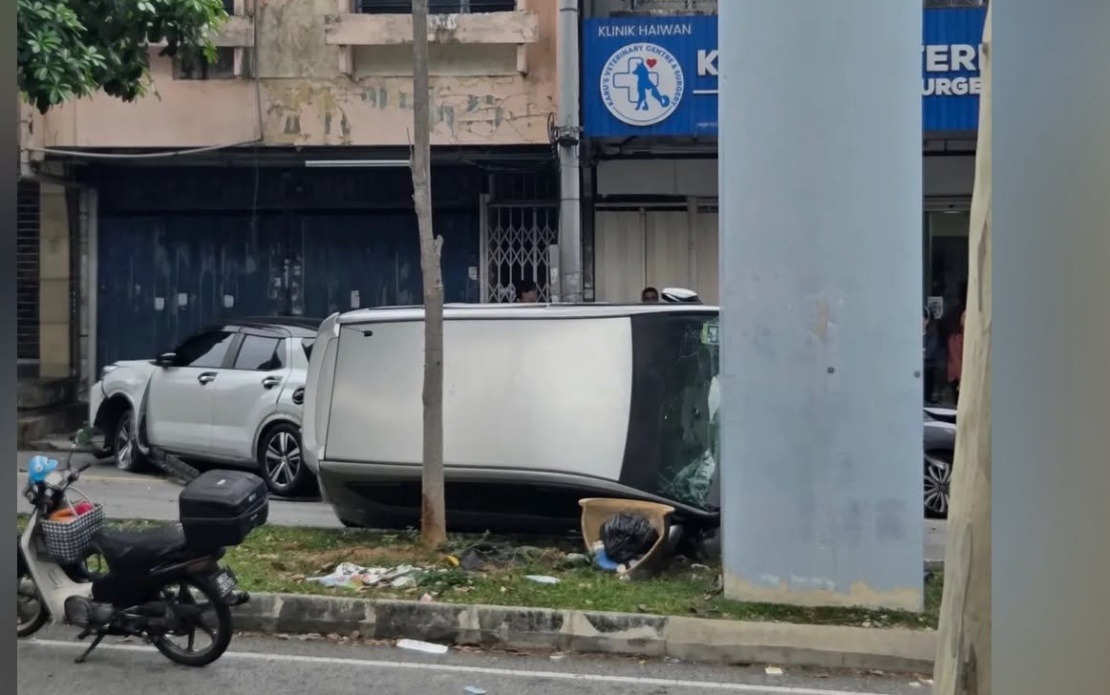
A medical emergency transformed into a significant traffic incident on Kuala Lumpur's Jalan Midah 1 in Cheras when a 28-year-old motorist suddenly experienced a seizure whilst operating his BMW 320i, resulting in a chain collision involving six stationary vehicles parked along the roadside. The incident unfolded at approximately 8.30 am, disrupting the morning commute in this residential and commercial area of the capital. Traffic police attributed the crash to the driver's sudden loss of bodily control, which prevented him from maintaining his vehicle's trajectory as he made his way from home to his workplace in Taman Midah 1.
According to a statement released by Kuala Lumpur Traffic Investigation and Enforcement Department chief ACP Mohd Zamzuri Mohd Isa, the sequence of events began when the driver lost consciousness momentarily, causing him to lose grip over the steering mechanism. The BMW then drifted across its lane before mounting the left shoulder of the road, where it struck the six parked vehicles in succession. The sheer momentum of the impact meant that multiple vehicles bore the brunt of the collision, though fortunately none contained occupants at the time of the crash.
The six vehicles damaged in the incident belonged to four women aged between 29 and 43, a 39-year-old man, and one commercial vehicle operated by a company. This diversity of vehicle ownership indicates the incident affected both private motorists and commercial operators who happened to have parked in the vicinity. The financial and administrative consequences for these vehicle owners will likely be substantial, as they must now navigate insurance claims and repair processes. The fact that all vehicles were unoccupied represented a crucial stroke of fortune, as any occupants could have suffered serious injury or worse from the unexpected impact.
Police investigations revealed that the driver's medical condition was not a one-time occurrence but rather part of a chronic pattern spanning approximately a decade. Records indicate the 28-year-old has experienced seizures for about ten years, raising questions about whether he should have been operating a motor vehicle on public roads. The existence of a known seizure disorder creates complex legal and medical considerations regarding driving privileges and the duty of care that motorists with such conditions must exercise toward other road users. Authorities would typically expect individuals with a documented history of seizures to take precautions, though the circumstances and frequency of his episodes remain unclear from available information.
Breathalysing conducted immediately following the incident produced a reading of zero milligrammes per 100 millilitres of blood, definitively ruling out alcohol or drug intoxication as contributing factors. This finding simplifies the investigation from a criminal culpability standpoint, as the driver cannot be charged with driving under the influence. However, it simultaneously focuses attention squarely on his medical condition and the decision-making that led him to get behind the wheel despite his seizure history. The negative result does not absolve questions about medical fitness to drive, which remain the central issue in understanding how and why this incident occurred.
The traffic authority classified the incident under Rule 10 of LN 166/59, a classification that typically relates to traffic accidents involving property damage and medical emergencies. This administrative categorisation sets the framework for the ongoing investigation, which continues to gather evidence and testimony from potential witnesses who may have observed the incident or its immediate aftermath. Police are particularly keen to understand whether the driver experienced any warning signs before the seizure or whether the episode struck completely without notice, information that could assist in understanding seizure management and road safety protocols.
Authorities have appealed to members of the public who witnessed the collision or possess relevant information to come forward and assist investigators. The Tun H.S. Lee traffic police station, reachable at 03-2071 9999, has been designated as the point of contact for witness statements and additional information. Neighbouring police stations also stand ready to receive reports from anyone who can shed light on the incident's circumstances. This outreach reflects standard protocol in traffic investigations, where eyewitness accounts often provide crucial details that help establish the sequence of events and identify any underlying factors that might have contributed to the accident.
The incident carries implications for Malaysian road safety discourse, particularly regarding the management of drivers with chronic medical conditions that could affect their ability to control vehicles safely. Seizure disorders present a particular challenge because episodes can occur suddenly and unpredictably, potentially without warning signs. Regulatory frameworks exist in most jurisdictions to address such situations, but enforcement and compliance remain ongoing challenges. Drivers diagnosed with conditions that impair consciousness or motor control are typically required to disclose these to transport authorities and may face restrictions on their driving privileges depending on the frequency and severity of episodes.
This Cheras incident also highlights the vulnerability of parked vehicles and their owners to incidents initiated by drivers on the road. Motorists who park their vehicles along public roadsides accept inherent risks, as demonstrated by this morning's collision. The six vehicle owners affected today had no control over the events that damaged their property, yet they bear the burden of arranging repairs and dealing with insurance complexities. The incident underscores the need for awareness and caution among all road users, including those managing vehicles that may be affected by medical conditions that could suddenly impair their driving ability.
As investigations proceed, the case will likely provide insights into seizure management protocols and whether current regulations adequately protect public safety while respecting the rights of individuals living with epilepsy and similar conditions. The outcome may influence how traffic authorities assess medical fitness standards for drivers in Malaysia, particularly regarding chronic neurological conditions. Meanwhile, the six vehicle owners await compensation through insurance mechanisms, hoping their claims proceed smoothly despite the administrative burden. The incident serves as a sobering reminder that road safety depends not only on driving skill and judgment but also on drivers' physical and medical readiness to operate vehicles in shared traffic environments.

