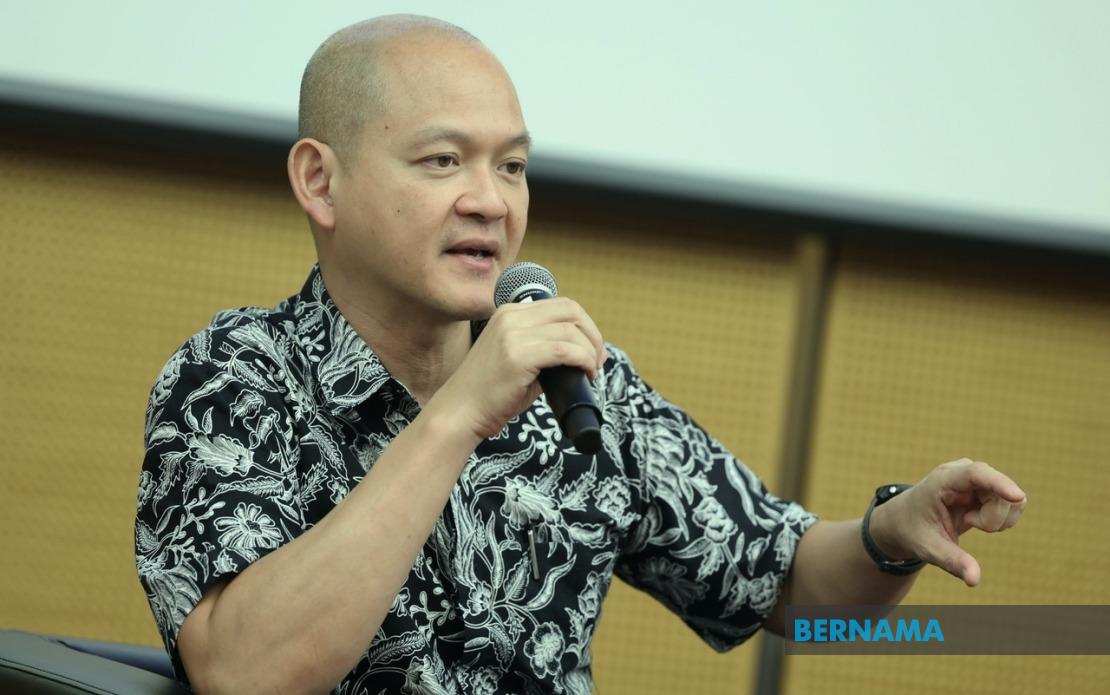
Dr Ong Kian Ming, the former Member of Parliament for Bangi, announced his resignation from the Democratic Action Party on August 31, concluding a membership spanning more than a decade. The announcement came through a Facebook post directed at the party leadership, with Secretary-General Anthony Loke Siew Fook and National Organising Secretary Khoo Poay Tiong formally notified of his decision.
The departure of Ong marks another significant exit from the DAP's parliamentary ranks, particularly as the party navigates its role within the federal coalition government and manages internal pressures across its various state and national structures. His exit introduces fresh questions about the party's retention of senior figures and comes at a moment when the DAP consolidates its influence following the 2023 general election, in which the party emerged as a major political force.
Ong's political journey with the DAP began in 2012, establishing him as one of the party's intellectual voices and economists. His parliamentary service stretched across two constituencies: Serdang from 2013 to 2018, followed by his Bangi representation from 2018 to 2022. His tenure provided continuity for the DAP's engagement with Selangor's urban and semi-urban constituencies, regions critical to the party's electoral performance and organizational strength throughout the Klang Valley.
Beyond his parliamentary roles, Ong held ministerial responsibility as Deputy Minister of International Trade and Industry between 2018 and 2020, a position that placed him at the centre of Malaysia's trade policy development during a complex period of global economic shifts and the United States-China trade tensions. His appointment reflected the DAP's capacity to field technocratic talent within the Pakatan Harapan government, though that administration's collapse in 2020 redirected his focus back to party and parliamentary duties.
Within the party structure, Ong served as an appointed member of the Central Executive Committee from 2019 to 2022, positioning him within the DAP's strategic decision-making apparatus during crucial periods including the party's repositioning after the fall of the Harapan administration and its subsequent negotiations that led to its participation in successive governments. He additionally maintained an elected seat on the DAP Selangor state committee from 2018 to 2024, granting him influence over the party's direction in a state where the DAP commands substantial legislative representation.
In his resignation statement, Ong expressed gratitude for opportunities afforded by his membership, framing his departure as a conclusion to a defined chapter rather than a rejection of his contributions or achievements during those years. This measured tone contrasts with some politically motivated exits and may reflect Ong's typically methodical approach to public discourse and professional conduct throughout his political career.
Crucially, Ong's statement explicitly forecloses multiple pathways that might otherwise have invited speculation about his immediate political future. He confirmed that no membership in another political party figures in his near-term plans, a declaration that effectively removes him from the competitive game of party-hopping that has characterised Malaysian politics in recent years. Additionally, he announced that he will not contest as a candidate in GE16, the next scheduled general election, thereby removing himself from electoral competition regardless of where his political convictions might lead him.
These dual declarations carry particular significance for Malaysian political observers, as they eliminate the possibility of Ong becoming a contested figure across party lines or a potential recruit for rival organisations. In an era when political defections and cross-party movements generate substantial media attention and create leverage points in coalition negotiations, Ong's retirement from electoral politics represents a departure from the opportunistic calculus that often characterises senior politician behaviour.
Ong's stated intention to serve the country through alternative means remains deliberately vague, opening possibilities ranging from advisory roles, think-tank participation, academic engagement, or advocacy positions outside formal political structures. His background in economics and policy suggests that technical or research-oriented paths might align with his capabilities, though he has not detailed his specific intentions.
The timing of his resignation, announced in late August, precedes any significant political developments or crises that might have prompted a reactive departure, suggesting instead a carefully considered decision reached after deliberation. This distinguishes his exit from reactive resignations born of conflict or disagreement over party direction, though he has not articulated specific grievances.
For the DAP, Ong's departure represents the loss of a senior figure with ministerial experience, parliamentary tenure across two constituencies, and recognised expertise in economic and trade policy—areas where the party seeks to maintain credibility and technical authority. His knowledge of Selangor politics and the Klang Valley constituencies contributes further institutional value that the party loses with his resignation.
The broader implications for Malaysian politics remain measured. Ong's generation of DAP leaders, including those who have progressed through ministerial experience and held senior party positions, constitutes a layer of established figures whose decisions reflect evolving political dynamics. His choice to exit electoral politics entirely rather than transition sideways into another party suggests satisfaction with his contributions to date and perhaps a calculation that continued electoral involvement offers diminishing returns or alignment with personal priorities beyond political office.
As the DAP navigates its role in evolving coalition mathematics and prepares for eventual electoral cycles leading toward GE16, the departure of experienced figures like Ong will require organisational adjustment and the elevation of newer party talent into positions previously occupied by established leaders.

