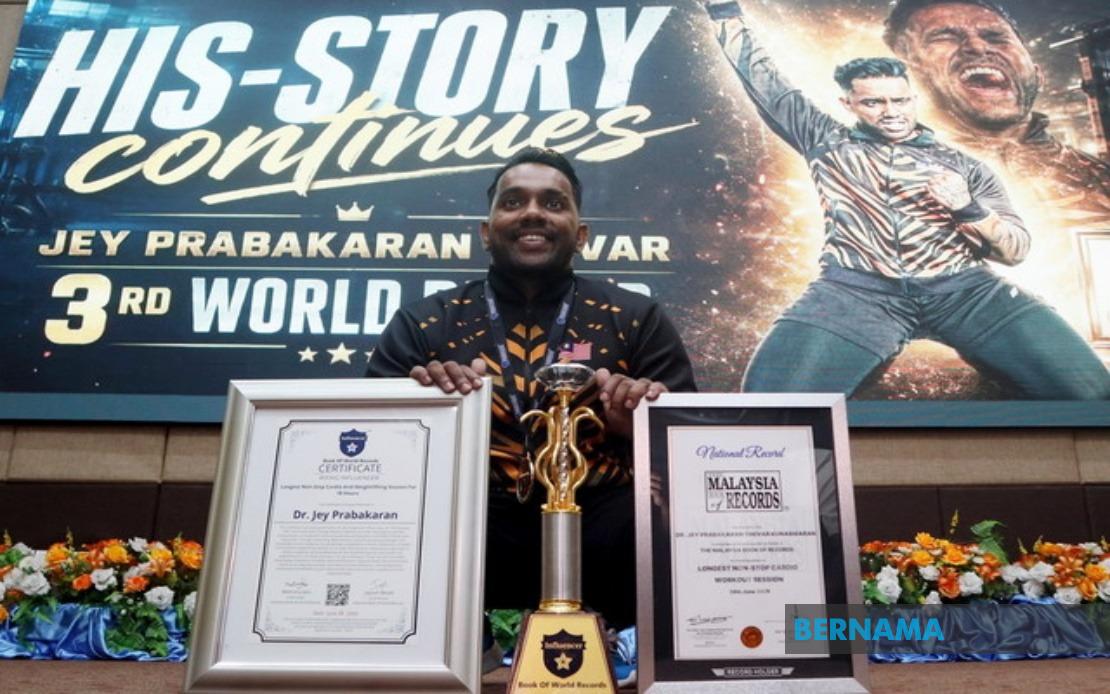
Fitness enthusiast K. Jey Prabakaran Thevar, professionally known as Dr Kjey, has etched his name into sporting history by completing an gruelling 18-hour non-stop cardio and weightlifting event at Healthland Kuala Lipis in Pahang. The record-breaking attempt, which commenced at 4 am on a Sunday and concluded at 11 pm, represents the athlete's third consecutive world record achievement and has been recognised by both the Malaysia Book of Records and the Influencer Book of World Records. At just 29 years old, Dr Kjey has demonstrated extraordinary physical and mental resilience in pursuing increasingly ambitious fitness challenges that push the boundaries of human endurance.
The Pahang native has imbued this latest achievement with profound personal meaning by dedicating it to the memory of his father, Kunasigaran Suppiya Thevar, who passed away on March 3, 1999. Growing up without paternal guidance following his father's death when he was merely a child has become a defining motivational force throughout Dr Kjey's athletic journey. In conversation with reporters, the athlete reflected on how this loss, rather than becoming an insurmountable obstacle, transformed into a wellspring of inspiration and determination that fuelled his relentless pursuit of excellence on the international sporting stage.
This latest record represents a significant progression in Dr Kjey's record-breaking trajectory. His first world record came in 2023 when he successfully completed a 12-hour non-stop cardio and weightlifting challenge, a feat recognised by the Malaysia Book of Records. The following year, in 2024, he extended this accomplishment by surpassing the 15-hour mark in a similar continuous exercise regimen, again securing formal recognition. Between these milestone achievements, Dr Kjey also established an Asian record by completing 13 hours of non-stop combined cardio and weightlifting, demonstrating his consistent ability to exceed previous physical thresholds.
The preparation process for this most recent record attempt began immediately following his participation in a national record challenge conducted in conjunction with National Sports Day celebrations in October of the previous year. Rather than resting on his laurels after completing that event, Dr Kjey embarked on an intensive training and conditioning programme designed specifically to meet the demands of an 18-hour endurance test. The timeline reflects his methodical approach to record-breaking, allowing sufficient recovery and preparation between attempts while maintaining the momentum of his fitness trajectory.
During the extended challenge, Dr Kjey confronted numerous physical and psychological obstacles that tested his resolve throughout the nearly full-day ordeal. Beyond the obvious fatigue associated with prolonged exercise, he struggled particularly with maintaining consciousness and combating drowsiness during the latter stages of the attempt. These challenges underscore that setting world records in endurance athletics extends far beyond simple physical capability—mental fortitude, strategic pacing, and the ability to overcome psychological barriers become equally crucial determinants of success.
In preparation for this specific record attempt, Dr Kjey implemented a comprehensive dietary transformation that proved instrumental in optimising his physical condition. He completely restructured his nutritional approach by adopting a vegetarian eating pattern, a significant departure from his previous diet. This dietary shift enabled him to shed 32 kilogrammes before commencing the record attempt, suggesting that weight reduction formed a critical component of his preparation strategy. Such dramatic physical transformation over a condensed timeframe demonstrates the sacrifice and discipline required to compete at world record levels in fitness athletics.
Beyond his individual accomplishments, Dr Kjey serves as president of the Malaysian India Fitness Association, a position that amplifies his influence within the fitness community and among people of Indian descent in Malaysia. He has articulated a broader vision extending beyond personal records, expressing genuine hope that his achievements can serve as a catalyst for encouraging younger Malaysians to embrace healthier lifestyles and explore serious engagement with fitness pursuits. In a country grappling with rising rates of lifestyle-related diseases and sedentary behaviour, his record-breaking accomplishments carry significance as inspirational narratives that demonstrate human potential.
Looking forward, Dr Kjey has already outlined his next ambitious undertaking, scheduled to coincide with National Sports Day festivities in October. He intends to attempt setting a national record by completing 5,000 jumping jacks within a five-hour timeframe, a feat that would require sustained intensity and coordination over an extended period. This announcement indicates his commitment to continually pushing boundaries and setting new targets rather than remaining satisfied with past achievements, reflecting the mindset of a dedicated athlete perpetually seeking the next challenge.
The broader context of Dr Kjey's accomplishments becomes apparent when considering Malaysia's fitness landscape and the representation of Malaysian athletes in international record-breaking forums. While Malaysia has produced exceptional athletes in traditional sporting disciplines, achievements in extreme endurance fitness receive less mainstream attention despite their remarkable nature. Dr Kjey's successive records demonstrate that Malaysian athletes can compete and excel in niche but internationally recognised athletic categories, bringing recognition to the country on global platforms including Guinness World Records. His accessibility as a fitness professional based in Kuala Lipis, a relatively small town in Pahang, also suggests that world-record aspirations need not be confined to major urban centres or well-funded elite training facilities.
The emotional component of Dr Kjey's dedication of his records to his late father adds a distinctly human dimension to what might otherwise be perceived as purely technical physical achievements. His willingness to publicly articulate how personal tragedy has shaped his motivational framework resonates with many who have experienced loss and may find inspiration in his channelling of grief into productive accomplishment. This narrative—transforming familial absence into competitive drive—carries potential resonance across demographic boundaries and cultural communities in Malaysia.
As Dr Kjey continues pursuing increasingly ambitious fitness objectives, his journey exemplifies how individual determination, disciplined preparation, and emotional purpose can converge to produce extraordinary results. His record achievements serve simultaneously as personal tributes, national representations, and inspirational models for younger generations contemplating their own health and fitness trajectories. The recognition accorded through official record-keeping bodies validates these efforts while simultaneously positioning Malaysia within the international conversation surrounding extreme endurance athletics and human performance limits.

