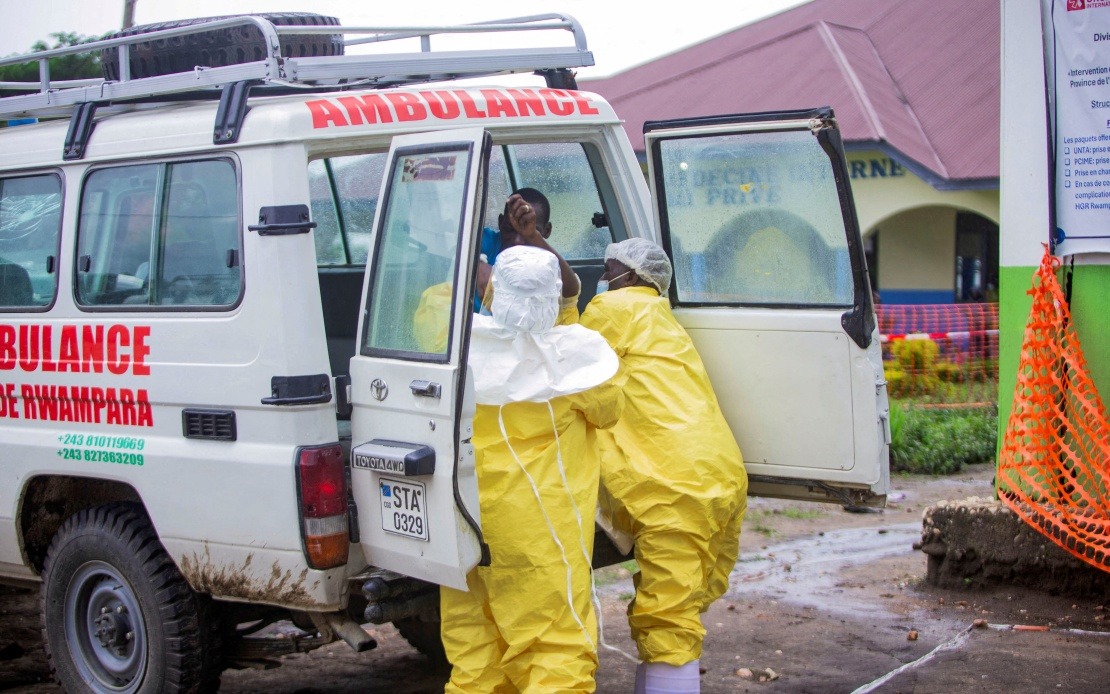
The Democratic Republic of the Congo faces an escalating public health emergency as the Ebola outbreak continues spreading geographically, with authorities confirming 1,873 cases and 672 fatalities across five provinces as of mid-July. The expansion of the disease into previously unaffected regions marks a critical turning point in what health officials declared two months earlier, signalling that control efforts have not yet stemmed transmission chains across the vast central African nation.
Five provinces now grapple with confirmed Ebola cases: Ituri, which remains the epicentre of the outbreak, North Kivu, South Kivu, Haut-Uele, and Tshopo. The inclusion of Haut-Uele and Tshopo in the official situation report represents the first documented cases in these regions, indicating that the virus has jumped beyond the initial containment zone. This geographic spread complicates response efforts significantly, requiring health authorities to establish new treatment infrastructure and train personnel across wider territory while managing limited resources.
Epidemological investigations have traced the cases in these two newly affected provinces back to the Ituri epicentre, revealing transmission pathways driven primarily through direct contact with infected individuals and population movements. This finding underscores how mobility across provincial borders, whether through trade routes, family visits, or fleeing insecurity, facilitates virus propagation. Southeast Asian nations with significant populations in the region and trade connections to the DRC should note how easily haemorrhagic fevers traverse borders once established in populated areas.
The strain on the country's fragile healthcare infrastructure is becoming acute. Treatment centres are operating at 95.1 percent bed occupancy, leaving minimal capacity for surges. Some 763 patients remain isolated or hospitalised, placing enormous pressure on medical staff who face occupational hazard while treating one of the world's deadliest pathogens. This near-saturation indicates that any further increase in cases will require rapid expansion of facilities or difficult triage decisions.
Recovery data provides limited hope: only 306 people have survived among the confirmed cases, yielding a survival rate substantially below outcomes seen in controlled settings. Meanwhile, 299 suspected cases remain under investigation, with 91 deaths among this group pending final confirmation. These suspected cases represent a shadow epidemic that could rapidly increase official figures once laboratory results return, suggesting the true scale of transmission may exceed current tallies.
The outbreak stems from the Bundibugyo ebolavirus strain, which officials formally declared on May 15. Unlike the more notorious Zaire ebolavirus responsible for West Africa's catastrophic 2014-2016 epidemic, Bundibugyo typically produces somewhat lower fatality rates but remains devastating. However, the sub-Saharan setting with weak disease surveillance, limited laboratory capacity, and ongoing conflict in affected regions creates conditions favouring viral spread that advanced nations would contain rapidly.
For Malaysia and the broader region, this outbreak carries several implications. The DRC hosts significant populations of Asian workers, traders, and diplomatic staff, creating potential pathways for virus exportation should containment fail entirely. Several Southeast Asian nations have in place quarantine and screening protocols inherited from COVID-19 experience, providing some defensive capability. However, gaps in real-time information sharing between African and Asian health authorities could delay detection of imported cases.
The response by Congolese health authorities reflects years of experience managing previous outbreaks, yet the current situation demonstrates how quickly initial progress can erode. Earlier successes in controlling Ebola in the DRC through vaccination campaigns and patient isolation have not prevented this latest expansion. Vaccines exist but require reliable cold-chain logistics and access to vulnerable populations—challenges amplified in remote provinces where insecurity restricts movement.
International support remains crucial but complicated by the DRC's geographic remoteness and ongoing security concerns in North and South Kivu provinces, where armed groups restrict humanitarian access. The World Health Organization and partner organisations operate under constant operational constraints, creating delays in case investigation, contact tracing, and isolation of transmission chains. This friction between response needs and operational reality suggests the outbreak will likely persist for months rather than weeks.
Regional implications extend beyond direct health risks. Instability in eastern DRC continually threatens neighbouring nations including Rwanda, Burundi, and Uganda, and any major disease outbreak could exacerbate migration pressures or strain cross-border health systems. For Malaysian policymakers monitoring global disease threats, the DRC situation exemplifies how poverty, conflict, and weak healthcare infrastructure create persistent breeding grounds for emerging infectious diseases that eventually reach international attention only after substantial spread.
The near-1,900 case mark represents a threshold suggesting escalation rather than control. Unless treatment capacity expands rapidly and contact tracing improves markedly, authorities should anticipate the caseload surpassing 2,000 within weeks. This trajectory would mark the outbreak as one of the DRC's largest recorded Ebola events, justifying heightened global concern and underscoring why regional disease surveillance networks must maintain vigilance for potential regional transmission.

