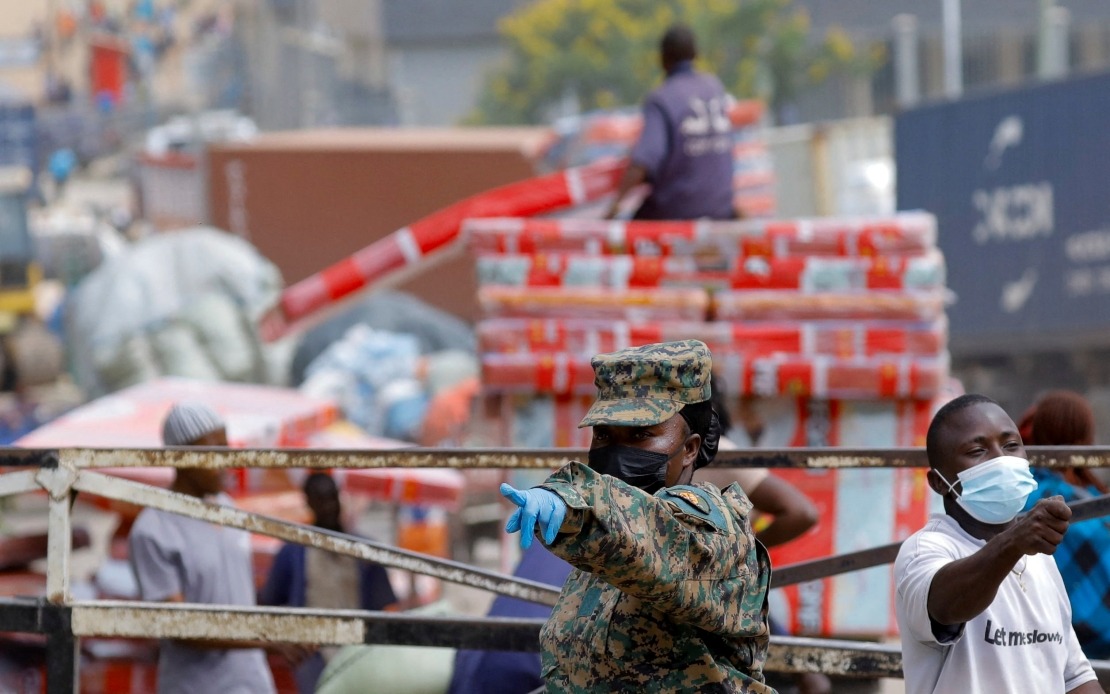
The Democratic Republic of Congo has begun receiving supplies of the Ervebo Ebola vaccine in a critical step to combat an ongoing health crisis that has rapidly spiralled across the central African nation. The first shipment arrived carrying 16,520 doses, with Health Minister Samuel Roger Kamba confirming that an additional 50,000 doses are slated to arrive by early in the week. The vaccine intervention marks a significant escalation in the government's containment strategy, backed by international partners who have pledged support to protect vulnerable populations in the hardest-hit regions.
The vaccine stockpile represents a portion of 70,000 doses committed by the World Health Organisation from its global reserve specifically designated for Ebola response. This deployment will serve a dual purpose: conducting advanced Phase 3 clinical trials to evaluate the vaccine's efficacy against the Bundibugyo virus strain, while simultaneously providing protective coverage to frontline medical workers and health system personnel most exposed to transmission. The distinction is crucial, as no approved vaccine or targeted treatment currently exists for Bundibugyo ebolavirus infection, making both disease monitoring and preventive vaccination essential to understanding how best to manage this particular variant.
The Ervebo vaccine has proven effective in previous Ebola outbreaks caused by the Zaire ebolavirus strain and carries international regulatory approval for use during declared epidemics. Health authorities view the vaccine programme as foundational to their broader containment efforts, though the arrival of doses has come against a backdrop of mounting case numbers. The current outbreak has now documented 5,290 confirmed infections, with the death toll surpassing 2,500 individuals—representing a fatality rate that underscores the severity of the situation and the urgency surrounding vaccination deployment.
The geographic spread of the outbreak poses substantial logistical and coordination challenges for response teams. The Ebola virus has now been detected across 56 separate health zones distributed throughout six provinces: Haut-Uele, Ituri, North Kivu, South Kivu, Bas-Uele, and Tshopo. Since the initial declaration in mid-May, the virus has progressively established transmission networks across considerable territory, complicating efforts to deliver coordinated healthcare interventions and communicate prevention strategies uniformly across disparate communities. This dispersed pattern contrasts sharply with more contained outbreaks in previous years and suggests that community-level factors—including population movement, healthcare access, and cultural practices—have facilitated sustained transmission.
Despite the arrival of vaccines, international humanitarian organisations have raised serious concerns about the adequacy of broader containment infrastructure. Doctors Without Borders warned publicly this week that affected communities in the Democratic Republic of Congo are not receiving sufficient support to effectively curtail viral spread. The organisation emphasised that training programmes for health workers and community leaders remain critically underfunded, despite being essential components of outbreak control. Community engagement around case detection, proper patient referrals, and infection prevention measures requires intensive, sustained educational effort that current capacity appears unable to deliver at scale across all affected zones.
The training gap identified by Doctors Without Borders points to a fundamental challenge in public health emergencies: vaccines alone cannot arrest an outbreak without complementary systems for case identification, isolation, and contact tracing. Communities must understand warning signs and feel confident that seeking medical attention will result in appropriate care rather than social stigma or abandonment. Health workers require practical skills in personal protective equipment use, safe burial practices, and infection control protocols that prevent healthcare facilities themselves from becoming transmission hubs. Without this foundational education and capacity building, even an abundant vaccine supply may achieve suboptimal uptake and protection.
The implications of this outbreak extend beyond the Democratic Republic of Congo's borders, particularly given the country's regional position and cross-border movement patterns. Neighbouring countries including Uganda, Rwanda, Burundi, and the Central African Republic all maintain varying degrees of healthcare preparedness, and secondary transmission events have already emerged in adjacent territories. Southeast Asian nations monitoring this situation recognise that rapid international coordination and information sharing become essential when novel disease threats emerge, as supply chains for medical countermeasures and expert technical support often depend on timely alerts and transparent epidemiological data. The Ebola response thus serves as a practical case study in regional health security frameworks that Malaysia and other ASEAN members continue developing.
The vaccination programme represents a multilayered response that attempts to combine immediate disease prevention with longer-term epidemiological intelligence. By conducting Phase 3 trials during an active outbreak, researchers gain real-world data on vaccine performance while simultaneously conferring benefit to vaccinated individuals—a approach that accelerates both scientific understanding and population protection. However, this requires careful ethical oversight and community consent processes to ensure that research objectives do not inadvertently compromise the primary goal of outbreak containment. International experience from previous Ebola campaigns demonstrates that successful vaccination programmes depend heavily on community trust, clear communication about vaccine safety and benefits, and transparent governance structures that involve local leadership in decision-making.
The trajectory of this outbreak over the coming weeks will largely depend on whether vaccination coverage expands sufficiently to create population-level protection while concurrent strengthening of case detection and contact tracing systems occurs. The World Health Organisation and partner nations face a critical window during which rapid vaccine deployment could substantially reduce case numbers, but delays in distribution, logistical constraints, or community hesitance could allow ongoing transmission to persist. Health Minister Kamba's statement emphasising the importance of partner support underscores that containment success requires sustained international engagement beyond simply supplying vaccines—it demands coordinated technical assistance, financial investment in healthcare systems, and long-term commitment to regional epidemic preparedness that will extend well beyond the resolution of this immediate crisis.

