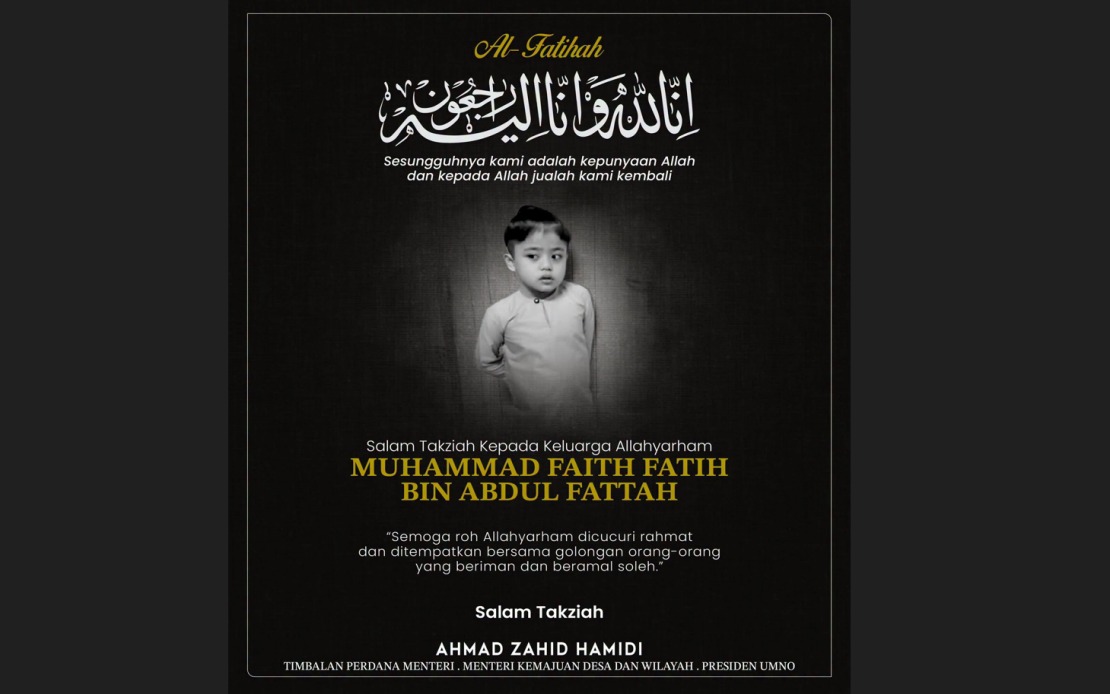
Deputy Prime Minister Datuk Seri Dr Ahmad Zahid Hamidi has extended his sympathies to the bereaved family following the tragic death of Muhammad Faith Fatih Abdullah Fattah, a six-year-old child with autism, whose body was recovered from an oil palm plantation area in the Hutan Melintang district of Perak. The incident has cast a shadow over the community, drawing attention once again to the vulnerabilities faced by children with special needs and the challenges confronting their families in safeguarding their welfare.
Ahmad Zahid, who represents the constituency of Bagan Datuk in parliament, released a statement through his Facebook account expressing profound sorrow at the boy's untimely passing. He acknowledged the extraordinary pain that accompanies the loss of a child, particularly when that child has special requirements that demand constant parental vigilance and care. The nature of the tragedy underscored the delicate balance families must maintain between allowing children independence and protecting them from harm, a tension that becomes all the more acute for parents raising children with developmental or neurological conditions.
In his message, the Deputy Prime Minister highlighted the immeasurable grief experienced by parents who lose a young child, characterising such loss as one of life's most devastating trials. His words reflected a broader recognition within Malaysian society of the emotional and psychological toll that such incidents inflict not only on immediate family members but also on extended relatives and close community networks. The emphasis on parental suffering served to humanise the tragedy beyond mere statistics, bringing into focus the personal dimension of the loss.
Ahmad Zahid called upon the public to join in offering prayers for the deceased child's soul, invoking religious sentiments that resonate deeply within Malaysia's Muslim-majority population. By encouraging the recitation of Al-Fatihah, a cornerstone prayer in Islamic tradition, and appealing for divine mercy upon the child's spirit, he sought to provide a framework through which the community could collectively process and respond to the tragedy. This invocation of faith-based observances reflected the intertwining of spiritual and emotional responses to grief within Malaysian culture.
The circumstances surrounding the child's disappearance and subsequent discovery underline broader anxieties about child safety and emergency response protocols. The boy had been last observed in his home's living room before being reported missing by his family. A comprehensive search and rescue operation was subsequently initiated, with authorities combing the surrounding area throughout the evening. At approximately 10:08 pm, rescue personnel located the child's body in a drain situated within the oil palm plantation grounds, bringing a desperate search to its tragic conclusion.
Police records indicate that the initial missing person report was lodged at 4:54 pm, establishing a window of approximately five hours between the child's last confirmed sighting and the discovery of his remains. Bagan Datuk police chief Supt Mohammad Ali Mohd Jali confirmed receipt of the report and provided details regarding the location where the child was last seen. The timeline suggests that considerable effort was invested in locating the child, though ultimately the search ended in tragedy rather than reunion.
The discovery of the child's body in a drainage system within plantation grounds raises important questions about environmental hazards and accessibility safeguards in agricultural areas. Oil palm plantations, while economically significant to Malaysia's agricultural sector, contain various infrastructure elements and waterways that can pose serious risks to young children, particularly those with autism spectrum disorder who may not fully comprehend danger or may possess limited verbal communication skills. The incident highlights the need for heightened awareness among communities adjacent to such facilities regarding potential risks to vulnerable populations.
Children with autism frequently require specialised supervision and tailored safety protocols. The condition affects each individual differently, influencing their ability to recognise and respond to hazards, understand instructions, or communicate distress. Parents and caregivers of autistic children often navigate a complex landscape of medical appointments, therapeutic interventions, and everyday management strategies designed to maximise the child's safety and development. The loss of a child with special needs carries additional dimensions of grief, including the loss of future milestones and the realisation of unfulfilled potential for growth and achievement.
The incident has prompted reflection within Malaysian society regarding child protection mechanisms and the particular vulnerabilities of children with developmental disabilities. While Malaysia has frameworks in place addressing child welfare and safety, tragic incidents such as this underscore the ongoing need for comprehensive, community-based approaches to protecting all children, with specific attention to those facing heightened risks. Educational initiatives, improved coordination between relevant authorities, and enhanced community awareness represent areas where progress could be made.
Ahmad Zahid's public statement serves multiple functions within the Malaysian political and social context. Beyond offering comfort to the grieving family, such expressions of sympathy from senior government officials affirm the value and dignity of all members of society, including those with disabilities. They also establish a platform for broader conversations about child safety, special needs education and support, and community responsibility in creating environments where vulnerable children can thrive and be protected.
The tragedy occurs against a backdrop of ongoing discussions in Malaysia regarding support services for families raising children with autism and other developmental conditions. Access to quality diagnostic services, therapeutic interventions, and educational programmes tailored to the needs of autistic children remains inconsistent across different states and socioeconomic groups. Many families face substantial financial burdens in securing appropriate care and support, challenges that extend beyond the immediate family to encompass broader healthcare and educational systems.
Moving forward, the incident may catalyse renewed examination of safety protocols in areas where children with special needs reside or attend school, particularly in regions where agricultural or industrial activities create environmental hazards. Coordination between local authorities, healthcare providers, educators, and community organisations could yield practical improvements in identifying and mitigating risks. Such collaborative approaches would acknowledge the shared responsibility that Malaysian society bears in safeguarding its most vulnerable members and in supporting families managing the complex demands of raising children with special needs.

