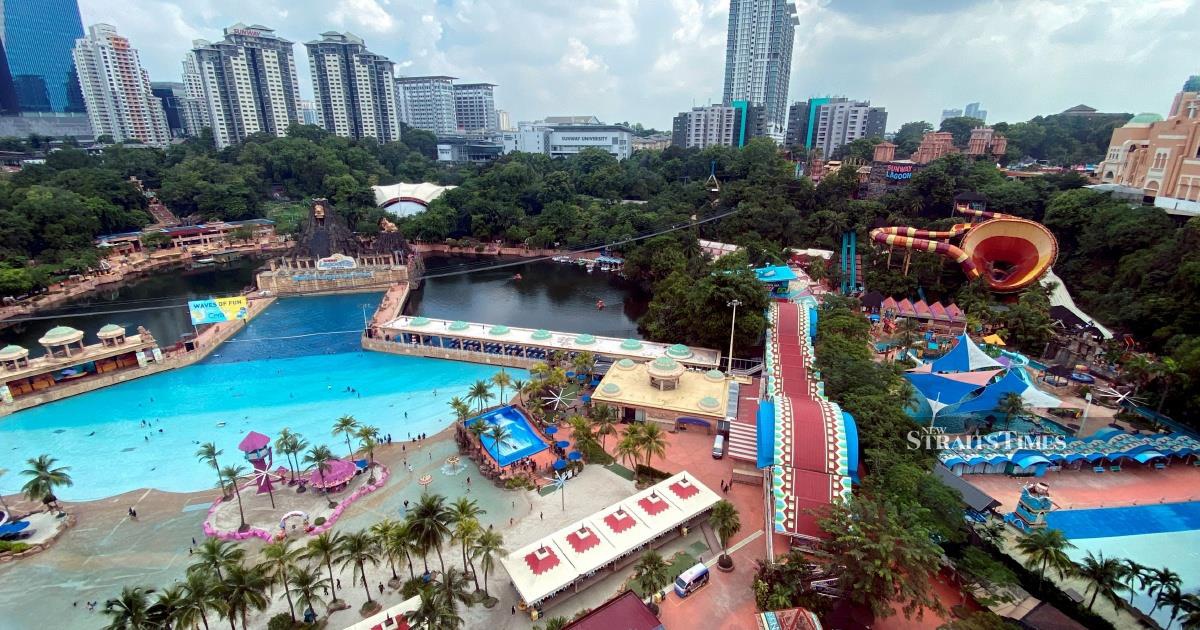
Authorities in Malaysia have activated a formal forensic investigation mechanism following an incident involving a roller coaster at Sunway Lagoon, one of Southeast Asia's most visited entertainment venues. The Department of Occupational Safety and Health, operating from its headquarters in Putrajaya, has assumed command of the inquiry to establish the circumstances, causation factors, and systemic failures that may have contributed to the occurrence.
Sunway Lagoon, located in the Klang Valley region of Selangor, operates multiple high-speed mechanical rides and attractions that draw hundreds of thousands of visitors annually from Malaysia and abroad. The facility, operated by Sunway Group, represents a critical segment of the nation's tourism and hospitality industry, with theme parks contributing measurably to both employment and visitor spending. Any incident within such facilities carries implications extending beyond the immediate parties affected, touching on national safety standards and international visitor confidence.
The forensic investigation methodology employed by DOSH represents a systematic approach to unravelling technical, human, and procedural factors. Such probes typically involve examination of mechanical components, review of maintenance records spanning months or years, analysis of operational procedures, assessment of staff training protocols, and reconstruction of events based on witness accounts and physical evidence. The department's technical specialists will likely engage with engineers and safety consultants to evaluate whether the ride operated within manufacturer specifications and industry safety benchmarks.
Maintenance protocols constitute a focal point in roller coaster safety investigations worldwide. Theme park operators must balance visitor throughput demands with rigorous equipment oversight, conducting daily visual inspections, periodic detailed maintenance schedules, and component replacement cycles dictated by manufacturer guidelines. The forensic process will examine whether Sunway Lagoon maintained adequate documentation of its maintenance regime and whether inspection intervals aligned with industry standards and regulatory requirements in Malaysia.
Operational procedures merit equally thorough examination. Roller coaster incidents frequently involve factors such as improper ride loading, failure to secure restraint systems correctly, operator error in sequence timing, or inadequate supervision of guest boarding processes. The investigation will assess whether operating staff received appropriate training, whether protocols existed to verify passenger compliance with safety requirements, and whether multiple failsafe mechanisms functioned as designed.
The regulatory environment governing amusement park safety in Malaysia has evolved considerably over the past decade. DOSH maintains oversight responsibility, though coordination with other bodies including local authorities and the Ministry of Human Resources may occur. The investigation findings will likely inform whether existing regulations require enhancement or whether implementation of current standards needs strengthening across the industry. Such determinations carry weight beyond Sunway Lagoon, potentially affecting operational practices across Malaysia's other entertainment facilities.
From a visitor perspective, roller coaster safety remains a complex psychological and technical issue. Perception of risk often diverges substantially from actual statistical likelihood, yet public confidence in safety systems directly influences consumer decisions regarding theme park patronage. International visitors considering Malaysia as a tourism destination monitor how authorities respond to such incidents, making the transparency and thoroughness of official investigations consequential for the nation's tourism positioning in competitive Southeast Asian markets.
The involvement of DOSH in a comprehensive forensic probe, rather than a routine incident report, signals recognition of the incident's significance and potential systemic dimensions. Such investigations typically require weeks or months to complete, as specialists analyse gathered evidence, consult technical literature, interview personnel extensively, and develop detailed findings and recommendations. The eventual report will provide public accountability while guiding remedial actions.
Theme park operators across Malaysia and the region monitor such investigations closely, recognising that findings may establish precedents affecting industry-wide practices. Recommendations emerging from DOSH's forensic assessment could necessitate equipment modifications, operational procedure revisions, or enhanced training requirements. Insurance considerations, maintenance contractor selection, and capital investment decisions all hinge partly on how authorities define safety expectations through their investigative findings.
The incident underscores that even established, professionally managed facilities must maintain vigilance across multiple technical and human dimensions. Roller coaster safety represents a mature field with established engineering principles and operational protocols, yet incidents continue occurring globally, suggesting that perfect systems remain elusive. Malaysia's response through rigorous forensic investigation demonstrates commitment to extracting maximum learning value from adverse events, ultimately contributing to industry safety evolution.
Stakeholders including visitors, operators, regulators, and the general public await DOSH's findings. The forensic investigation will determine whether the incident resulted from isolated equipment failure, systemic operational deficiencies, inadequate maintenance practices, or failures in multiple domains simultaneously. Whatever the ultimate conclusions, the investigation process itself reinforces the principle that serious incidents demand serious scrutiny, establishing accountability mechanisms that ultimately protect future theme park visitors throughout Malaysia and the broader region.

