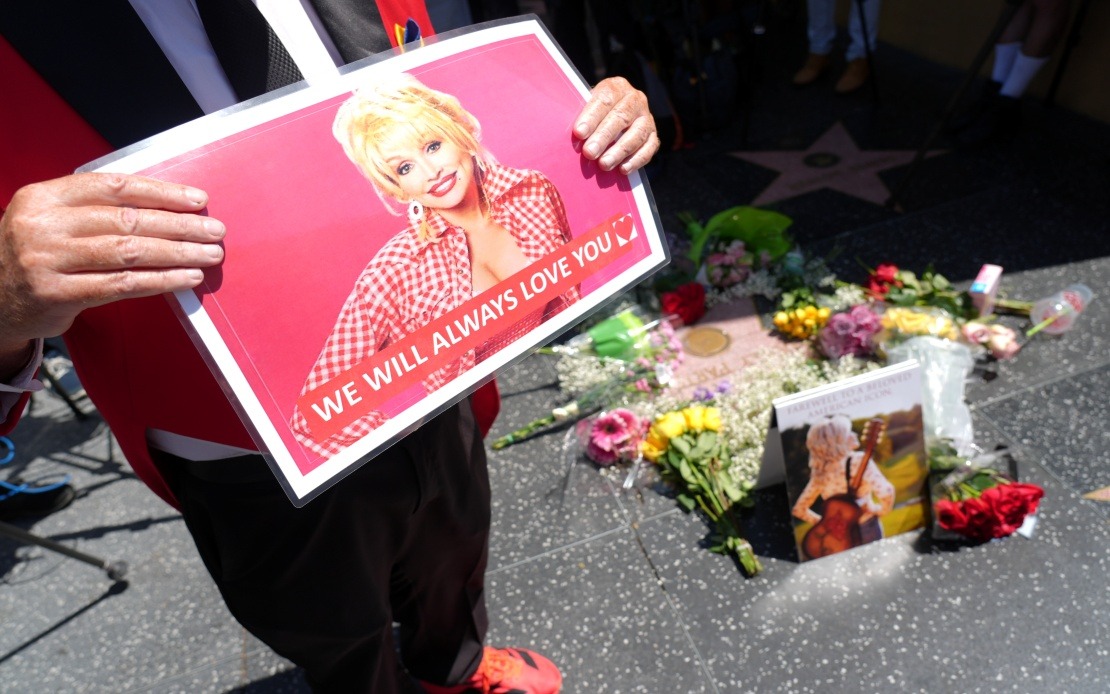
One of America's most enduring entertainers, Dolly Parton, has passed away at the age of 80, her family confirmed on Tuesday through a video posted to her social media accounts by her nephew, Bryan Seaver. The announcement offered no details regarding the cause of her death, though the iconic musician had experienced significant health difficulties in recent months that forced her to step back from public commitments.
Parton had been visibly struggling with her health in the period leading up to her death. Earlier this year, she was compelled to cancel scheduled performances and delay her anticipated Las Vegas residency. Just days before her passing, she reassured her devoted fanbase that she was making steady progress in her recovery, noting that she was responding positively to the medical care and pharmaceutical treatments prescribed by her physicians. These health setbacks marked a rare interruption in what has been a remarkably active career stretching across more than sixty years.
Born in Sevierville, Tennessee, in 1946, Parton emerged from humble origins that would later inspire much of her artistic output and philanthropic mission. Growing up in a financially struggling household, she demonstrated an extraordinary aptitude for music from childhood. By the time she was ten years old, she had already begun performing on local radio stations, an achievement that few young entertainers could claim. At thirteen, she recorded her debut single, "Puppy Love," and made her first appearance at the Grand Ole Opry in Nashville, establishing herself as a prodigy in country music circles.
Her relocation to Nashville in 1964 marked a pivotal turning point in her professional trajectory. Rather than immediately seeking the spotlight as a performer, Parton initially developed a formidable reputation as a songwriter, crafting compositions that other established artists eagerly recorded and released. This groundwork in songwriting proved invaluable, allowing her to build industry connections and refine her craft before launching her solo career. Her visibility expanded considerably when she joined Porter Wagoner's television variety show, performing alongside him from 1967 to 1974 and reaching audiences far beyond those who heard her records.
The 1970s represented the golden era when Parton released the songs that would cement her legacy for generations to come. "Jolene," with its haunting melody and achingly emotional lyrics about romantic loss, became one of the most recognizable country songs ever recorded. "I Will Always Love You" similarly showcased her ability to craft deeply personal yet universally resonant material. While Parton's original version achieved substantial success, the song transcended country music boundaries when Whitney Houston recorded it for the film "The Bodyguard" in 1992, introducing the composition to a global audience and demonstrating the timeless quality of Parton's songwriting.
Beyond her achievements in the music industry, Parton established herself as a multifaceted entertainer by transitioning successfully into cinema. She demonstrated considerable acting talent in films such as "9 to 5" alongside Jane Fonda and Lily Tomlin, and later appeared in "Steel Magnolias," proving that her star power extended well beyond concert halls and recording studios. These ventures into film brought her considerable critical acclaim and introduced her artistic talents to audiences who might not have regularly engaged with country music.
The breadth of Parton's cultural impact, however, extends far beyond entertainment alone. She became internationally recognized for her extensive philanthropic initiatives, most notably the Imagination Library, an innovative program that distributes free books to children regardless of their family's financial circumstances. This venture reflected her personal understanding of poverty and her conviction that access to literature should not be determined by economic status. Through the Imagination Library and her other charitable endeavors, Parton demonstrated a commitment to improving social conditions and expanding educational opportunities that matched the ambition and creativity she channeled into her artistic career.
By the time of her death, Parton had accumulated sales exceeding 100 million records worldwide and received numerous accolades that recognized both her musical genius and cultural significance. Her eleven Grammy Awards represented only a fraction of the honors bestowed upon her throughout her career. She earned induction into the Songwriters Hall of Fame, acknowledging her extraordinary compositional abilities, and was later recognized with induction into the Rock and Roll Hall of Fame, a distinction that underscored how her influence transcended genre boundaries and shaped the broader landscape of popular music.
For audiences across Southeast Asia and beyond, Parton's passing represents the end of an era in American popular culture. Her music, translated across languages and cultural contexts, became part of the global soundtrack to multiple generations' lives. Whether through her own recordings or through the countless cover versions of her compositions by artists worldwide, Parton's artistic legacy ensures her continued presence in the cultural consciousness. The combination of her remarkable musical talent, her versatility as an entertainer, and her dedication to charitable causes established a template for celebrity that transcended commercial success and created a model of cultural influence rooted in genuine compassion and artistic integrity.

