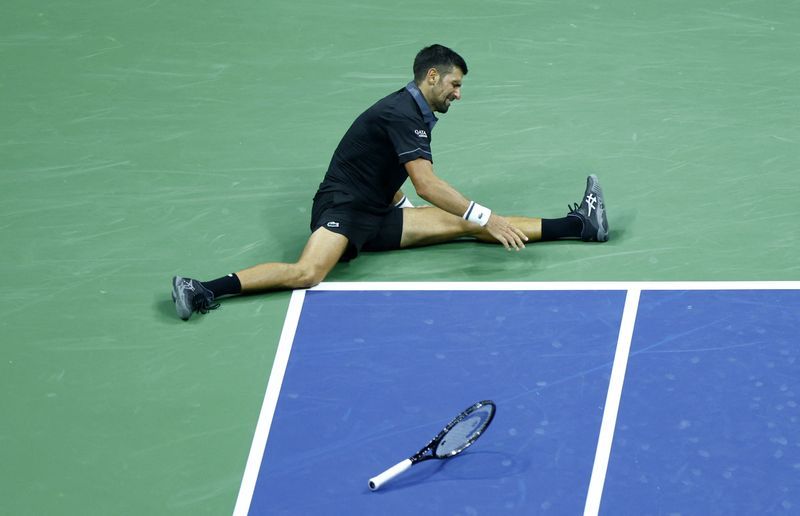
The tennis world reeled in shock as Novak Djokovic's campaign for an unprecedented 25th Grand Slam championship came to an abrupt and humiliating end on Sunday, when the Serbian champion succumbed to unseeded Argentine Mariano Navone in a marathon first-round encounter at the US Open. The match, which stretched across four hours and 36 minutes of gruelling competition, concluded 7-6(5) 5-7 4-6 6-2 6-1 in favour of the world number 49 Navone, marking one of the most significant upsets in recent Grand Slam history.
Djokovic arrived at Flushing Meadows for his 20th appearance at the tournament under considerable scrutiny regarding his physical condition and competitive sharpness. The 39-year-old had suffered a concerning defeat to Thiago Agustin Tirante in Cincinnati just a fortnight before, raising legitimate questions about whether the legendary competitor retained the physical resilience required to contend for the sport's most prestigious prizes. These concerns proved prescient, as the Serbian star displayed visible discomfort throughout a performance that deteriorated progressively as the match unfolded.
The opening set offered early promise for Djokovic, who aggressively seized control and constructed a commanding 3-0 advantage amid the oppressive humidity that characterised conditions at the Arthur Ashe Stadium. However, Navone demonstrated remarkable composure and tactical intelligence, gradually clawing back into the set after the match's most dramatic interruption—the closure of the retractable roof as rain began falling across the venue. The Argentine's recovery to level at 4-4 marked the psychological turning point, and despite Djokovic's experience, Navone forced the set into a tiebreak before claiming it amid roaring crowd reaction that suggested many observers sensed something extraordinary was unfolding.
Djokovic managed to reclaim the second set through sheer competitive instinct and experience, temporarily steadying his ship and suggesting a potential comeback. The third set proved particularly revealing of the physical toll the match was exacting. During an interval within the set, Djokovic was overcome by nausea and vomited into a courtside bin—a telling indication of the physical stress his body was enduring. Despite this deterioration, he rallied sufficiently to break Navone and establish a 5-4 lead, executing some accomplished serving that created hope he might find another gear. Yet his own service game proved shakier than usual, and although he managed to close out the set, the manner of his victory suggested fragility rather than dominance.
The fourth set represented the moment when Djokovic's bid genuinely unravelled. With his serve increasingly unreliable due to mounting back problems, Navone seized his opportunity with the composure expected of a rising professional. The Argentine's consistent depth of shot, combined with his ability to dictate the rhythm rather than settling into defensive rallies, gradually tilted the balance decisively in his favour. Djokovic's previously reliable first serve proved an inconsistent weapon, and his physical limitations became increasingly evident to everyone observing the contest. Navone claimed the fourth set convincingly, and entered the deciding fifth set with genuine momentum and psychological advantage.
The final set witnessed the complete reversal of the early match dynamics. Where Djokovic had dominated the opening stages, the 25-year-old Navone now exhibited command and confidence. The Argentine maintained his nerve throughout, with his groundstroke consistency and willingness to take calculated risks ultimately overwhelmed a Djokovic reduced by circumstance and physical malaise to a shadow of his championship-winning self. The upset reverberated across the tennis world instantly, representing not merely a single match loss but a potential watershed moment in the sport's hierarchies.
For Malaysian and Southeast Asian tennis followers, this result underscores the unpredictable nature of professional sport and the reality that even the most accomplished athletes face inevitable physical decline. Djokovic's loss also highlights how the demanding schedule of professional tennis increasingly challenges ageing competitors, despite their accumulated experience and proven excellence. The Serbian's departure from the tournament eliminates one of the sport's most dominant forces from contention and opens the path for younger competitors to capture the Grand Slam prizes that have defined recent tennis history.
Navone's victory represents far more than a singular upset; it announces the arrival of a compelling talent whose tactical maturity and physical fortitude enabled him to seize an opportunity against the most decorated player in his sport. The Argentine's performance demonstrated that unseeded status provides no guarantee of inadequacy, and that hunger and tactical intelligence can overcome accumulated achievement and reputation. For global tennis audiences, particularly those tracking emerging talent, this match will be remembered as the occasion when youth and contemporary game dynamics overwhelmed the last vestiges of an era dominated by a singular and transformative champion.

