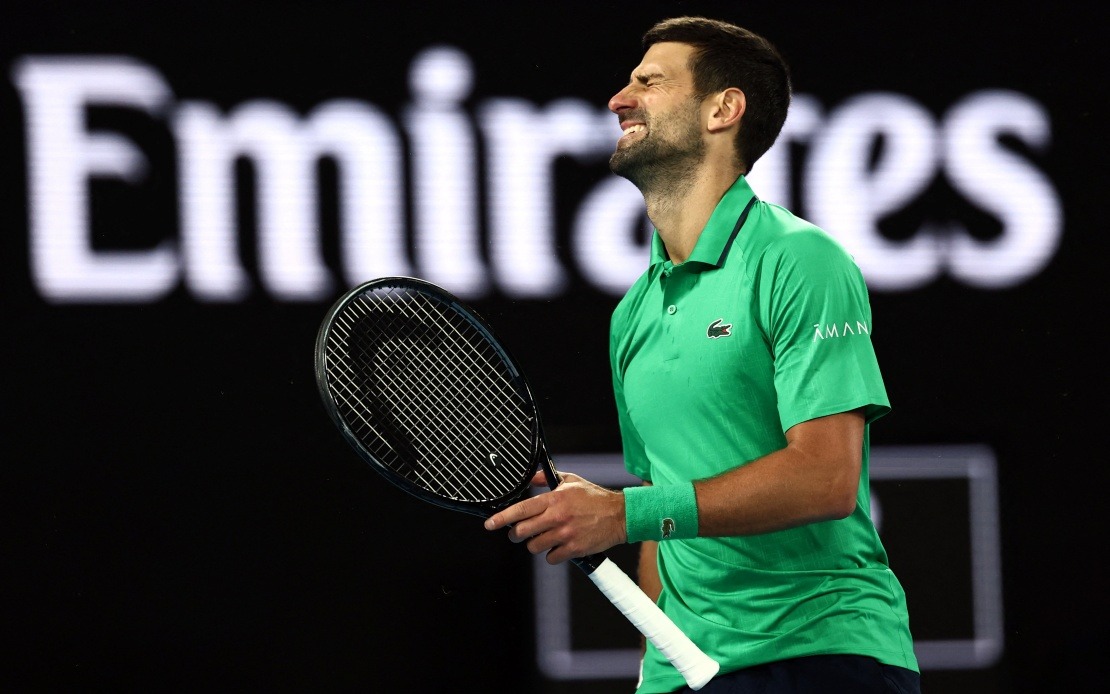
Novak Djokovic has reached a historic milestone at Wimbledon, matching Roger Federer's long-standing record of 105 men's singles victories at the All England Club. The Serbian champion defeated France's Arthur Rinderknech in a gruelling four-set encounter on Centre Court, securing his place in the fourth round and his 18th appearance in the last 16 at the prestigious tournament. The 7-5, 6-4, 1-6, 7-6 (7-4) victory extended Djokovic's legacy at a venue where he has won seven titles and remains one of the tournament's most formidable competitors despite approaching his 40th birthday.
The three-hour contest demonstrated why Djokovic continues to command respect at the highest level of professional tennis. Though Rinderknech pushed hard, particularly in the third set, the world-renowned champion displayed the mental fortitude and tactical awareness that have defined his career. His achievement in reaching this milestone underscores the exceptional durability required to sustain excellence across multiple decades in an increasingly competitive sport where younger players regularly challenge established champions.
Djokovic's reaction to matching Federer's record reflected both humility and his characteristic humour. Rather than dwell on the statistical achievement, the 24-time Grand Slam champion suggested a ceremonial match between himself and Federer to determine who should claim the undisputed record. "I propose a match between me and Roger for 106," he remarked, before offering a more philosophical perspective on his presence at the tournament. For Djokovic, playing at Wimbledon represents the realisation of childhood dreams, and his focus remains on competing for titles rather than accumulating individual statistics.
The significance of Djokovic's achievement extends beyond mere numbers. His continued success at a venue traditionally favoured by grass-court specialists highlights his adaptability and preparation methods. Unlike some players who struggle with the demands of specific surfaces, Djokovic has consistently demonstrated the ability to compete at the highest level across all court types, a factor that has contributed to his unprecedented Grand Slam success and durability at the professional level.
In the men's draw, defending champion Jannik Sinner showcased the form that secured him the title last year. The Italian world number one dispatched American opponent Jenson Brooksby with a commanding 6-4, 6-3, 6-4 performance that underscored his status as the tournament's favourite. Sinner's perfect record in third-round Grand Slam matches now stands at 20 victories, an Open Era record that speaks to his consistency when matches reach crucial stages. The crowd support he received during the contest visibly boosted his confidence, with Sinner acknowledging the importance of home advantage and audience backing in sustaining momentum through tournament competitions.
Djokovic's next opponent will be Russian qualifier Roman Safiullin, a player who has navigated the qualifying rounds to reach the fourth round. This matchup presents an intriguing challenge, as qualifying-round success often indicates a player operating at peak confidence and sharpness. Safiullin's journey through qualification suggests he is playing with the freedom that comes from exceeding expectations, a factor that could complicate Djokovic's path to the quarter-finals despite the Serbian's evident superiority in ranking and experience.
On the women's side, world number one Aryna Sabalenka continued her pursuit of a maiden Wimbledon title by defeating former French Open champion Jelena Ostapenko 6-4, 6-4. The Belarusian's quest for success on grass remains unfulfilled despite her dominance on other surfaces, and her methodical progression through the draw suggests she has made meaningful tactical adjustments to suit grass-court conditions. Her aggressive playing style, which has delivered two Australian Open titles, appears increasingly effective on the Wimbledon surface.
Sabalenka's fourth-round opponent will be four-time Grand Slam champion Naomi Osaka, who has enjoyed a remarkable resurgence following her earlier struggles with tournament tennis. Osaka's 6-1, 6-3 dispatch of Daria Kasatkina was emphatic, and her advancement to the Wimbledon fourth round for the first time in her career marks a significant personal milestone. This clash between two of tennis's most powerful players promises compelling tennis, with both athletes bringing contrasting but equally formidable styles to their encounter.
The meeting between Sabalenka and Osaka carries particular significance given the latter's recent career trajectory. After stepping back from professional tennis and working through personal challenges, Osaka's return to competing at the highest levels represents an inspirational narrative within the sport. For Malaysian and Southeast Asian tennis enthusiasts, Osaka's progress holds particular resonance, as her career developments often capture regional interest and demonstrate the possibilities for global tennis success despite unconventional career paths.
Sabalenka's acknowledgement of the challenge ahead reflected her competitive mentality. "Another aggressive player. Another very powerful match," she observed, indicating her understanding that Osaka's firepower and technical ability demand respect and heightened preparation. The world number one's resolve to "fight and do whatever it takes to get through" suggests she views this fourth-round encounter as potentially determinative for her tournament prospects.
The emergence of compelling narratives at Wimbledon extends beyond the established champions. The presence of qualifier Safiullin and Osaka's first fourth-round appearance demonstrates that the tournament retains the capacity to produce unexpected storylines. These developments enrich the competition and remind observers that while established players like Djokovic, Sinner, and Sabalenka remain formidable, the tournament's historic stature continues attracting dedicated challengers seeking breakthrough moments.
As the tournament progresses toward its conclusion, the contributions of these players will determine not only who claims the year's third major title but also who adds to their personal legacies and records. For Djokovic, the focus has clearly shifted from matching Federer's 105 victories toward accumulating a 106th, regardless of whether it surpasses or merely ties the Swiss champion's achievement. The tournament's remaining matches promise continued excellence and the kind of high-level tennis that defines professional competition at sport's pinnacle.

