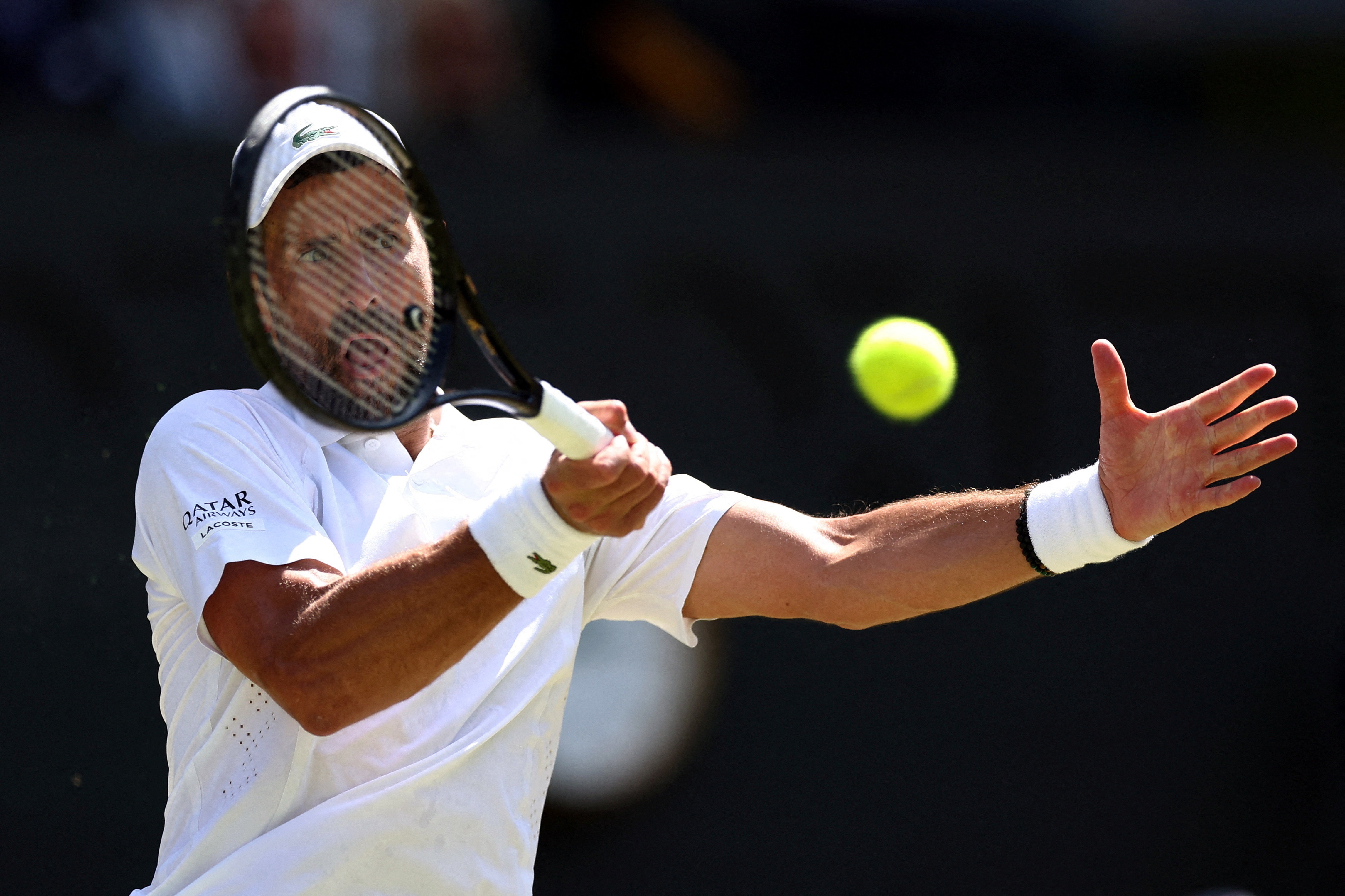
Novak Djokovic's marathon journey to the Wimbledon semifinals came with both triumph and controversy as the 39-year-old Serbian navigated the most grueling quarterfinal in the championship's history. His five-hour and 15-minute conquest of Canada's Felix Auger-Aliassime ended mere minutes before the All England Club's 11 pm curfew, a desperate dash against the clock that underscores the physical and mental toll of modern tennis at the sport's highest echelon. The match concluded with a 7-6, 3-6, 6-3, 6-7, 7-6 scoreline, propelling Djokovic into a semifinal meeting with defending champion Jannik Sinner and keeping alive his pursuit of an eighth Wimbledon title.
The flashpoint that dominated proceedings erupted when tournament referee Denise Parnell arrived at Centre Court to inform both players that the roof would be closed. At 7:40 pm, with the match delicately poised at one set apiece, Djokovic launched into a spirited protest, sensing that Parnell's decision disadvantaged him against the significantly younger Auger-Aliassime, renowned for his prowess on indoor surfaces. The Serbian fired an accusation at the official that highlighted perceived inconsistency in rule application, suggesting that earlier matches had been allowed to proceed in daylight conditions considerably later in the evening. "You are so proud of your rules and you're not sticking to any kind of rule," Djokovic remonstrated. "We have no idea what the rule is."
Djokovic's grievance drew upon his recollection of his opening-round victory against Wu Yibing, during which the roof remained open until approximately 8:30 pm. His argument carried weight: with daylight still available and an entire set potentially playable outdoors, closing the roof at 7:40 pm appeared premature. The champion questioned why the timing was shifting on a particular day when tournament conditions remained favorable. "We can play a whole other set outdoors. We're an outdoor tournament," he asserted, his frustration evident in both his words and demeanor.
Parnell countered Djokovic's objections by referencing a previous incident during Jannik Sinner's fourth-round encounter with Shintaro Mochizuki, when darkness forced an unexpected mid-set roof closure. The referee sought to prevent a recurrence of that logistical nightmare. However, Djokovic's dismissive response—"With Jannik, I don't care what happens. I care about our match right now!"—revealed the competitive calculus driving his complaint. He perceived the protective measure as an unnecessary accommodation to one opponent's circumstances while constraining his own tactical options against a player 14 years his junior.
The tension visible in this exchange dissipated somewhat during play, though Djokovic's physical struggles remained evident throughout. He had required medical attention near the completion of the opening set after sustaining what appeared to be a minor left calf strain, grimacing noticeably on his serves despite ultimately securing the set through a marathon tiebreak. The initial discomfort raised genuine questions about whether his body could withstand the demands of a prolonged encounter, yet he adjusted his movement and maintained competitive intensity as the match progressed.
Auger-Aliassime, seeded third at the championship, presented a formidable obstacle despite having surrendered serve only once throughout the tournament before this match. The Canadian's consistency and relative freshness—stemming from earlier quick victories—meant Djokovic required exceptional execution to penetrate his defense. Djokovic finally managed a love break in the third set, capitalizing on accumulated pressure and mental fatigue, before the match tilted toward a fourth set. That set went to a tiebreak that Auger-Aliassime won decisively with a 7-4 margin, forcing Djokovic into a deciding fifth set.
The deciding set became a test of nerve and endurance as both players pushed toward the first-to-10 tiebreak format demanded by Wimbledon's final-set rulebook. Each point carried exponential weight; each hold of serve represented a small victory in an increasingly tense contest. A 14-minute hold from Auger-Aliassime during the second game of the third set had provided unexpected validation for Parnell's earlier caution about roof closure, as darkness would have made continuation impossible outdoors. The pace of play, influenced by the psychological pressures mounting alongside the physical toll, necessitated the controlled environment that indoor courts provide.
Djokovic's eventual victory in the deciding tiebreak, concluded at 10-4, delivered him from the brink of exhaustion and potential elimination. Having preserved his tournament life through grit and experience, he reflected candidly on the ordeal: "I did it with a racket, and a lot of heart," he stated in the immediate aftermath. His acknowledgment of the emotional and psychological dimensions of such contests speaks to a competitor who recognizes that pure physical talent becomes insufficient at this level; management of tension, regulation of nervous energy, and mental fortitude ultimately separate victors from vanquished.
For regional audiences, Djokovic's struggle illuminates the evolving nature of professional tennis where duration and intensity have increased dramatically. His ability to prevail despite physical compromise and administrative frustration underscores why he remains a force at 39, though questions about recovery loom ahead. The semifinal against Sinner will test whether one night's recovery suffices for Djokovic's body to recuperate from five hours of relentless baseline tennis. His closing remark—"I wish it was the final so I don't need to worry about how the body will feel tomorrow"—hints at the vulnerability facing any athlete competing at elite levels beyond conventional career spans.
The confrontation with Parnell also raises broader questions about tournament governance and competitive fairness in modern grand slam tennis. Roof technology has transformed Wimbledon from an exclusively outdoor championship into a hybrid venue, yet the protocols governing its deployment remain subject to interpretation. Djokovic's challenge to the consistency of application resonates with longstanding debates about whether rules are enforced uniformly or whether discretion sometimes favors particular matches or players. As Wimbledon continues evolving as an institution, balancing weather concerns against competitive integrity remains an enduring tension.

