Novak Djokovic arrives at Flushing Meadows with genuine grounds for optimism about clinching a record 25th Grand Slam title, a pursuit that has defined his recent years on tour. The circumstances surrounding the final major of 2024 present the Serb with perhaps his clearest opportunity since claiming the title in 2023, though the road remains treacherous with Alexander Zverev establishing himself as a formidable obstacle following his breakthrough at Roland Garros.
The competitive landscape has shifted considerably in Djokovic's favour heading into New York. Jannik Sinner, who has emerged as one of the sport's dominant forces alongside Carlos Alcaraz, is sidelined by a knee injury that forces his absence from the draw. Alcaraz, the defending champion, is returning from an extended four-month absence prompted by a wrist problem, leaving considerable uncertainty about whether the young Spaniard has recovered sufficient sharpness to mount his customary championship challenge. These dual setbacks for the players who have most consistently thwarted Djokovic's attempts to break clear of Margaret Court's all-time record of 24 major titles represent a meaningful shift in the tournament dynamics.
The statistical reality underscores how thoroughly Alcaraz and Sinner have dominated men's tennis in recent seasons. The pair have combined to win ten of the last eleven Grand Slam tournaments, establishing a level of consistency that seemed unassailable just months earlier. Across the previous six major championships, these two rivals have defeated Djokovic on five occasions, a record that illuminates both their rising dominance and the difficulty the 39-year-old veteran faces in reaching the sport's summits. Even at this stage of his career, Djokovic's pursuit of the record has been repeatedly blocked by the next generation's firepower.
Yet Djokovic enters the tournament armed with a psychological tool that he has articulated with increasing clarity: the Serbian concept of inat, which translates roughly as a stubborn refusal to capitulate when facing seemingly impossible odds. In a documentary released ahead of the U.S. Open, Djokovic reflected on how this mentality has sustained him through periods when doubters questioned whether his competitive window had permanently closed. He framed inat not merely as individual determination but as an expression of Serbian cultural character, a force activated precisely when external pressures mount most intensely.
The physical realities of Djokovic's situation cannot be glossed over, however. He brings limited preparation time to the tournament and continues to manage lingering physical concerns that have accumulated over a career spanning decades at the sport's highest intensity. These practical constraints stand in contrast to the psychological resolve he repeatedly emphasises, creating a genuine tension between the mental conviction driving his continued pursuit and the bodily demands of competing across multiple rounds against the world's best players. Whether his physique can sustain the rigours of a deep run through New York remains perhaps the most pertinent question surrounding his candidacy.
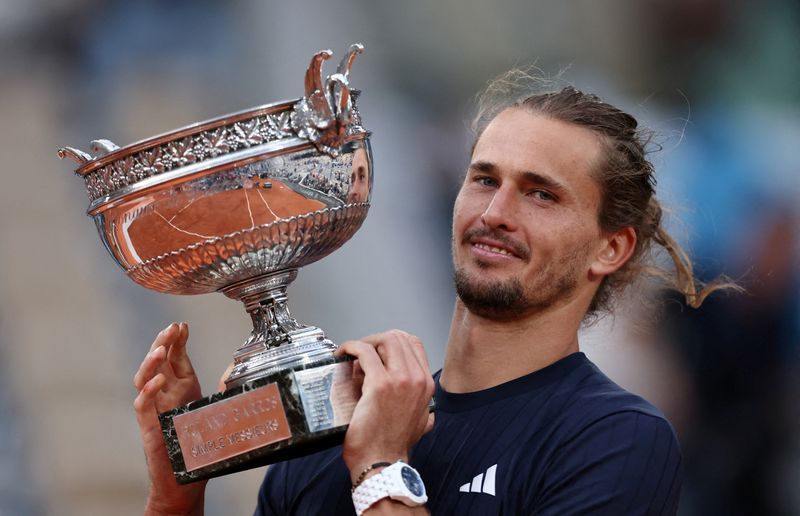
Alexander Zverev has emerged as the primary threat to Djokovic's ambitions, having finally conquered the major-title drought that haunted him for years. His French Open victory earlier in 2024 provided definitive proof of his capacity to perform under the brightest lights, while his subsequent appearance in the Wimbledon final reinforced his status as a top-tier contender capable of sustaining excellence across different surfaces and tournament conditions. For Djokovic, the German represents perhaps a more immediate concern than the returning Alcaraz, whose competitive sharpness after months away remains genuinely uncertain.
Alcaraz's layoff introduces unpredictability into his prospects that distinguishes his situation from typical tournament preparation. Defending champions customarily arrive with recent tournament experience and rhythm intact, yet Alcaraz's extended absence means he faces a more substantial ramp-up period to reach championship form. Nevertheless, his established pattern of producing elite tennis when stakes peak highest suggests that discounting his chances would be premature. The uncertainty surrounding his return creates genuine danger for opponents lacking full information about his current physical condition and competitive readiness.
The American contingent looms as a secondary narrative throughout the tournament. Ben Shelton, who captured the Canadian Open crown in Montreal, has suddenly thrust himself into genuine major contention with a dramatic trajectory in recent weeks. His earlier first-round exit at Wimbledon followed by the Canadian success underscores the volatility of his performances, a pattern that legendary former champion Andy Roddick has identified as crucial to monitor. Roddick emphasised that Shelton's ability to navigate the tournament's opening week decisively will prove determinative for his capacity to remain competitive in the latter stages, where the draw typically becomes progressively more challenging.
Taylor Fritz, the defending finalist, remains positioned to end a 23-year drought for American men's champions on home soil, while Cincinnati runner-up Frances Tiafoe adds another homegrown challenger to the mix. The concentration of American players among the tournament's serious contenders reflects both the depth of American tennis development and the particular affinity many U.S.-based competitors hold for New York's courts and atmosphere. For the American tennis establishment, this gathering of legitimate challengers represents both opportunity and pressure to finally produce a domestic male champion at the year's final major.
Roger Federer, observing from the sidelines in New York, offered a measured assessment of Djokovic's prospects that acknowledged both his age-related limitations and his demonstrated capacity for sudden excellence. Federer's perspective carries particular weight given his own experience as an elder statesman of tennis seeking to extend his major-winning career, and his observation that Djokovic will possess genuine chances whenever he enters any tournament reflects the Serbian's proven ability to rise to championship moments despite the accumulated toll of a lengthy career. Federer's comments underscored a crucial distinction: Djokovic's presence in any draw creates genuine possibilities precisely because he has repeatedly demonstrated that capacity across decades and diverse conditions.
Rising talents including Arthur Fils and Rafael Jodar represent the sport's emerging generation, while Felix Auger-Aliassime, who reached the semi-finals the previous year, seeks to build upon his recent progress at the major championships. The depth of the men's draw illustrates how the era of Djokovic-era dominance has given way to a more distributed competitive landscape where multiple players possess credible championship credentials. Yet amid this shifting hierarchy, Djokovic's pursuit of the record continues to command attention and generate genuine narrative tension about whether the 39-year-old can overcome the accumulated disadvantages of age, limited preparation, and the fundamental challenge of sustaining elite performance across five demanding rounds against the sport's most accomplished players.

