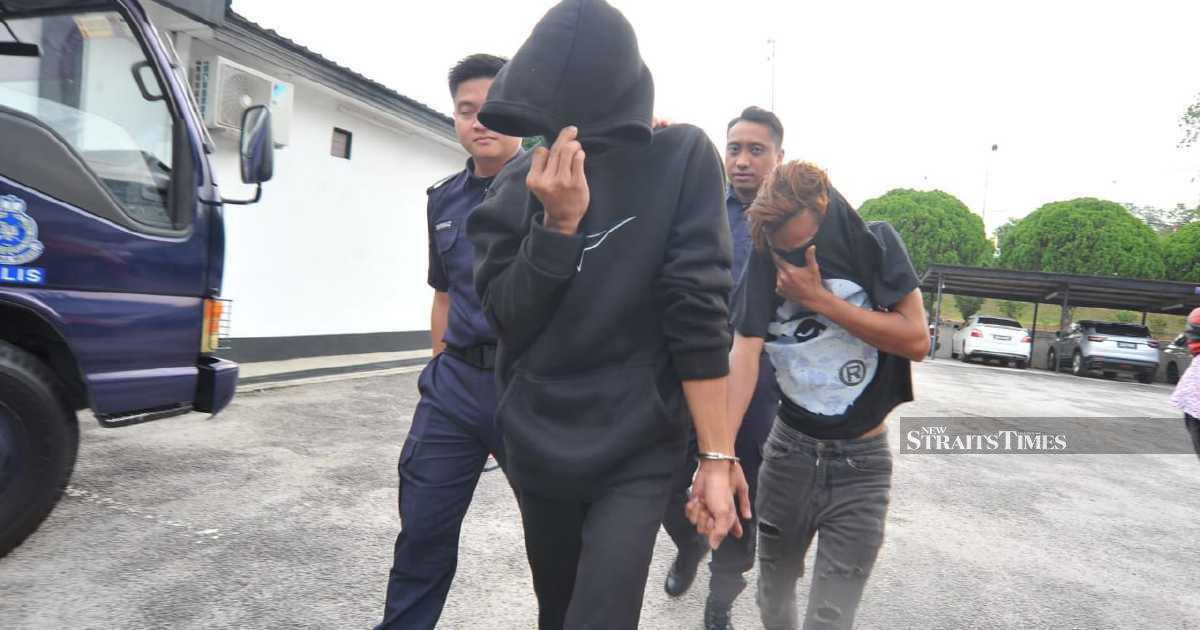
A disabled mechanic and his associate faced serious motoring charges in Kulai magistrate's court following allegations of reckless and dangerous driving during what authorities say was an unauthorised street racing incident on the Johor Second Link expressway last Saturday. The charges mark a continued enforcement crackdown on dangerous driving practices along one of Malaysia's busiest toll expressways, a corridor that connects Johor Bahru to Singapore and experiences significant traffic volumes daily.
The Second Link, also known as the Johor Second Link Expressway, has become a focal point for law enforcement operations targeting dangerous driving behaviours. The expressway handles considerable commercial and passenger traffic between Malaysia and Singapore, making any racing incidents or reckless driving particularly hazardous to other road users. Authorities have intensified patrols and monitoring along this route in recent years as part of broader road safety initiatives, reflecting growing public concern about accident rates on major expressways.
The case draws attention to an ongoing problem in Malaysia's urban and semi-urban areas where illegal street racing continues despite consistent law enforcement efforts. These incidents typically involve modifications to vehicles and coordination between multiple participants, creating significant risks not only to the racers themselves but to innocent motorists and passengers who share the roadway. The alleged Saturday incident adds to a pattern of such cases that regularly appear before Malaysian courts.
What distinguishes this particular case is the involvement of a mechanic with disabilities, raising broader questions about accessibility, employment opportunities, and social integration for individuals with physical limitations in Malaysia. The fact that a disabled person was allegedly involved in such a serious traffic offence reflects the complex realities faced by this demographic, including employment pressures and participation in activities alongside peers without restrictions.
Mechanics, particularly those operating in informal sectors or smaller workshops, sometimes become entangled in activities that extend beyond legitimate automotive work. The involvement of two mechanics suggests potential connections to vehicle modification networks that support illegal racing communities. These networks typically involve custom work on engines, suspension systems, and other performance enhancements specifically designed for racing activities.
The magistrate's court in Kulai has jurisdiction over such motoring violations and would determine appropriate penalties if the defendants are convicted. Malaysian traffic laws impose substantial penalties for reckless and dangerous driving, including significant fines, driving ban periods, and potential imprisonment depending on case severity and circumstances. Magistrate's courts handle the majority of routine traffic offences before they progress to higher jurisdictions.
Public road safety remains a critical concern for Malaysian policymakers and enforcement agencies. The Malaysian public has become increasingly vocal about dangerous driving through social media and traditional channels, creating political pressure for authorities to demonstrate visible progress in reducing traffic-related incidents. Street racing, illegal speed racing, and reckless driving campaigns have featured prominently in police public relations messaging and education initiatives.
The Second Link's significance extends beyond Malaysian road safety into bilateral relations with Singapore. Both countries maintain cooperative traffic enforcement arrangements along their shared border crossings, and incidents on the expressway can attract attention from both authorities. The expressway's heavy usage by commercial vehicles, tourist traffic, and daily cross-border commuters means that safety concerns reverberate across the region.
Identifying and prosecuting individuals involved in illegal racing has become increasingly important as vehicle technology advances and modification capabilities expand. Younger drivers and automotive enthusiasts have developed sophisticated communities around performance vehicles, sometimes crossing into illegal territory. Law enforcement agencies across Southeast Asia, including Malaysian authorities, have recognised the need for both deterrence through prosecution and alternative engagement strategies for automotive enthusiasts through legal channels.
The case highlights potential disconnects between enforcement efforts and underlying social factors driving participation in risky driving behaviours. While prosecution and legal consequences serve important deterrent functions, understanding why individuals engage in dangerous driving—particularly those facing additional social challenges such as disability—remains crucial for developing comprehensive road safety strategies. Malaysian policy discussions increasingly include consideration of such contextual factors alongside traditional enforcement approaches.
For the broader automotive and repair community in Johor, cases like this carry reputational implications, as mechanic networks become associated with vehicle modification for illegal purposes. The industry itself has incentive to distance legitimate automotive work from racing-related activities that tarnish professional standards and create negative public perception of repair shops and technicians.
The outcome of these charges will likely influence how Malaysian authorities approach similar cases and may contribute to evolving enforcement priorities. Each high-profile prosecution sends signals to both potential offenders and the public about road safety commitment levels. The case will be monitored closely by road safety advocates and automotive enthusiast communities, as the court proceedings unfold and potential precedents emerge regarding dangerous driving convictions.

