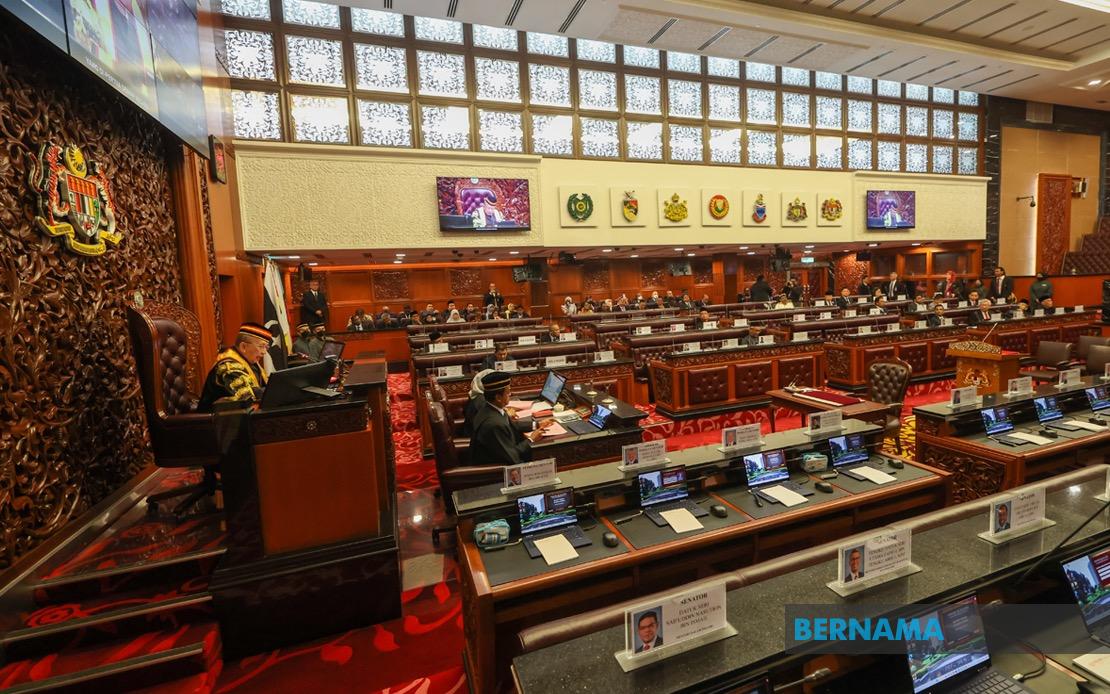
Malaysia's upper chamber has wrapped up a productive parliamentary sitting marked by the successful passage of two key pieces of legislation designed to modernise the nation's institutional and statistical frameworks. The 10-day session of the Dewan Negara, which ran from July 20 through August 4, delivered the National Trust Fund (KWAN) Bill 2026 and the Statistics Bill 2026, reflecting the government's broader commitment to enhancing governance structures and data infrastructure. Both measures represent substantive reforms aimed at addressing long-standing institutional gaps and setting clearer parameters for future financial management and statistical collection across the country.
Deputy Finance Minister Liew Chin Tong steered the KWAN Bill through the chamber, introducing provisions designed to impose stricter accountability measures on the National Trust Fund and establish more rigorous protocols governing resource withdrawals. The legislation signals the government's determination to prevent misuse of accumulated national reserves and create transparent mechanisms that prevent ad-hoc or inadequately justified fund depletion. Simultaneously, Deputy Economy Minister Datuk Mohd Shahar Abdullah championed the Statistics Bill, which establishes a contemporary legal framework for the collection, management, and application of national statistical data. This modernised approach acknowledges the evolution of data requirements in an increasingly complex economy and the critical role reliable statistics play in evidence-based policymaking across sectors ranging from healthcare to infrastructure development.
The sitting operated within a broader economic context shaped by geopolitical developments in West Asia that have created supply chain uncertainties and commodity price volatility. Government representatives assured parliament that targeted interventions would protect public welfare whilst maintaining growth momentum, with strategies encompassing strategic supply chain management, inflation containment through targeted price stabilisation measures, industry support mechanisms, and capacity-building initiatives to enhance national economic resilience. This multifaceted approach reflects recognition that economic vulnerability in an interconnected global system demands coordinated policy responses spanning both preventative and reactive measures.
Prime Minister Datuk Seri Anwar Ibrahim used the platform to defend the Retirement Fund (Incorporated) (KWAP) against criticism following its net profit of RM12.9 billion, arguing that pension fund performance should be evaluated with appropriate context and nuance. He acknowledged, however, that the fund's investment in eFishery—a Southeast Asian aquaculture technology platform—had yielded valuable lessons informing future investment strategies. This candid assessment demonstrates willingness to learn from investment outcomes whilst maintaining confidence in the fund's overall trajectory and management approach, an important signal to pensioners and public employees who depend on KWAP's stability.
The government also addressed the operational challenges confronting Pos Malaysia, outlining continuation of comprehensive transformation initiatives designed to address persistent financial losses through strategic network consolidation, accelerated digital service expansion, and disciplined cost management. Beyond near-term operational improvements, officials revealed they are exploring establishment of a dedicated Postal Service Fund that would provide sustainable long-term financing mechanisms for the national postal operator, reflecting acknowledgement that market-based approaches alone may prove insufficient to maintain universal postal services across Malaysia's diverse geography.
Energy security emerged as a substantial parliamentary concern, with government officials detailing comprehensive measures to strengthen the nation's fuel independence and supply reliability. These initiatives include careful assessment of establishing strategic petroleum reserves, an undertaking that demands rigorous analysis of fiscal implications, operational logistics, governance arrangements, and successful international models. The recently finalised 20-year fuel supply agreement with Russia—encompassing petrol, diesel, crude oil, and natural gas—was presented as complementary to the National Energy Transition Roadmap (NETR) objectives, allowing Malaysia to secure essential hydrocarbon supplies whilst maintaining commitment to longer-term energy diversification and renewable integration.
Investment attraction and industrial development featured prominently in parliamentary discussions, with officials highlighting Japan's substantial commitment to Malaysia's electrical and electronics manufacturing sector. Between 2021 and 2025, approved Japanese investments totalled RM10.5 billion across 46 distinct projects, anticipated to generate 9,009 employment opportunities and reinforce Malaysia's positioning within global high-technology supply chains. These figures underscore the continuing appeal of Malaysia as a manufacturing destination for sophisticated electronics production, a sector that generates substantial foreign exchange earnings and integrates Malaysian enterprises into premium value chains.
Competitiveness and economic rankings received ministerial attention during the sitting, with Datuk Mohd Shahar highlighting Malaysia's trajectory toward becoming one of the world's 12 most competitive economies by the conclusion of the 13th Malaysia Plan (13MP). This ambitious target derives support from Malaysia's improved standing in the 2026 World Competitiveness Ranking (WCR), suggesting that incremental reforms across regulatory, infrastructural, and human capital dimensions are generating measurable returns. The government simultaneously unveiled plans for Bank Negara Malaysia to implement a revised Performance Measurement Framework (PMF) for Development Financial Institutions (DFIs) commencing July 1, 2027, ensuring more comprehensive evaluation of these institutions' developmental impact, governance standards, and operational performance.
The electric vehicle ecosystem continued gaining policy attention, with government confirmation that private sector participation would remain the primary driver of EV infrastructure expansion, eschewing centrally imposed pricing controls for public charging services. As of May 31, Malaysia had installed 6,416 public EV chargers nationwide, demonstrating accelerating momentum in electromobility infrastructure development. This market-driven approach balances environmental transition objectives with private enterprise incentives, allowing competitive forces to shape charging network expansion rather than relying on state subsidy or price regulation.
Fiscal sustainability, a longstanding government priority, demonstrated measurable progress during the parliamentary session, with Finance Ministry officials reporting that the federal fiscal deficit had narrowed for the fifth consecutive year following sustained implementation of comprehensive economic and fiscal reforms. Federal debt remained comfortably within statutory limits, providing reassurance regarding long-term fiscal viability. Deputy Finance Minister Liew additionally noted that expenditure controls implemented during the first half of 2024 generated nearly RM5 billion in spending restrictions whilst preserving delivery of essential public services, illustrating that fiscal consolidation need not compromise critical government functions and capital investments essential for economic development.
The disciplined fiscal management exemplified by these outcomes carries particular significance for Malaysian readers and regional observers assessing Southeast Asian fiscal governance. Many countries in the region continue struggling with elevated deficit and debt levels; Malaysia's five-year trajectory of deficit reduction whilst maintaining service delivery standards offers a contrasting model worthy of examination. This combination reflects calculated policy choices prioritising long-term macroeconomic stability over short-term expenditure expansion, positioning Malaysia to weather future economic shocks and maintain policy flexibility when crises demand rapid response.
The Dewan Negara's conclusion of its Second Meeting marks the end of a session substantially focused on institutional modernisation, economic resilience-building, and preparation for anticipated future challenges spanning geopolitical tensions, energy transition, and competitive pressures within global manufacturing and services sectors. The passage of governance and statistics legislation, combined with comprehensive government briefings on energy security, investment promotion, and fiscal performance, reflects parliament's expanded role in scrutinising executive implementation of complex policy agendas. The President of the Dewan Negara adjourned the session pending announcement of dates for subsequent parliamentary business, leaving various ongoing initiatives—from strategic petroleum reserve assessment to the DFI performance framework—in implementation phases requiring continued monitoring and parliamentary oversight.

