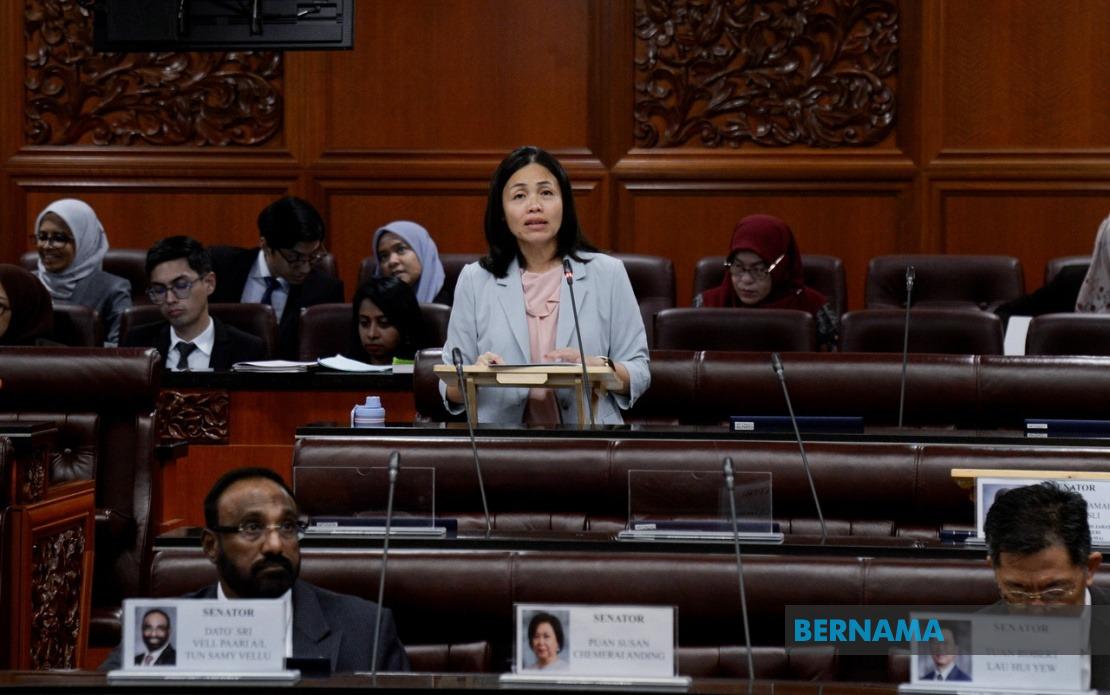
The Dewan Negara has given its blessing to the Communications and Multimedia Commission (Amendment) Bill 2026, marking a significant step toward fortifying the regulatory framework governing Malaysia's communications sector. Following a debate involving eleven senators, lawmakers voted to advance legislation that fundamentally restructures how the country approaches digital regulation and infrastructure oversight in an increasingly complex online environment.
Deputy Minister of Communications Teo Nie Ching highlighted the urgency of the reforms by presenting compelling enforcement statistics that underscored escalating regulatory activity against illicit digital content. The MCMC has orchestrated the removal of more than 222,000 online gambling-related materials during the first seven months of 2026 alone, reflecting what officials characterize as increasingly assertive action against harmful online activity. The trajectory of enforcement efforts tells a story of institutional muscle-building: mere scattered removals two years ago have transformed into systematic removal campaigns, with deleted content jumping from just two instances in 2022 to nearly 290,000 by 2025.
The scale of this enforcement operation extends beyond simple content deletion. Over the past four years, the MCMC has successfully petitioned telecommunications providers to block access to 6,982 gambling-related websites, creating substantial barriers to illegal operators attempting to exploit Malaysia's connected population. This coordinated approach demonstrates how regulatory bodies can leverage platform cooperation to achieve enforcement objectives without requiring direct legal authority over gambling operations themselves. Teo clarified that while the Royal Malaysia Police maintains primary jurisdiction over gambling activities, the MCMC functions as a crucial technical partner, providing digital forensic capabilities and access restriction services that prove essential to combating sophisticated online operations.
The amendment introduces structural safeguards aimed at insulating the commission from political interference, a consideration that resonates deeply within Malaysia's governance discourse. Critically, the revised legislation explicitly prohibits elected officials from serving as commission chairman, barring sitting members of Parliament and state assemblies from the position. This architectural change reflects growing recognition that regulatory independence requires more than rhetorical commitment—it demands formal institutional barriers preventing those wielding legislative or executive authority from simultaneously controlling watchdog functions. Teo framed this depoliticization as essential to ensuring that appointees possess genuine qualifications rather than political connections, a distinction with considerable implications for regulatory credibility.
Senator Datuk Abdul Halim Suleiman contextualized the amendments within a broader understanding of Malaysia's evolving strategic priorities. His intervention suggested that communications and multimedia infrastructure has transcended its traditional characterization as merely an economic sector, instead assuming the status of critical national infrastructure comparable to energy, water, or transportation systems. This reconceptualization justifies more robust regulatory mechanisms and heightened scrutiny of organizational governance. However, Suleiman simultaneously warned that legislative powers alone cannot guarantee effective outcomes—institutional success depends upon the MCMC's capacity to exercise authority with professional competence, institutional transparency, and genuine effectiveness in safeguarding public interests.
Senator Muhammad Hasbie Muda introduced a complementary concern regarding personnel selection processes. His intervention emphasized that regulatory reform extends beyond simply granting expanded functions and authorities to agencies; authentic reform requires ensuring that those wielding such powers operate according to principles of transparency, professional effectiveness, and accountability to the public. This distinction matters considerably for Malaysian governance, where regulatory capture—the phenomenon of agencies becoming vehicles for private or political interests rather than public welfare—remains a persistent concern across multiple sectors. By emphasizing merit and expertise in appointment procedures, lawmakers signaled that structural independence provisions must be paired with rigorous qualification standards.
The bill itself, having already secured approval in the Dewan Rakyat on July 15, comprises seventeen substantive clauses addressing multiple dimensions of digital governance. Among its key provisions, the legislation amends Section 16 of Act 589 to explicitly clarify the MCMC's function in developing and regulating digital infrastructure and platform standards. This clarification matters because technological developments constantly outpace existing legal frameworks, creating ambiguity about regulatory authority that clever operators can exploit. By establishing clearer statutory language regarding infrastructure development and standard-setting responsibilities, the amendment provides more solid legal grounding for MCMC interventions in emerging digital domains.
The reform package arrives at a critical juncture in Malaysia's digital development. As internet penetration deepens and online platforms increasingly mediate commerce, communication, and civic participation, regulatory institutions require both sufficient authority and demonstrated independence to maintain public confidence. The rise of illicit digital gambling illustrates how nimble online operators can proliferate harmful services faster than traditional law enforcement can respond, making technical regulatory agencies increasingly central to public safety. Simultaneously, the political economy of telecommunications and digital platforms creates substantial temptation for elected officials to influence regulatory decisions for partisan advantage, making institutional safeguards against politicization genuinely consequential.
For Malaysia and the broader Southeast Asian region, this legislative moment reflects shared challenges around digital governance. Neighbouring countries confront similar pressures from online gambling, illicit content, and platform-related harms, yet struggle to develop regulatory responses that prove simultaneously effective and independent of political manipulation. Malaysia's explicit prohibition on elected officials chairing regulatory bodies, coupled with its emphasis on merit-based appointments and transparent operations, establishes a model that other regional nations might study and adapt. The proven coordination between the MCMC and telecommunications providers also demonstrates how regulatory frameworks can leverage private sector compliance without requiring intrusive government control.
The amendments signal that Malaysian policymakers increasingly appreciate the distinction between regulatory power and regulatory legitimacy. An agency with expansive statutory authority but questionable independence will generate public skepticism and may face compliance challenges from the platforms and service providers it seeks to regulate. By moving to depoliticize the MCMC's leadership and enhance appointment standards, the legislation addresses a dimension of governance that technical provisions alone cannot solve. The true test will emerge as the MCMC continues its enforcement campaigns and navigates the inevitable conflicts between competing interests that characterize digital regulation in a complex, pluralistic democracy.

