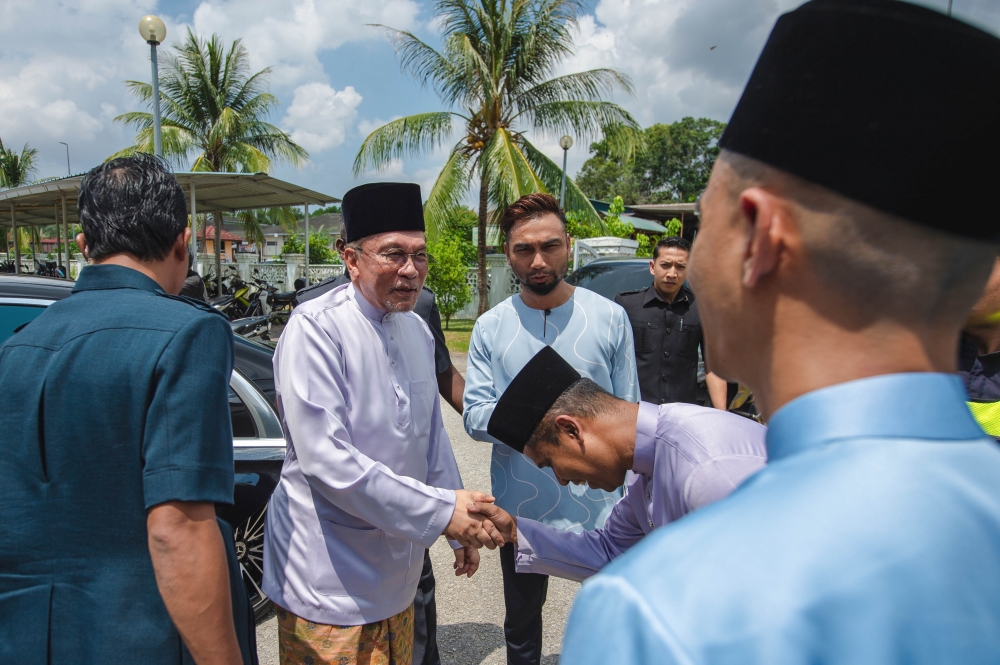
Prime Minister Datuk Seri Anwar Ibrahim has sounded a measured note of caution regarding Malaysia's economic trajectory, emphasising that headline growth figures do not necessarily reflect the lived reality of many citizens and business operators still grappling with financial pressures. While second quarter gross domestic product expansion exceeded market forecasts, the government remains acutely aware that the benefits of this growth have not translated uniformly across Malaysian society, leaving substantial segments of the population and entrepreneurial class in precarious circumstances.
The divergence between aggregate economic indicators and household financial conditions has emerged as a defining challenge for Malaysia's policymaking establishment. Strong quarterly growth statistics, while reassuring for international investors and financial markets, often obscure the more granular picture of wage stagnation, rising living costs, and compressed profit margins that characterise the reality for many Malaysians. This disconnect represents a critical communications and policy challenge for the government, which must balance the need to project economic confidence with genuine acknowledgment of widespread hardship.
Micro, small and medium enterprises represent the backbone of Malaysia's employment ecosystem and entrepreneurial fabric, yet these operators continue to report substantial difficulties in navigating the contemporary business environment. Rising input costs, labour expenses, and financing challenges have created persistent headwinds for businesses operating outside the large corporate sector. Many MSMEs remain vulnerable to external shocks and struggle to achieve meaningful profitability despite macroeconomic expansion, a reality that constrains job creation and wage growth in this crucial segment.
Anwar's explicit recognition of these challenges carries political and economic significance. By acknowledging that GDP growth alone does not constitute sufficient evidence of broad-based prosperity, the Prime Minister signals governmental awareness of social pressure points that could crystallise into political discontent if left unaddressed. The statement reflects a sophisticated understanding that economic legitimacy depends not merely on statistical growth but on tangible improvements in household purchasing power and business viability across income and size categories.
The Malaysian government has articulated various interventions aimed at cushioning economic pressures on vulnerable populations and small enterprises. These measures, ranging from targeted subsidies to credit facilitation schemes, attempt to decouple headline growth from the necessity of inclusive recovery. However, questions persist regarding the adequacy and targeting efficiency of such programmes, particularly as government budgetary constraints limit the scale of support that can be sustained over extended periods.
Regional economic dynamics compound Malaysia's domestic policy challenges. As a trading economy deeply integrated into regional and global supply chains, Malaysia remains susceptible to external demand fluctuations and commodity price volatility. The second quarter growth performance occurred within a context of cautious regional expansion, suggesting that the Malaysian economy has benefited from selective sectoral strength rather than across-the-board vigour. This concentration of growth raises questions about employment breadth and income distribution.
Inflationary pressures that emerged throughout 2022 and into 2023 continue to exert real-terms erosion of household income gains, particularly for lower-income cohorts with limited hedging capacity. While headline inflation has moderated from peak levels, it remains elevated relative to historical norms, meaning that nominal wage increases frequently fail to restore purchasing power. This structural dynamic creates a psychological dimension to economic discontent that transcends statistical measurement and influences political sentiment.
The small business sector's financial vulnerability extends beyond operational margins to encompass access to capital markets and formal credit facilities. Many MSMEs operate within informal or semi-formal contexts that exclude them from conventional banking relationships, forcing reliance on high-cost alternative financing that further constrains investment capacity and competitiveness. Digital transformation and modernisation initiatives championed by the government remain inaccessible to substantial portions of the MSME universe, particularly in rural areas and traditional sectors.
Anwar's comments implicitly acknowledge that Malaysia's economic policy framework must evolve beyond conventional macroeconomic management toward more granular interventions addressing specific structural constraints. The statement reflects growing recognition within the government that sustained political legitimacy requires demonstrable improvements in household financial security and MSME viability, not merely maintenance of positive GDP growth trajectories. This orientation positions future budget allocations and policy initiatives within a framework that privileges inclusive recovery mechanisms.
The sequencing and composition of fiscal policy decisions will prove determinative for whether Malaysia achieves genuine broad-based economic improvement or merely sustains a bifurcated recovery in which headline statistics improve while substantial population segments experience stagnation. Government effectiveness in translating growth into employment expansion, wage improvement, and business profitability will substantially influence both economic outcomes and political dynamics in the coming months and quarters.

