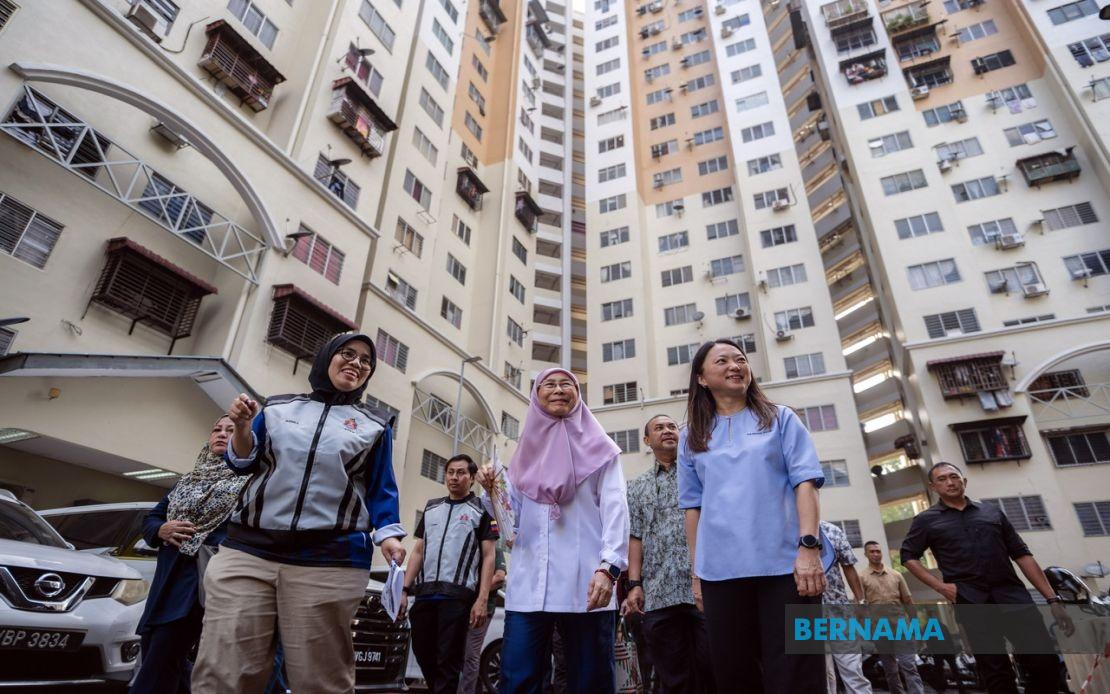
The Desa Tun Razak People's Housing Project (PPR) in Kuala Lumpur has joined a growing list of upgraded public housing facilities following the completion of comprehensive renovation works valued at RM9.6 million. The project represents a significant milestone in the federal government's commitment to systematically overhaul aging housing complexes throughout the capital, with Hannah Yeoh, the Minister in the Prime Minister's Department (Federal Territories), highlighting that this particular development is one of 22 projects that have now reached completion out of a total portfolio of 61 facilities slated for upgrade work.
The broader initiative reflects a strategic shift in how Malaysia approaches public housing maintenance. The government has allocated an additional RM300 million specifically earmarked for this year to ensure that upgrading efforts across Kuala Lumpur's PPR portfolio proceed in an orderly and comprehensive manner rather than through sporadic, reactive interventions. This allocation came after consultation with all Kuala Lumpur Members of Parliament, indicating a collaborative approach to housing policy at the federal and local levels. The funding model addresses a critical gap that has long plagued Malaysia's public housing sector—the absence of sustained maintenance budgets that can degrade facilities over time, compromising both resident safety and property longevity.
The Desa Tun Razak facility, which has housed residents since its establishment in 1998, accommodates more than 8,000 people, making it a substantial community hub requiring systematic attention. Hannah Yeoh emphasized during an inspection of the completed works that deliberate, planned maintenance infrastructure is essential to preventing safety deterioration. She articulated a philosophy increasingly prevalent in government housing discourse: that developing a project represents only the first phase, and without dedicated long-term funding mechanisms, structural and safety standards inevitably decline, potentially endangering occupants.
The specific works undertaken at Desa Tun Razak address pressing operational concerns identified within the facility. Electrical wiring throughout the complex was systematically replaced, a necessary upgrade for aging infrastructure that had been in service for over two decades. Road surfaces were resurfaced to restore accessibility and drainage functionality. Significantly, the project prioritized fire safety enhancements, a response directly tied to fire incidents that occurred at the PPR in the preceding year. These incidents likely prompted a comprehensive reassessment of fire prevention protocols and equipment across the facility.
Kuala Lumpur Mayor Datuk Fadhlun Mak Ujud provided detailed cost breakdowns for the RM9.6 million investment. The largest component, consuming RM7 million, was dedicated to repainting works throughout the complex—a substantial expense reflecting either the size of the facility or the comprehensive nature of the cosmetic restoration. Fire prevention systems and electrical wiring upgrades accounted for RM1.68 million of the budget, underscoring the safety-first prioritization evident in the upgrade strategy. Road resurfacing consumed nearly RM1 million. Beyond these line items, the mayor noted that fire riser systems—critical infrastructure for water supply during emergency situations—and drainage systems received upgrades as well, though specific costs were not itemized.
The timeline for completing the entire RM300 million PPR upgrade programme appears ambitious yet achievable. With 22 projects already finished and expectations that all works under the allocation will conclude by year's end, the initiative represents a compressed timeline for such extensive renovation across dozens of facilities. This acceleration may reflect political pressure to demonstrate tangible improvements in public housing conditions ahead of electoral cycles or, alternatively, a genuine administrative commitment to resolving long-standing maintenance backlogs that have accumulated within Kuala Lumpur's PPR portfolio.
Parking constraints at Desa Tun Razak PPR exemplify challenges that extend beyond the physical infrastructure directly addressed by the RM300 million programme. Kuala Lumpur City Hall (DBKL) has committed to identifying vacant land suitable for temporary parking facilities, acknowledging that vehicle accommodation shortages persist despite renovation efforts. This acknowledgment suggests that comprehensive housing upgrades must sometimes address ancillary quality-of-life issues that fall outside primary construction parameters. The identification of temporary solutions indicates an interim approach rather than permanent architectural remedies, a pragmatic recognition of land constraints within urban Kuala Lumpur.
Bandar Tun Razak Member of Parliament Datuk Seri Dr Wan Azizah Wan Ismail utilized the completion milestone to appeal for resident stewardship of upgraded facilities. Her remarks reflected concerns, common across Malaysian public housing discourse, that infrastructure improvements fail to achieve lasting benefits when maintenance responsibility lacks clear allocation or when community engagement remains superficial. The emphasis on fostering cultures of property safeguarding—distinguishing between public and private asset protection—suggests recognition that infrastructure success depends not solely on government investment but equally on resident participation in preserving improvements over extended periods.
The Desa Tun Razak project carries broader implications for Malaysia's approach to public housing policy. The decision to fund systematic upgrading rather than capital-intensive new construction projects reflects resource constraints and pragmatic acceptance that Malaysia's existing PPR stock requires attention. Southeast Asian observers monitoring Malaysia's social infrastructure investment patterns may view this initiative as a bellwether for how regional governments balance new development against maintenance of aging facilities. For Kuala Lumpur residents, particularly those inhabiting the 39 remaining PPR complexes awaiting upgrade work, completion trajectories and similar funding commitments will determine whether the current initiative represents sustained policy evolution or a temporary injection of resources unlikely to be replicated.
The RM300 million allocation carries fiscal weight that warrants scrutiny regarding sustainability. If the upgrade programme successfully completes all 61 projects within the stated timeline using only this year's allocation, questions arise regarding mechanisms for maintaining these facilities during subsequent fiscal years. Previous Malaysian public housing cycles have witnessed initial improvements followed by gradual deterioration as maintenance budgets contracted. Whether the current initiative establishes permanent structural changes to federal housing maintenance financing remains to be determined, but the symbolic importance of completing 22 projects and positioning the remainder for completion has already influenced public perception of government responsiveness to housing conditions.

