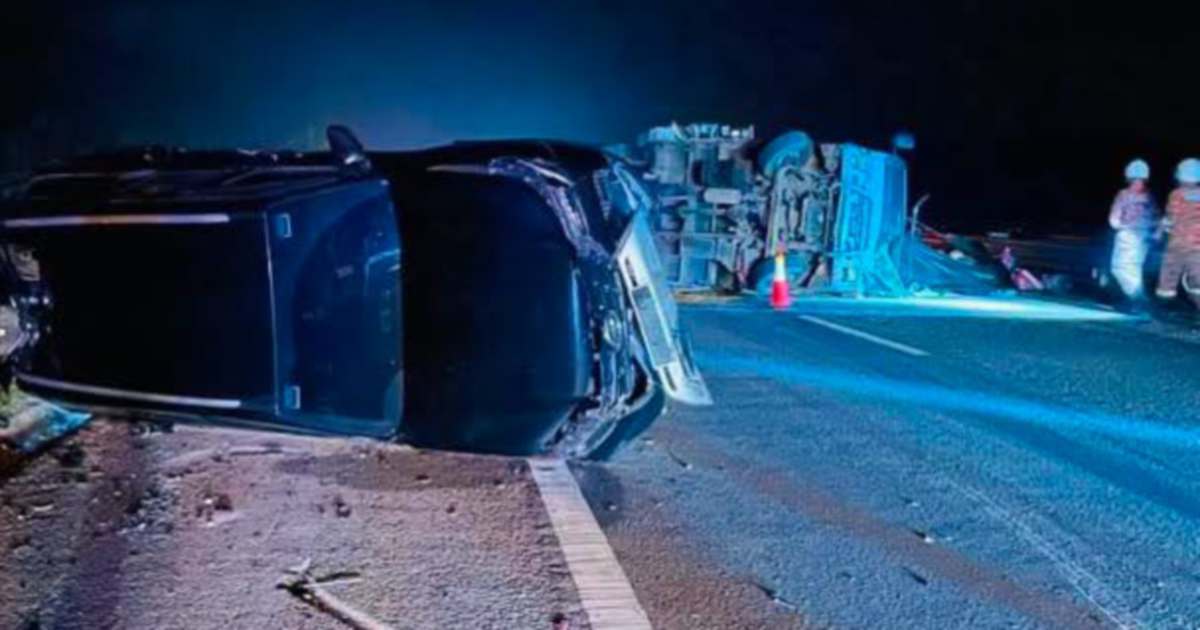
A road accident involving three vehicles on the East Coast Expressway near Maran has left seven people injured, including three media officers attached to Deputy Prime Minister Datuk Seri Dr Ahmad Zahid Hamidi. The incident occurred at Km144 of the expressway in the early hours of the morning, disrupting traffic flow on one of Malaysia's major north-south transport corridors.
Among those hurt in the collision were staff members responsible for media and communications duties for the Deputy Prime Minister's office. While official reports confirm that all three officers sustained injuries, initial assessments suggest none of the victims suffered life-threatening conditions that would have necessitated emergency medical intervention. The remaining four injured individuals involved in the crash were not officially identified at the time of reporting.
The East Coast Expressway serves as a critical commercial and commuter route connecting Peninsular Malaysia's eastern states with the central and northern regions. Traffic incidents at this location have the potential to create significant bottlenecks, affecting logistics operations, business deliveries, and daily commuter patterns across the route. The timing of this morning collision added to disruption during what would typically be the start of the working day.
Police and emergency responders were deployed to the scene to manage the accident, conduct initial investigations, and facilitate the safe removal of damaged vehicles. First responders assessed all injured parties and coordinated their transfer to medical facilities for treatment and observation. The involvement of government personnel and the presence of multiple vehicles complicated the initial response procedures, requiring coordination between various authorities.
The circumstances surrounding the collision remain under investigation by traffic police. Preliminary examination of the accident scene would have focused on determining the sequence of events, identifying which vehicle initiated the chain reaction, and establishing whether weather conditions, road surface quality, or driver error contributed to the incident. Such multi-vehicle crashes typically involve complex causation factors that require thorough forensic analysis.
For officials traveling extensively as part of their government duties, road safety represents an ongoing occupational concern. Media personnel attached to high-ranking government offices frequently undertake long journeys to cover official functions, attend press conferences, and document ministerial activities across different states. The incident highlights the inherent risks associated with frequent highway travel, particularly during early morning hours when driver fatigue may be a contributing factor.
The Deputy Prime Minister's office would likely review transportation protocols and safety measures following such incidents. Government agencies operating vehicles on behalf of senior officials often conduct post-incident assessments to identify opportunities for enhanced safety practices, including revised driving schedules, vehicle maintenance standards, and driver training protocols. These reviews form part of broader duty-of-care obligations toward staff members.
The East Coast Expressway has historically recorded varying accident rates across different sections, with certain stretches experiencing higher incident frequencies due to topographical factors, traffic volume, or junction design. The Maran area, located in Pahang state, represents a section of the expressway that carries substantial daily traffic. Infrastructure maintenance, speed enforcement, and public awareness campaigns continue to be focus areas for authorities managing the corridor.
Multi-vehicle accidents on express highways typically involve rapid assessments of vehicle damage, fuel leak risks, and potential fire hazards. Emergency services must balance swift clearance of the roadway to restore traffic flow with thorough documentation for insurance purposes and legal proceedings. The presence of government personnel may have elevated the priority given to the incident's investigation and media coordination.
The incident serves as a reminder of traffic safety considerations relevant to Malaysian travelers broadly. Whether for official purposes or personal journeys, highway travel during early morning hours requires heightened alertness, appropriate vehicle maintenance, and adequate rest breaks. Statistics from road safety organizations consistently indicate that fatigue-related accidents peak during early morning driving periods when circadian rhythms naturally encourage drowsiness.
Authorities managing the East Coast Expressway continue implementing various safety initiatives, including improved signage, enhanced lighting at high-risk sections, and emergency response stations strategically positioned along the route. Ongoing monitoring and periodic reviews of accident data help identify patterns and guide targeted interventions. Public cooperation with speed limits and safe driving practices remains essential for reducing incident severity and frequency.
As investigations proceed, transport authorities will likely release detailed findings regarding the accident's cause and contributing factors. Such information proves valuable for other highway users and transport operators seeking to understand and mitigate similar risks. The incident underscores ongoing conversation about balancing Malaysia's development through improved transport infrastructure with the safety standards necessary to protect all road users.