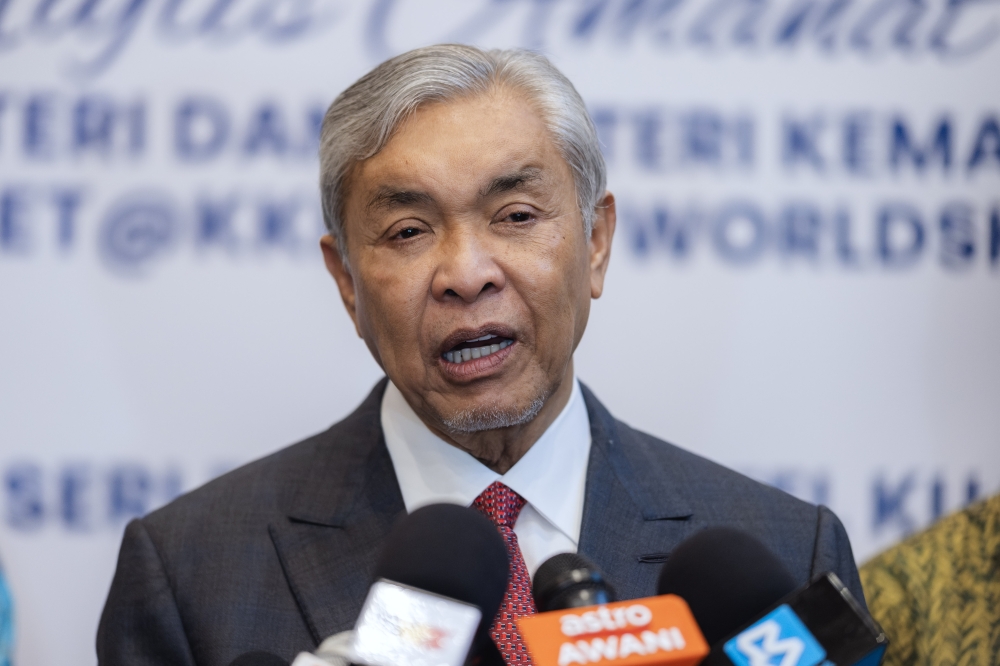
Deputy Prime Minister Datuk Seri Dr Ahmad Zahid Hamidi has made a bold commitment to fully finance umrah pilgrimages for TVET trainees who capture gold medals at WorldSkills competitions, an initiative aimed at honouring their technical excellence and providing religious fulfilment to top performers in Malaysia's vocational education system.
The offer represents a significant gesture recognising the calibre of technical talent emerging from Malaysia's Technical and Vocational Education and Training institutions. By linking umrah sponsorship with WorldSkills achievement, Zahid has effectively elevated the status of vocational pursuits within the national consciousness, positioning skilled trades and crafts as accomplishments worthy of the highest recognition and reward.
WorldSkills is the premier international platform where young technicians showcase their capabilities across diverse fields including welding, plumbing, electronics, culinary arts, and information technology. For Malaysian trainees, competing at WorldSkills represents both a test of technical prowess and an opportunity to demonstrate the country's commitment to developing world-class vocational expertise. Gold medals earned at these global competitions serve as validation that Malaysian TVET graduates can compete at international standards alongside their counterparts from developed nations.
The motivation behind Zahid's pledge appears multifaceted. Malaysia has long struggled with perception challenges surrounding vocational education, with many families viewing TVET pathways as second-tier options compared to academic university routes. By attaching spiritual and emotional significance to technical achievement through umrah sponsorship, the initiative attempts to reframe vocational excellence as prestigious and deserving of recognition comparable to traditional academic accomplishments. This psychological repositioning could prove consequential for encouraging more students to pursue skilled trades.
Umrah, the lesser pilgrimage to Mecca, carries profound spiritual significance for Muslims and represents a lifelong aspiration for many Malaysian families. Offering fully subsidised umrah trips removes a significant financial barrier for vocational trainees, many of whom come from lower and middle-income households. The gesture acknowledges that outstanding technical achievement should be rewarded with opportunities that transcend economic circumstance, ensuring that talented individuals from disadvantaged backgrounds can experience this important religious milestone.
For the TVET sector itself, the pledge signals political investment in vocational education's future trajectory. Malaysia faces an acknowledged skills gap in technical fields as industries seek workers trained in advanced manufacturing, renewable energy, and digital technologies. Attracting higher-calibre students to TVET programmes requires not merely competitive salaries but also social validation and concrete rewards for excellence. Zahid's initiative contributes to building the narrative that vocational achievement merits celebration and support at the highest levels of government.
The practical implications for TVET institutions across Malaysia warrant consideration. Heightened recognition for international competition success may prompt colleges and training centres to invest more substantially in coaching, equipment, and resources dedicated to WorldSkills preparation. Students aware that gold medals carry tangible rewards including umrah sponsorship may demonstrate heightened motivation and commitment to their technical studies. This cascading effect could strengthen Malaysia's overall competitive position in international skills competitions.
Contextually, Malaysia has participated in WorldSkills competitions for several decades, with mixed results. While Malaysian trainees have claimed medals historically, the country's medal tally remains modest relative to established powerhouses like Switzerland, South Korea, and Japan. The pledge to sponsor umrah for gold medalists might be viewed as an incentive mechanism intended to concentrate effort and resources on achievable targets, potentially lifting Malaysia's standing in future WorldSkills Olympiads.
The initiative also reflects broader strategic priorities within Malaysia's vocational education agenda. The government has repeatedly emphasised TVET's role in addressing skills shortages and preparing the workforce for economic transformation. By visibly rewarding technical excellence through a widely valued prize, Zahid reinforces messaging that vocational pathways represent legitimate routes to achievement and social mobility. Such cultural messaging carries particular weight given Malaysia's demographic composition and the number of youth entering the employment market annually.
For TVET trainees themselves, the offer presents direct incentive structure distinct from conventional academic recognition. While university graduates might compete for scholarships or job placements, vocational trainees now have prospect of state-funded spiritual travel contingent on world-class technical performance. This tailored recognition approach acknowledges that vocational learners may have different aspirations and values compared to academic-stream students, personalising government incentivisation strategies accordingly.
The umrah sponsorship pledge must also be situated within Malaysia's broader commitment to skills development and competition participation. As regional economies increasingly emphasise technical workforce capabilities, Malaysia seeks to position itself as a centre for vocational excellence. International recognition through WorldSkills success contributes to this positioning, and governmental incentives supporting competitive participation reinforce commitment to achieving global competitiveness in skilled trades.

