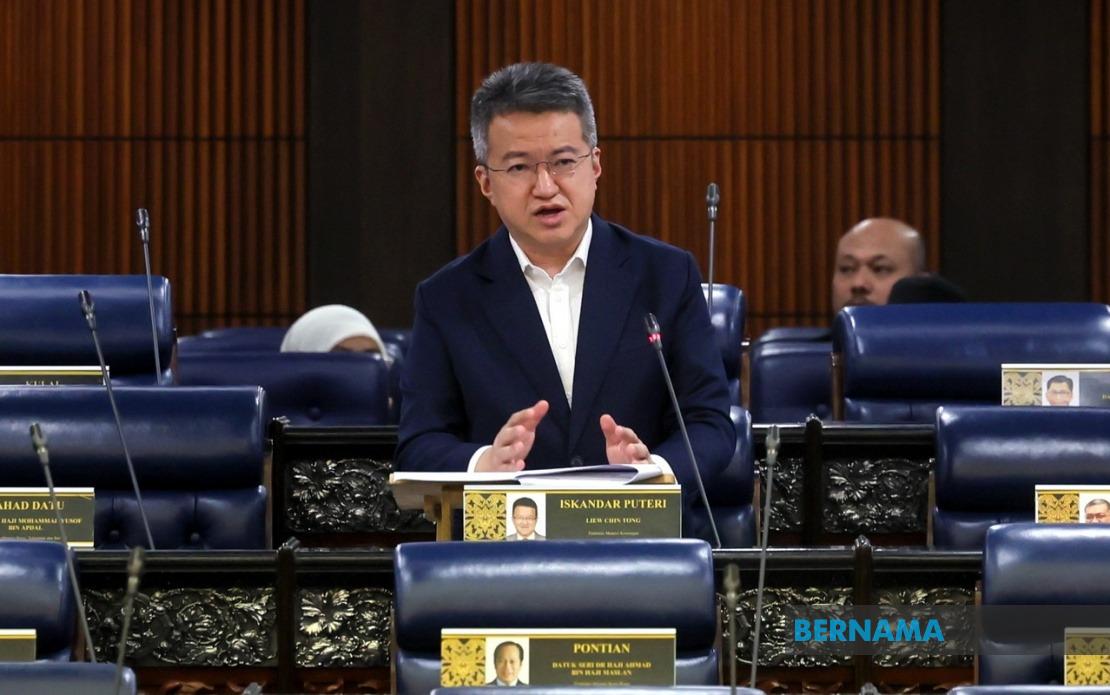
Deputy Finance Minister Liew Chin Tong has categorically rejected claims that fugitive businessman Low Taek Jho, commonly referred to as Jho Low, entered Malaysia with a Chinese delegation during the past year to participate in confidential discussions regarding a potential settlement over the massive 1Malaysia Development Berhad scandal. Fielding a supplementary question during parliamentary proceedings in the Dewan Rakyat, Liew provided a terse denial when confronted about media allegations suggesting such a clandestine meeting had occurred in late 2024 involving Ministry of Finance representatives.
The allegations emerged after opposition member Syed Saddiq Syed Abdul Rahman from MUDA-Muar highlighted reports claiming Jho Low had attended secret negotiations in Malaysia to broker a 1MDB repayment arrangement. This marked the first parliamentary confirmation of such rumours, elevating what had previously circulated as media speculation to formal parliamentary inquiry. The timing of these allegations underscores the persistent international dimensions of the 1MDB crisis, which continues to haunt Malaysian governance and diplomatic relations nearly a decade after the fund's implosion.
When answering the initial parliamentary question from Chong Chieng Jen regarding 1MDB's outstanding debts and recovery strategies, Liew outlined the government's multifaceted approach to asset retrieval through both criminal prosecution and civil litigation. The Deputy Minister emphasized that Malaysia's authorities remain committed to pursuing all available legal channels to claw back misappropriated funds, demonstrating sustained governmental focus on resolving what has become synonymous with institutional financial mismanagement and kleptocracy.
A significant milestone in this recovery effort came in December 2025 when the High Court delivered a watershed judgment against former Prime Minister Datuk Seri Najib Tun Razak, sentencing him to 15 years imprisonment and imposing a substantial financial penalty of RM11.38 billion. This conviction, reached after finding Najib culpable on 25 counts encompassing money laundering and abuse of executive authority to facilitate bribery linked to 1MDB operations, represented a landmark moment in Malaysian jurisprudence. The severity of both the custodial and financial penalties underscored judicial determination to hold those at the apex of power accountable for their role in the scandal.
Parallel to proceedings against Najib, the government has pursued civil remedies targeting other key beneficiaries of the misappropriated wealth. Specifically, authorities are seeking to recover approximately US$380 million (roughly RM1.56 billion) from Datin Seri Rosmah Mansor, Najib's wife, through civil litigation alleging that 1MDB funds were converted into acquisitions of luxury consumer goods including designer handbags and precious jewellery. These cases represent the government's determination to trace and reclaim assets purchased using pilfered state money, addressing not merely the theft itself but its conspicuous consumption by connected individuals.
The most substantial civil claim, however, targets Jho Low directly, with the government pursuing recovery of US$3.78 billion—approximately RM15.4 billion—in a civil suit identifying him as the strategic architect orchestrating the 1MDB misappropriation scheme. Beyond these civil proceedings, Malaysian authorities maintain parallel criminal investigations against the fugitive businessman, creating a comprehensive enforcement strategy operating on multiple legal fronts. Jho Low's absence from Malaysian territory and his international flight status complicate these enforcement efforts substantially, requiring cooperation across multiple jurisdictions and extradition frameworks.
The broader fiscal and reputational consequences of the 1MDB debacle extend far beyond the immediate perpetrators and their convictions. Liew delineated four categories of damage inflicted upon the Malaysian economy and polity. The most quantifiable harm encompasses direct financial losses—the millions siphoned from state coffers and transferred into private enrichment schemes. Beyond these immediately measurable figures lie opportunity costs, representing investments and developmental initiatives Malaysia forgone because funds were diverted into illicit channels rather than deployed for productive national purposes.
A third category of loss defies straightforward monetary quantification: irrecoverable losses stemming from funds that have been dissipated, concealed in complex international financial structures, or otherwise placed beyond governmental reach even through aggressive asset recovery litigation. These losses represent a permanent diminution of the national patrimony, funds that will never be retrieved regardless of how aggressively courts pursue civil remedies. The fourth and perhaps most insidious category concerns damage to Malaysia's international reputation, transforming the nation into a cautionary tale of governance failure and rendering Malaysian officials subjects of suspicion in international business and financial communities.
The persistence of allegations regarding Jho Low's potential secret return to Malaysia underscores the unresolved dimensions of this saga. The suggestion that the fugitive might undertake such a conspicuous journey, entering Malaysian territory potentially with official facilitation, raises troubling questions about enforcement commitment and the possibility of behind-the-scenes settlement negotiations. Parliamentary scrutiny of such claims, as demonstrated by Syed Saddiq's questioning, reflects ongoing legislative vigilance regarding the scandal, ensuring that accountability mechanisms remain operationally active rather than gradually fading from institutional memory.
For Malaysian stakeholders, the continued pursuit of 1MDB asset recovery represents both practical necessity and symbolic affirmation that systemic corruption carries consequences. Each conviction, each civil judgment, and each asset seizure reinforces institutional commitment to the rule of law and democratic accountability. The international dimensions of this case—involving Chinese delegations, fugitive suspects operating across borders, and global financial networks—demonstrate how thoroughly transnational the mechanisms of grand corruption have become, necessitating cooperative international enforcement frameworks and sustained diplomatic engagement.
The government's resistance to any suggestion of negotiated settlement with Jho Low, as implied by Liew's categorical denial, reflects a principled stance that the mastermind behind Malaysia's greatest financial heist should face prosecution rather than accommodation. Whether through recovery of frozen assets, successful extradition and prosecution, or sustained civil litigation, Malaysia's institutional apparatus continues engaging with consequences of decisions made during an earlier administration, attempting to restore public resources and institutional integrity despite formidable legal and jurisdictional obstacles that characterize international financial crime prosecution.

