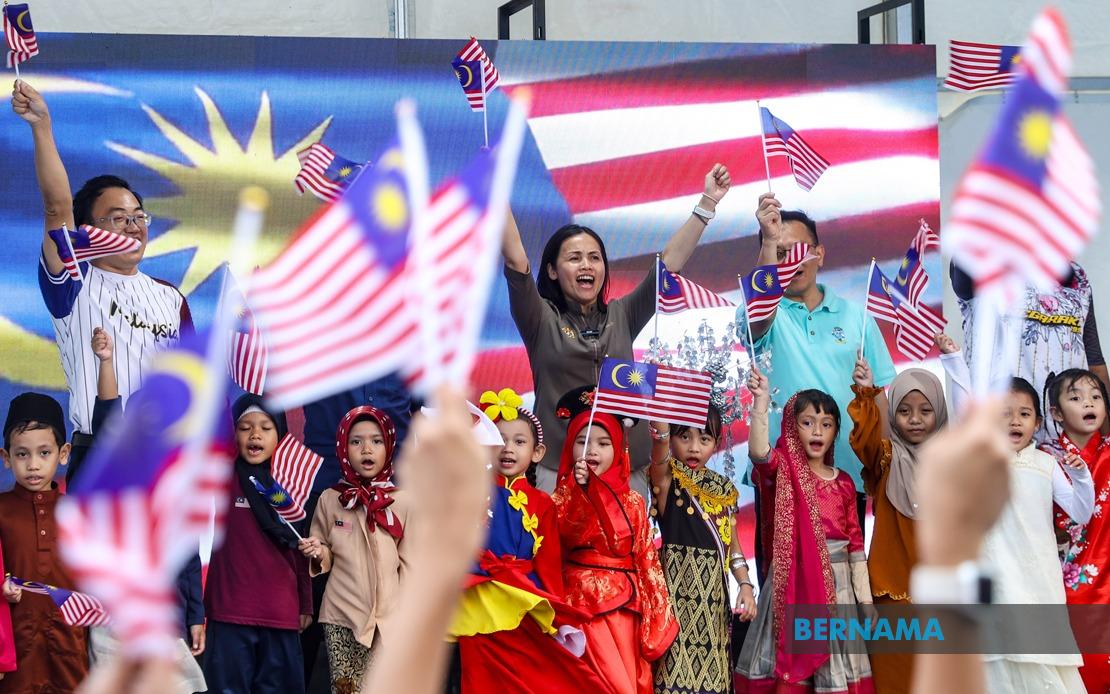
Deputy Communications Minister Teo Nie Ching moved swiftly to counter allegations that surfaced on social media platforms, firmly rejecting claims linking her to gang-related activities and a road accident currently under police scrutiny in Johor. Speaking at the Safe Internet Campaign Community Carnival at Hutan Bandar Putra in Kulai on Wednesday, Teo emphasized that the accusations were entirely false and designed to damage her reputation through coordinated digital attacks.
The DAP national vice-chairman drew attention to what she characterized as a sophisticated campaign involving newly created social media accounts designed solely to make accusations against her. Rather than engaging with the substance of individual allegations, Teo placed the matter within a broader context of how digital platforms have become vectors for disinformation in Malaysia, a concern that extends well beyond her personal situation and affects public discourse nationwide.
Teo's long record in electoral politics—18 years overall with 13 years of service as a Member of Parliament—appeared central to her defence strategy. She suggested that her extensive public profile meant she had inevitably been photographed with various individuals in ordinary social settings, and that critics were misusing such images to fabricate associations with criminal elements. This line of reasoning highlights a vulnerability faced by public figures in the digital age, where decontextualized photographs can be weaponized to create false impressions of impropriety.
While Teo acknowledged her own interactions with various segments of society throughout her political career, she rejected the leap from casual social encounters to allegations of criminal involvement. The distinction she drew between being present in someone's photograph and actually participating in gang activities underscores how digital disinformation operates by exploiting visual evidence stripped of its original context, a technique that has become increasingly common in Malaysian political discourse.
Teo welcomed the police investigation into the matter, noting that the Johor police chief had already held a press conference announcing the arrest of 13 suspects related to the incident in question. This reference to police action serves multiple purposes: it suggests that legitimate law enforcement is already engaged with the underlying criminal matter, and it implies that Teo's own legal exposure to such allegations is minimal if police have already identified and arrested relevant suspects. Her explicit endorsement of police authority and willingness to cooperate with investigations positioned her response within the bounds of institutional legitimacy.
The Deputy Communications Minister's framing of the broader problem—that anyone can fall victim to fake news in the digital era—shifted focus from her personal predicament to systemic concerns about media literacy and platform governance. This strategic repositioning transforms her from a specific target into one example of a widespread phenomenon affecting Malaysian society, a technique that both validates her concern and normalizes the experience of being targeted by disinformation.
Teo's own remedial actions—filing complaints with the Malaysian Communications and Multimedia Commission and lodging police reports—demonstrated her willingness to work within existing regulatory frameworks. However, she candidly identified a significant structural problem: Meta controls the infrastructure through which false information spreads, and the pace at which the platform removes content falls far short of the speed at which disinformation propagates. This critique points to a genuine governance gap in digital Malaysia, where Malaysian authorities have limited leverage over international platforms that host the vast majority of social media activity.
The Deputy Communications Minister explicitly advised the public to adopt critical thinking when encountering information on social media, urging Malaysians to verify sources before sharing or believing claims. Given her position in the Ministry of Communications, this counsel carried particular weight—it represented not merely personal advice but an implicit policy position regarding digital literacy and media consumption habits that should characterize Malaysian society.
Senai assemblyman Wong Bor Yang's decision to lodge a police report at the Kulai District Police Headquarters specifically addressing the defamatory posts represented institutional support for Teo's position and demonstrated that the matter had gained traction among Johor-based elected representatives. His action suggested that the allegations were sufficiently serious and widespread to warrant formal documentation through the police system, even as both political figures rejected their veracity.
Teo's handling of the controversy reflects the particular challenges facing Malaysian politicians in 2024, where social media campaigns can spread accusations faster than they can be formally rebutted, and where international platform dynamics often frustrate local regulatory efforts. The incident illustrates how disinformation campaigns targeting political figures exploit the architecture of social platforms, where anonymity and rapid sharing can amplify false claims before fact-checking mechanisms engage.
The emphasis on the creation of new accounts specifically to target Teo suggests a deliberate strategy rather than spontaneous rumour-mongering, raising questions about whether the campaign was coordinated by political rivals or other organized actors. This dimension remains unexplored in Teo's public response but carries significant implications for understanding how Malaysian political competition increasingly occurs in digital spaces with minimal transparency or accountability.
For Malaysian readers and policymakers, the incident underscores the urgent need to strengthen digital literacy initiatives, enhance platform accountability mechanisms, and develop faster-response capabilities for law enforcement and regulatory agencies when confronted with coordinated disinformation campaigns. Teo's position as Deputy Communications Minister places her at the intersection of these concerns, suggesting that her agency will likely face increasing pressure to address gaps in Malaysia's capacity to manage digital-era political discourse effectively.

