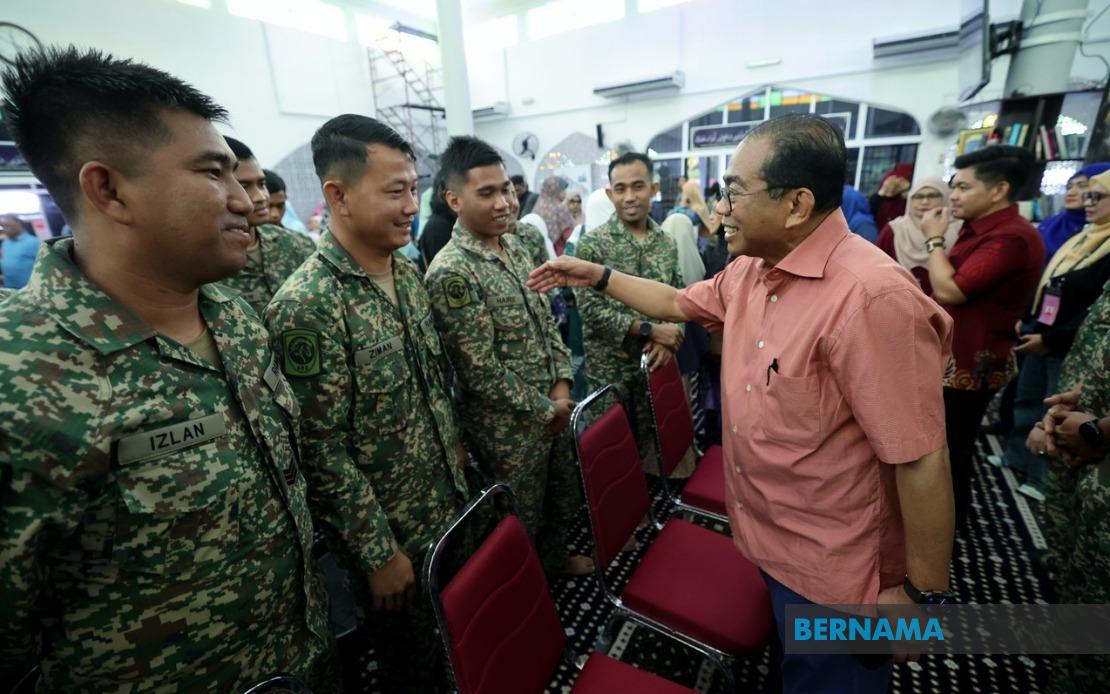
The investigation into a devastating grenade explosion at Hobart Camp in Gurun that claimed the lives of two soldiers is entering its final stages, with Defence Minister Datuk Seri Mohamed Khaled Nordin confirming the report will reach the Ministry of Defence by mid-July. Speaking in Kota Tinggi after attending the 'Ilmu dan Muafakat' (PIKAT) programme, Mohamed Khaled indicated that authorities are close to concluding their examination of the incident that has raised serious questions about military training safety standards.
The tragedy unfolded on June 16 when a grenade detonated during a routine training exercise, leaving two service members with catastrophic injuries. Corporal Norazmi Abu Bakar, attached to the Sixth Battalion of the Royal Malay Regiment, and Private Siti Khadijah Sungip from the First Squadron of the Royal Engineers Regiment sustained severe wounds in the blast. Both were immediately evacuated to Sultan Abdul Halim Hospital in Sungai Petani but succumbed to their injuries during transport, marking a sobering loss for the Malaysian Armed Forces and a watershed moment for defence establishment protocols.
The incident has intensified scrutiny over military training operations and safety measures across the service. Beyond the immediate shock of fatalities, the occurrence exposed potential systemic vulnerabilities that extend beyond this single catastrophe. Mohamed Khaled emphasised that the ministry's response would be comprehensive and deliberate, stressing that no rushed conclusions would be drawn before all investigative data has been thoroughly examined and analysed by relevant authorities.
Complicated matters further was a second incident that struck the same training facility just two weeks later. On June 29, another accident unfolded during a combat enhancement training exercise when a firearm unexpectedly discharged. The mishap injured two additional personnel—Sergeant Mohamad Firdaus Che Shaharudin and Corporal Felix Franchis of the Fourth Battalion, Royal Ranger Regiment—who sustained leg injuries from shrapnel fragments released by the weapon malfunction. This clustering of incidents within a fortnight at an identical venue has amplified concerns about whether fundamental problems permeate training operations at the location.
The twin incidents within such close temporal proximity have prompted the Malaysian Army to conduct a broader reassessment of its entire training methodology. Rather than treating the June 16 explosion as an isolated misfortune, military leadership has recognised the necessity for comprehensive institutional reflection. The army has been directed to identify whether additional shortcomings or structural weaknesses within training protocols contributed to creating conditions where such accidents could occur, suggesting that systemic factors rather than isolated human error may be at play.
For Malaysian policymakers and military planners, these developments raise pressing questions about whether current safety frameworks adequately protect service members during training operations. The Royal Malaysian Army, comprising personnel drawn from across the nation's ethnic and geographic diversity, entrusts soldiers to training environments where risks must be carefully managed and minimised. The deaths of Corporal Norazmi and Private Siti Khadijah represent not merely statistical losses but represent families and communities grappling with unexpected tragedy.
The investigation's findings will likely inform a recalibration of training standards across military installations nationwide. Southeast Asian armed forces have increasingly benchmarked their practices against international safety protocols, particularly as regional security dynamics evolve and training becomes more sophisticated. Malaysia's response to these incidents will be carefully watched by defence establishments throughout the region as an indicator of how professional militaries address internal crises and implement systemic reforms.
Mohamed Khaled's cautious timeline and emphasis on thorough investigation reflects the gravity with which the Defence Ministry treats the matter. By committing to a mid-July submission rather than rushing preliminary conclusions, the minister signals that the inquiry will be comprehensive rather than performative. This methodical approach, while potentially frustrating to those seeking swift accountability, demonstrates commitment to identifying root causes rather than assigning blame prematurely.
The forthcoming report will become a critical benchmark document for the Malaysian military establishment. Beyond merely cataloguing what happened, the investigation should establish whether training protocols require updating, whether equipment maintenance procedures need tightening, whether personnel certification requires enhancement, or whether command oversight structures require strengthening. Each answer carries implications not just for Hobart Camp but for training facilities system-wide.
Stakeholders including military families, veterans' organisations, and defence analysts will scrutinise how comprehensively the investigation addresses systemic factors versus individual culpability. The manner in which the Defence Ministry acts upon the investigation's recommendations will significantly influence public and military confidence in institutional capacity for reform. For a nation invested in maintaining a professional, disciplined armed force capable of responding to evolving regional security challenges, how Malaysia responds to these internal failures matters substantially.

