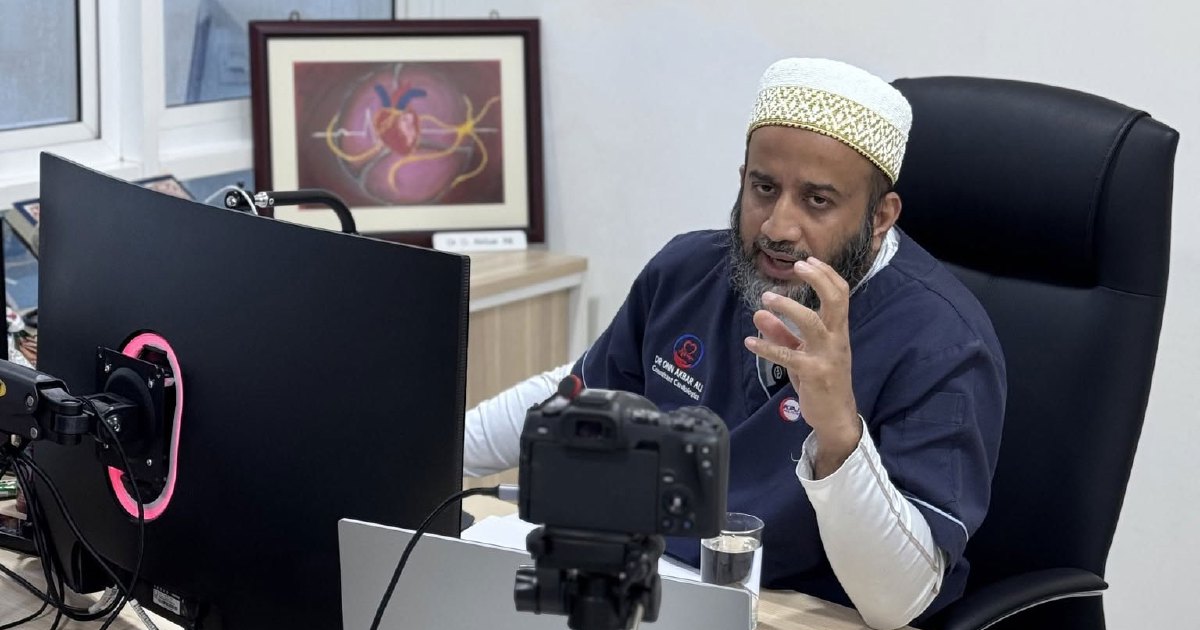
A prominent Malaysian consultant cardiologist has become an unwitting victim of artificial intelligence deception, with criminals creating convincing deepfake videos that exploit his medical credentials to market unproven herbal remedies. Dr Onn Akbar Ali was startled to learn that sophisticated videos utilising his likeness and vocal patterns had been circulating online, falsely endorsing herbal tea as a cure for diabetes. The incident underscores an alarming trend sweeping across Southeast Asia, where fraudsters increasingly harness advancing AI technology to manufacture credible-seeming endorsements from respected medical professionals, thereby luring desperate patients into spending their savings on worthless treatments.
The emergence of deepfake medical scams represents a particularly dangerous evolution in health fraud. Unlike traditional counterfeit medicines or unlicensed practitioners that patients might recognise through warning signs, AI-generated impersonations of genuine doctors leverage the fundamental trust that communities place in medical professionals. When patients see a video or hear an audio clip appearing to come from a real, verifiable physician, their natural instinct is to accept the medical guidance as legitimate. This exploitation of medical authority is particularly insidious because it preys upon people already in vulnerable psychological states—those desperately seeking relief from chronic conditions like diabetes, cancer, or heart disease. The psychological burden of illness makes patients more likely to abandon conventional treatment in favour of promises of miracle cures, especially when those promises appear to come from someone they recognise and respect.
The technology enabling such fraud has become alarmingly accessible. Generative AI models trained on publicly available videos, social media clips, and recorded interviews can now synthesise facial movements and vocal patterns with sufficient fidelity to deceive casual observers. Scammers need only compile a collection of video footage of their target—something readily available for prominent medical figures who appear in conference presentations, television interviews, or educational content—then feed this material into deepfake generation software that costs a fraction of previous expenses. Within hours, convincing fraudulent content depicting the doctor endorsing herbal remedies or unconventional treatments can be produced and distributed across multiple platforms simultaneously. The speed of reproduction and the difficulty in distinguishing authentic from fabricated content means that by the time a physician becomes aware of such fraud, thousands or even hundreds of thousands of people may already have encountered the deceptive material.
Beyond the immediate financial losses suffered by victims, deepfake medical fraud poses grave public health consequences. Patients who abandon evidence-based treatment regimens in favour of unproven herbal remedies frequently experience disease progression that could have been prevented or arrested through proper medical care. For serious conditions such as diabetes, heart disease, or cancer, even modest delays in initiating appropriate treatment can substantially worsen long-term outcomes. The broader concern extends to collective public health resilience. As confidence in medical expertise erodes due to widespread exposure to convincing fraudulent content, people become more susceptible to health misinformation regardless of source. Communities that lose faith in established medical authority are less likely to participate in vaccination campaigns, follow public health guidance during disease outbreaks, or trust medical institutions with their personal health information.
The challenge of combating deepfake medical scams remains formidable for Malaysian and Southeast Asian authorities. Existing legal frameworks governing fraud, false advertising, and medical malpractice were developed before such technology existed and often lack clear provisions addressing AI-generated impersonation. A person appearing in a deepfake video endorsing a product has not technically made any statement, created any advertisement, or violated any medical licensing regulations, since the actual doctor never participated in the recording. Yet victims have suffered genuine financial and health harms as a direct result of relying on the fraudulent content. This legal grey zone has left regulators struggling to prosecute cases effectively, and law enforcement agencies often lack the technical expertise to identify and authenticate deepfake material as evidence.
The Malaysian Medical Council and related regulatory bodies have begun issuing warnings to the public about verifying medical advice through official channels, yet such awareness campaigns reach only a fraction of the population most vulnerable to such scams. Elderly patients, those with limited digital literacy, and individuals from lower socioeconomic backgrounds—precisely the groups most likely to encounter and fall victim to health fraud—are paradoxically the least likely to encounter official warnings through social media or traditional news outlets. The scammers deliberately distribute their content through platforms and channels frequented by their target demographics, often in languages and with cultural messaging designed to resonate with specific communities.
Technological responses are emerging, though their effectiveness remains uncertain. Digital authentication tools, blockchain-based verification systems, and AI-powered detection algorithms capable of identifying fabricated videos are under development. However, these solutions require infrastructure investment and widespread adoption among healthcare institutions, platforms, and consumers to be truly effective. A patient using a smartphone in a rural area has little practical ability to verify whether a video has been authenticated through such systems. Furthermore, as detection technology improves, so too do the sophistication and realism of deepfake generation tools, creating a perpetual technological arms race that favours those with significant resources and motivation to stay ahead of detection methods.
The implications for the Malaysian healthcare ecosystem extend beyond individual cases of fraud. Trust in medical institutions and professionals represents a crucial public good that, once eroded, cannot be quickly restored. Countries and regions that experience widespread deepfake medical scams may see lasting damage to public trust in healthcare, with downstream consequences for disease surveillance, vaccination rates, and patient willingness to seek timely treatment. The private healthcare sector, already facing questions about accessibility and affordability in Southeast Asia, faces additional reputational risk if fraudsters target its practitioners and use their impersonation to market unproven private treatments.
Meanwhile, legitimate healthcare providers and medical professionals have limited tools to protect themselves. Dr Onn Akbar Ali's experience represents an injustice he did nothing to invite and could not have prevented through reasonable means. Other Malaysian doctors have reported similar incidents, yet no systematic reporting mechanism exists to track the prevalence or distribution of such frauds. The absence of comprehensive data hampers efforts by public health authorities to quantify the actual harm being inflicted and to design appropriately scaled intervention strategies.
Moving forward, addressing deepfake medical fraud will require coordinated action across multiple domains. Legislative reform must establish clear legal liability for the creation and distribution of deepfake medical content, with appropriate penalties that deter potential fraudsters. Healthcare regulators need expanded powers to investigate and combat such fraud, supported by technical expertise and international cooperation, since such scams routinely cross borders. Public awareness campaigns must specifically target high-risk populations with culturally and linguistically appropriate messaging that teaches people how to verify medical information directly with their healthcare providers. Technology platforms hosting healthcare content should implement verification systems and remove flagged fraudulent material more rapidly.
The experience of Dr Onn Akbar Ali and others affected by this emerging scam category serves as a warning signal for policymakers and healthcare leaders across Malaysia and Southeast Asia. As artificial intelligence technology becomes increasingly sophisticated and more widely accessible, the window for establishing protective frameworks and cultural practices that inoculate communities against such fraud is rapidly closing. The solution will require recognition that protecting public health in the AI era demands new institutions, new legal tools, and new forms of collaboration between medical professionals, technology companies, regulators, and communities themselves.

