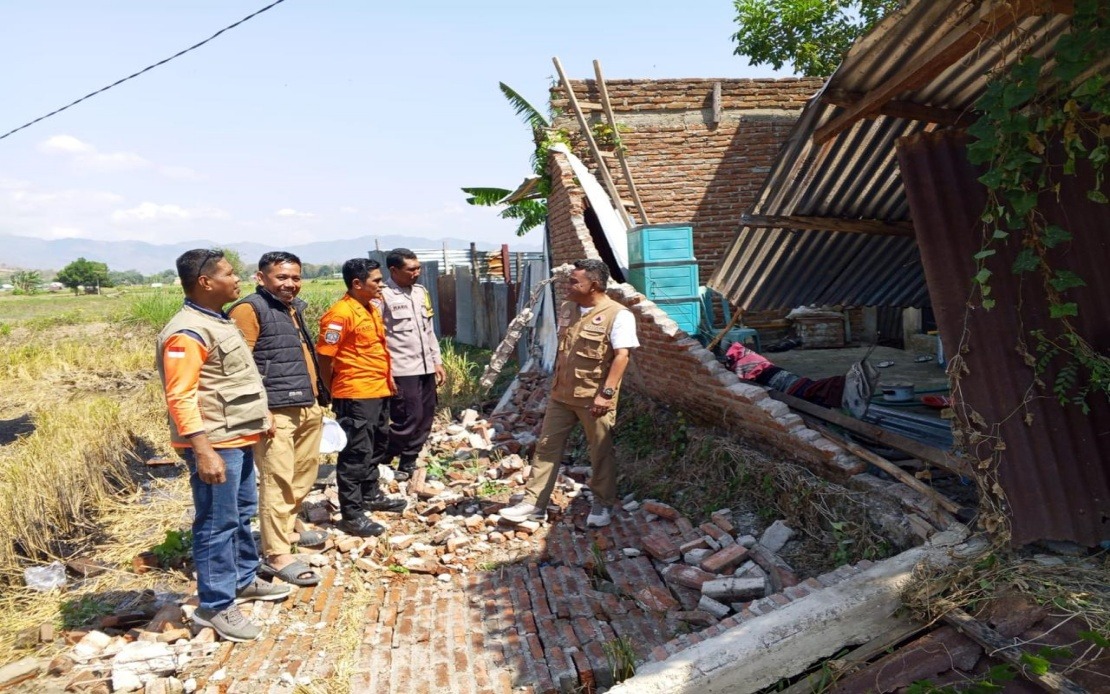
Indonesia's Flores Island has been struck by a devastating magnitude 7.7 earthquake that has claimed at least 38 lives, with rescue operations continuing at full pace as teams work to locate residents believed to remain trapped beneath collapsed structures. The seismic event occurred early Saturday morning at 4.58 am local time, with its epicentre positioned approximately 30 kilometres from the town of Mbay beneath the ocean at a depth of 15 kilometres, according to official measurements. The scale and location of the earthquake have made search and rescue efforts particularly challenging, requiring coordination between multiple national agencies to access damaged areas and provide immediate assistance to survivors.
National Disaster Management Agency chief Suharyanto provided a status update at a press conference held on Saturday, noting that beyond the fatal casualties, two individuals remained in serious condition while eleven others sustained lighter injuries from the event. The official described a concerning situation where numerous residents were still unaccounted for and potentially buried in buildings that had suffered structural damage from the powerful tremors. This assessment underscored the urgency facing emergency responders, who faced the twin challenges of locating survivors while managing ongoing aftershock risks that could further compromise unstable structures and endanger rescue workers.
The initial tsunami warning that followed the earthquake was subsequently lifted at 7.31 am after coastal monitoring stations detected that sea levels were stabilising and showed no indication of a dangerous wave surge. This early all-clear for marine hazards allowed authorities to redirect resources toward land-based search and rescue operations rather than managing potential coastal evacuation requirements. Approximately 2,000 residents had already evacuated the most severely affected areas independently, reflecting community awareness of earthquake risks in this seismically active region of East Nusa Tenggara province.
Physical infrastructure across Flores sustained considerable damage in the earthquake's aftermath. Dozens of residential structures were rendered uninhabitable, while several community health centres that serve as critical facilities for medical response were damaged or destroyed. The earthquake also triggered multiple landslides that effectively cut off road access to several communities, creating barriers that hindered rescue teams' ability to reach affected populations and deliver supplies. Airport infrastructure at nearby facilities sustained damage to terminal buildings, though critically, the runways themselves remained operational, preserving the capacity for air transport of personnel and supplies. Two port facilities also suffered damage that could complicate maritime logistics and relief operations during the recovery phase.
The Indonesian National Search and Rescue Agency, the military, and police forces were mobilised as the primary response mechanism, deploying personnel to systematically search through damaged structures and coordinate evacuation efforts. This multi-agency approach reflected the scale of the emergency and the need for specialised capabilities that each organisation brings to catastrophic disaster response. Suharyanto acknowledged that casualty figures and damage assessments were likely to increase as more detailed surveys were conducted across the affected zones, since Saturday represented only the opening stages of what would likely become a prolonged recovery operation.
A critical focus of the emergency response involved restoring transport connectivity, which had been severely compromised by earthquake-triggered landslides. The Public Works Ministry deployed teams and equipment specifically tasked with clearing roads to restore access corridors, recognising that communication lines and supply routes were essential for both rescue operations and subsequent humanitarian assistance. The restoration of transport links would determine the pace at which relief supplies could be distributed and how quickly search teams could expand their coverage across the affected region.
To supplement ground-based operations, the National Disaster Management Agency deployed two helicopters and one fixed-wing aircraft to the disaster zone. These aircraft served dual purposes: facilitating the evacuation of injured persons to medical facilities and transporting relief supplies that could not easily be moved via damaged road networks. This air capacity proved particularly valuable given the terrain challenges created by landslides and the scale of the earthquake-affected area. The deployment of aviation resources demonstrated the recognition that reaching isolated communities and extracting seriously injured survivors would require capabilities beyond what land-based rescue teams alone could provide.
Humanitarian assistance began flowing to affected communities rapidly, with supplies including food, drinking water, clean water reserves, temporary shelter in the form of tents, electrical generators, and other essential survival items being mobilised and distributed. The focus on these basic necessities reflected the immediate priorities facing survivors in the post-earthquake environment: securing food and water amid supply disruptions, establishing temporary shelter for those whose homes were destroyed, and providing power for emergency communications and medical operations. The coordination of these supply chains demonstrated the scale of the logistical challenge facing authorities managing a major disaster response across an island setting with compromised infrastructure.
For Malaysia and other Southeast Asian nations, the Flores earthquake serves as a reminder of the persistent seismic risks that characterise the Pacific Ring of Fire region, which encompasses much of the broader Southeast Asian geography. Indonesia's extensive experience managing earthquake and tsunami disasters has produced emergency response systems that, while tested by the scale and complexity of such events, offer comparative lessons for regional disaster preparedness. The incident highlights the importance of maintaining modern search and rescue capabilities, ensuring communication systems remain operational during disasters, and establishing clear protocols for humanitarian logistics that can function when conventional infrastructure becomes compromised.
The recovery from such a major earthquake typically unfolds across multiple phases, beginning with the immediate search and rescue operations that dominated Saturday's response efforts. Beyond immediate survivor extraction, authorities would face the longer-term challenges of providing sustained shelter, assessing structural safety across the affected communities, and beginning reconstruction of homes and essential services. The damage to community health centres created particular urgency for establishing alternative medical facilities or rapidly repairing existing ones, since health crises typically accompany major disasters and survivors require access to medical care even as rescue operations continue.

