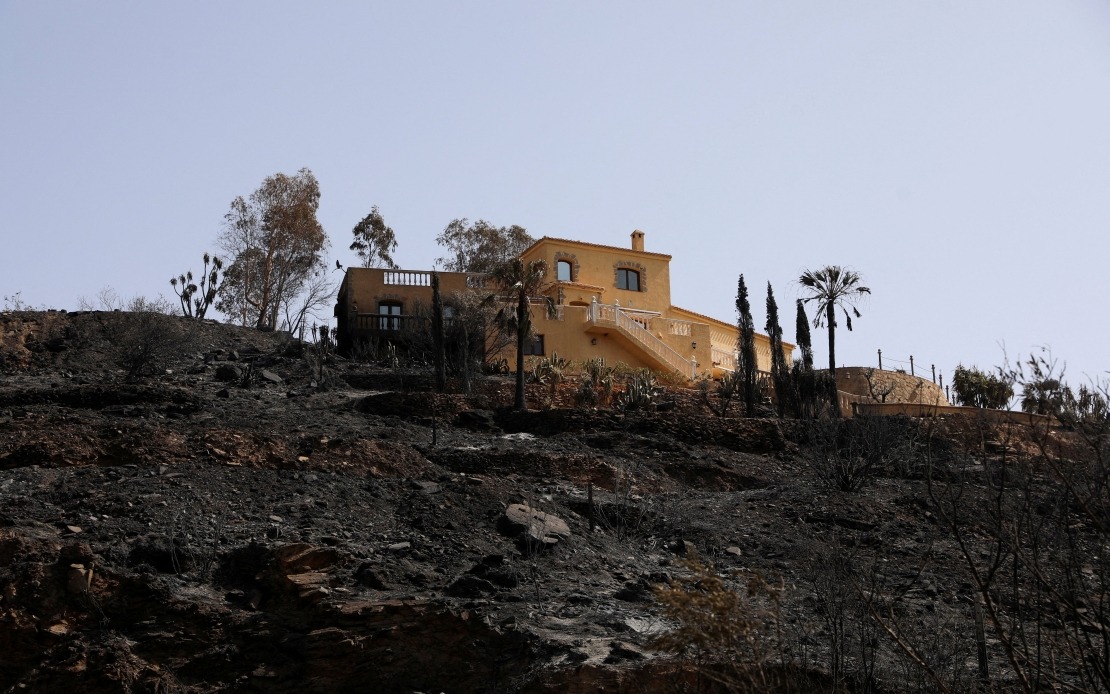
A wildfire that erupted in Spain's southeastern province of Almeria has claimed 13 lives, with regional authorities confirming Sunday that the blaze has been stabilised after spreading across approximately 7,000 hectares of countryside. The disaster, which originated Thursday near the Los Gallardos municipality in the Andalusian region, represents one of the most severe natural disasters to strike southern Spain in recent memory, drawing international attention as many of those affected are foreign nationals residing in the area.
Emergency response efforts have shifted into recovery mode following the successful containment of the advancing flames. Seven individuals remain hospitalised due to fire-related injuries, with three of them classified as being in serious condition. The stabilisation announcement also means that regional authorities have authorized the remaining approximately 1,000 evacuees to return to their homes, complementing the roughly 600 residents who were permitted back on Saturday. However, the search and rescue operation continues, as ten people remain officially registered as missing, casting a shadow over the otherwise positive developments in containing the fire itself.
Juanma Moreno, who leads the regional government of Andalusia, addressed the public Sunday with cautious optimism tempered by realistic warnings. He confirmed that the wildfire is no longer advancing and has been successfully contained within its established perimeter, yet he emphasised that considerable work remains before the blaze can be definitively declared fully extinguished and under complete control. Moreno characterised this incident as the most serious wildfire to occur in Andalusia's contemporary history, underscoring the magnitude of the disaster and its significance within the regional context.
The underlying cause of the conflagration remains under investigation by relevant authorities, though early assessments suggest the fire may have been sparked by the structural failure of an electricity pole or associated electrical cable infrastructure. This hypothesis points to potential infrastructure vulnerabilities that could exacerbate fire risks during periods of hot, dry weather. Understanding the precise triggering mechanism will be crucial for preventing similar incidents and improving public safety infrastructure across wildfire-prone regions in southern Spain.
Moreno seized the opportunity presented by this tragedy to advocate for greater public and governmental attention to climate change, framing the disaster as evidence of escalating environmental challenges. He stressed that climate change is fundamentally reshaping the conditions under which wildfires develop and spread, introducing increasingly unpredictable meteorological patterns and creating the circumstances for larger, more destructive blazes that strain emergency response capabilities. His comments reflect growing recognition among Spanish political leaders that traditional fire management strategies may be insufficient for confronting the emerging scale and intensity of wildfire threats.
For Malaysian and Southeast Asian observers, the Almeria wildfire carries instructive lessons about climate vulnerability and disaster preparedness. Tropical and subtropical regions like those in Southeast Asia face mounting risks from climate-related disasters, including intensified drought conditions that can trigger severe wildfires. The Spanish response demonstrates both the capacity of modern emergency services to contain large-scale fires and the profound human costs when prevention fails. The involvement of foreign nationals among the affected population also highlights the international dimension of modern disasters, as globalised populations increasingly live and work in regions vulnerable to natural hazards.
The scale of the evacuation and the subsequent permission for residents to return home illustrates the complex logistics involved in managing large-scale disasters in densely inhabited regions. The decision to allow 1,000 remaining evacuees to return, following the initial authorisation for 600, reflects confidence in the stabilisation efforts but also the practical necessity of restoring normal life and economic activity. For rural and semi-rural communities, extended evacuations create severe economic hardship, making the restoration of access to homes and properties a critical aspect of disaster response alongside firefighting and rescue operations.
The fact that approximately 7,000 hectares were consumed by the flames underscores the considerable environmental damage accompanying such disasters. Forest ecosystems require years or decades to recover from intense wildfires, and the loss of vegetation exposes soil to erosion, degrades water resources, and impacts biodiversity across multiple species. The environmental restoration efforts that will follow the suppression of this fire will represent a long-term commitment requiring sustained investment and coordination between regional and national environmental authorities.
The search for the ten missing individuals continues to overshadow the containment achievements, as families and rescue personnel hold onto hope for positive outcomes. Modern search and rescue operations employ sophisticated technology, including drone surveillance and thermal imaging, to locate missing persons in difficult terrain, but dense burn areas and dangerous conditions complicate these efforts. The resolution of these missing persons cases will be vital for providing closure to affected families and for developing comprehensive casualty figures.
As Spain confronts the immediate aftermath of this disaster, broader questions emerge about long-term resilience and adaptation strategies. Moreno's invocation of climate change reflects an increasingly mainstream recognition that conventional approaches to fire management must evolve. This includes enhanced early warning systems, community preparedness training, improved infrastructure hardening against fire-related risks, and potentially restrictions on development in high-risk zones. The Almeria wildfire thus serves not merely as a humanitarian tragedy but as a catalyst for reassessing how societies prepare for and respond to climate-driven natural disasters.
For Mediterranean and subtropical regions worldwide, including parts of Southeast Asia vulnerable to similar climatic stresses, the Spanish experience offers both cautionary insights and operational examples. Investment in fire detection and rapid response capabilities, coupled with community education about fire prevention and evacuation procedures, can reduce loss of life and property damage. The ongoing investigation into the electrical infrastructure failure also underscores the importance of maintaining and upgrading utilities to minimise ignition sources in fire-prone environments. These lessons will inform disaster management policy discussions across Europe and internationally as climate impacts intensify.

