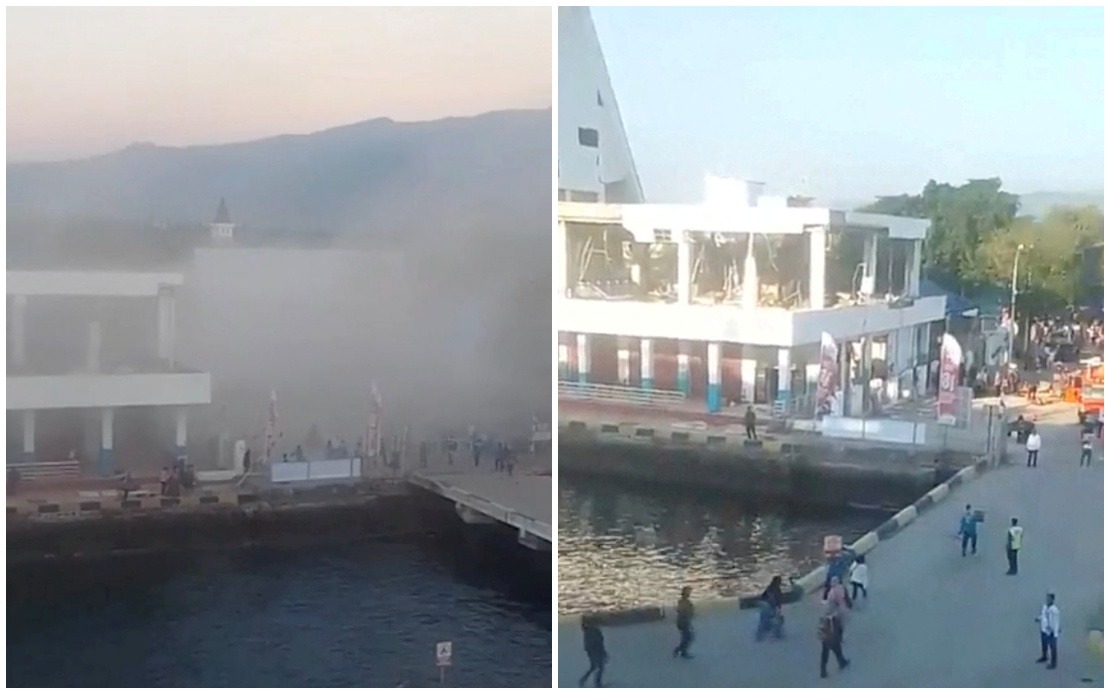
A devastating magnitude 7.7 earthquake that struck off the coast of Flores Island in eastern Indonesia early Saturday has resulted in at least 20 deaths, according to emergency officials coordinating relief efforts across the affected region. The seismic event, centred near Mbay town in Nagekeo Regency within East Nusa Tenggara province, was followed by several powerful aftershocks that have intensified concerns among residents and authorities. Fathur Rahman, an official with the Maumere Search and Rescue Office, reported that alongside the fatalities, six people suffered injuries while rescue teams continue searching for two individuals believed to be trapped beneath collapsed structures.
The immediate destruction across the province has been substantial. East Nusa Tenggara Governor Melki Laka Lena conveyed in a press conference held in Kupang that numerous residential dwellings and public buildings sustained significant damage from the initial quake and subsequent tremors. Infrastructure across the region has suffered compromised integrity, with several critical road networks rendered impassable due to landslides and debris obstruction. The governor acknowledged that his administration is still engaged in the preliminary data compilation phase, as ground teams work methodically through affected communities to establish a comprehensive damage assessment. The full scope of destruction remains uncertain as emergency personnel continue their investigations across remote and potentially inaccessible areas.
Video footage circulating on social media platforms captured dramatic moments during the earthquake's assault, showing structural collapse sequences unfolding in real time and residential buildings disintegrating into dust clouds. These harrowing recordings documented residents fleeing from buildings into open streets in panic, seeking safety from falling debris and aftershock tremors. Such footage underscores the intensity with which the seismic event impacted populated centres and the genuine terror experienced by inhabitants who had little warning before ground movement commenced.
The earthquake generated immediate tsunami concerns throughout the region. Indonesia's Meteorology, Climatology and Geophysics Agency issued a tsunami warning shortly after the initial seismic event but subsequently rescinded the alert following assessment of wave potential. However, the agency maintained its advisory for residents to remain exceptionally cautious regarding potential subsequent aftershocks, as significant seismic energy often continues dissipating through secondary tremors in the hours and days following major earthquakes.
Transportation disruptions have compounded response challenges. Multiple airline operators cancelled scheduled flights servicing East Nusa Tenggara province, limiting the movement of emergency personnel, medical supplies, and evacuation resources into and out of the affected area. This logistical constraint has complicated efforts to deploy additional rescue teams and specialized equipment from Jakarta and other Indonesian cities to the earthquake zone.
Foreign governments have also mobilized protective measures for their nationals in the region. The Chinese Consulate General in Denpasar issued an official notice on Saturday morning specifically addressing the safety concerns of Chinese citizens within its consular jurisdiction, with particular emphasis on Chinese nationals and visiting tourists concentrated in Labuan Bajo, a popular tourism destination within the province. The consulate provided explicit guidance directing people to maintain heightened vigilance and continuously monitor official earthquake and disaster information channels. They urged compliance with instructions to avoid coastal sectors where tsunami secondary effects could theoretically emerge, and to prepare for possible aftershock impacts on already-compromised structures.
The timing and location of this earthquake carry particular significance for Southeast Asian seismic hazard awareness. The Flores region sits within one of the world's most seismically active zones, positioned along the convergent boundary where the Indo-Australian and Eurasian plates interact. This geological context means that significant earthquakes in this region, whilst devastating locally, are part of a broader pattern of tectonic activity that poses ongoing risks to Indonesia and neighbouring nations throughout the archipelago. The recurring nature of such disasters has prompted Indonesian authorities to maintain sophisticated early warning systems, though the immediate destructiveness of large-magnitude events inevitably exceeds prevention capabilities.
Forest and agricultural areas surrounding the epicentre may have experienced additional secondary hazards beyond direct structural damage. Landslides triggered by ground shaking represent a significant hazard in mountainous terrain, potentially isolating affected communities and complicating rescue access routes. The delayed discovery of casualties often occurs precisely because terrain disruption prevents rescue teams from reaching remote settlements in the initial critical hours.
From a Malaysian perspective, this incident serves as a sobering reminder of shared seismic vulnerabilities across the region, particularly given Malaysia's own positioning within zones of tectonic sensitivity. The effectiveness of Indonesia's emergency response systems and international coordination mechanisms tested here provides applicable lessons for Malaysian disaster preparedness frameworks. The involvement of Chinese diplomatic representation highlights how modern disaster response increasingly requires international cooperation, with multiple nations coordinating support for affected populations regardless of nationality.
Rescue operations continue actively across the affected areas of East Nusa Tenggara as emergency personnel systematically work through destroyed sections of Maumere and surrounding municipalities. Authorities have indicated that comprehensive updates regarding both casualty figures and infrastructure damage assessments will emerge as initial assessment operations conclude and secondary search phases commence. The international community remains attentive to developments as Indonesia navigates the humanitarian consequences of this significant seismic event.

