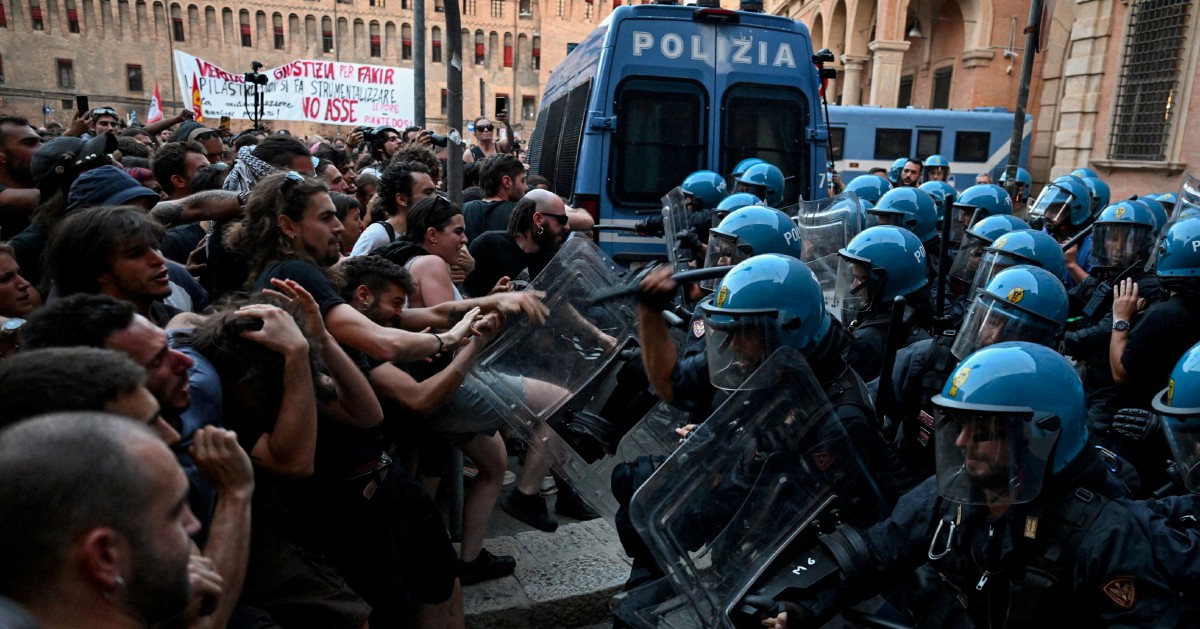
The death of a Moroccan national during a law enforcement operation in Italy has triggered an official investigation and intensifying public scrutiny, with both governments now engaged in damage control over the incident. Morocco has formally requested comprehensive clarification from Italian authorities, while Italian Prime Minister Giorgia Meloni issued a statement on Tuesday pledging that her government would pursue "the truth right to the end." The death has ignited demonstrations across Italy, reflecting widespread concerns about the conduct of police during arrests and broader questions about the treatment of foreign nationals in custody.
The circumstances surrounding the arrest remain under active investigation, with authorities examining the sequence of events that led to the fatal outcome. The incident has become politically sensitive in both Rome and Rabat, with each government keen to manage the narrative and prevent further deterioration in bilateral relations. Italian officials are under pressure to demonstrate that any wrongdoing will be investigated thoroughly and without bias, while Morocco's insistence on "full clarification" signals that the incident is being viewed as a matter of national concern requiring more than routine administrative procedures.
Meloni's public commitment to establishing the facts represents an attempt to contain the diplomatic fallout while appearing responsive to domestic and international criticism. Her statement emphasizes that the investigation will follow evidence wherever it leads, a positioning that acknowledges both the gravity of the situation and the need for credible institutional response. The framing of seeking "the truth" rather than a predetermined conclusion suggests an effort to preserve the investigation's integrity and public confidence in the process.
Protest movements have emerged across Italian cities as civil society organizations and community groups rally around the incident. These demonstrations reflect a convergence of concerns: humanitarian worries about policing practices, fears about the safety of migrants and foreign nationals in Italy, and broader anxieties about accountability within law enforcement. The protests also serve as a pressure valve for accumulated frustrations about border policies and immigration enforcement, which have been subjects of considerable political debate in Italy in recent years.
For Malaysia and Southeast Asia, this incident carries implications for how migrants and foreign nationals are treated across different jurisdictions. The region hosts substantial populations of Italian expatriates and sends significant numbers of workers abroad; maintaining robust standards for the protection of citizens abroad remains a core diplomatic concern. The case underscores the importance of bilateral mechanisms that ensure rapid communication and credible investigation when nationals are involved in such incidents, lessons that apply equally to Malaysian citizens and workers in foreign countries.
The diplomatic dimension of this incident cannot be understated. Morocco, as a neighbouring country to the European Union and an important Mediterranean nation, has leverage in its relationship with Italy and the broader EU framework. The government's formal demand for clarification signals that it will not accept a superficial inquiry or explanations that fail to address fundamental questions about the arrest operation's conduct. This approach reflects standard diplomatic practice when citizens die under state authority abroad.
Italian law enforcement faces increasing international scrutiny regarding detention practices and arrest procedures, particularly concerning migrants and foreign nationals. The incident arrives during a period when European authorities more broadly have faced criticism from human rights organizations about proportionality in policing and the treatment of vulnerable populations. The investigation's findings could have implications for police training, deployment protocols, and accountability mechanisms across Italian municipalities.
Public trust in institutions depends significantly on transparent investigation of such serious incidents. The fact that Meloni directly addressed the case and committed to pursuing the truth suggests that the government recognizes the stakes involved. However, credibility will ultimately rest on the investigation's substantive findings and any consequent actions taken, rather than political rhetoric alone. Communities affected by the incident will be observing whether stated commitments translate into concrete measures and institutional accountability.
The incident also highlights the complex relationship between migration, security, and human rights that characterizes contemporary Italy. The country has experienced significant debates about immigration policy, border enforcement, and the balance between security concerns and humanitarian obligations. This particular death, occurring during what should have been a routine arrest operation, raises questions about whether proper protocols were followed and whether de-escalation techniques were appropriately employed before the situation became fatal.
Within Italy, the incident has reignited conversations about police reform and the establishment of clearer standards for arrest procedures. Advocacy organizations are likely to use this case as a touchstone for demanding stronger oversight mechanisms, improved training for officers, and enhanced accountability measures. The political response from the government will influence whether this incident becomes a catalyst for systemic change or simply a tragic episode that recedes from public attention.
Regional observers, particularly in Southeast Asia where Italian cultural presence is significant and economic ties continue to strengthen, will monitor how Italy's institutions respond to these demands for accountability. The quality of investigation and the transparency of findings will reflect broader patterns of rule-of-law implementation in European jurisdictions and inform assessments of how reliable Italy is as a destination for workers, students, and other nationals from developing countries. Morocco's engagement in demanding clarification establishes a precedent that other nations may reference when their citizens face similar circumstances abroad.

