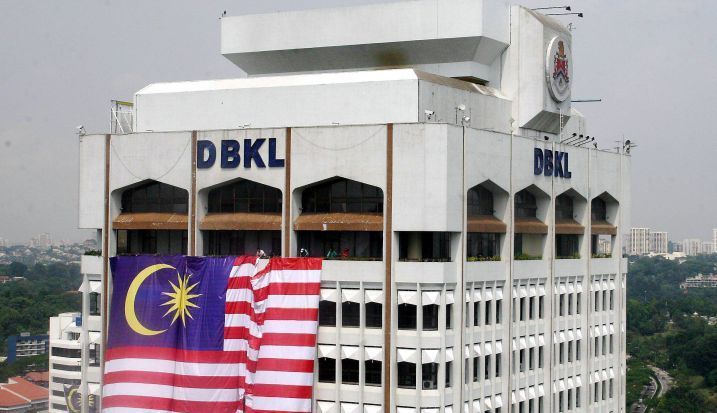
The Kuala Lumpur City Hall has escalated its standoff with the Taman Desa Phase 1 Residents Association by issuing a formal two-week notice demanding the removal of facial-recognition security scanners and boom gates that have been installed across public roads in the neighbourhood. DBKL enforcement officers on Thursday, August 27, affixed red notice papers directly to the facial-recognition equipment at Guard Posts 1 and 4, accompanied by yellow DBKL enforcement tape wrapping the scanners and boom-gate infrastructure. The notices explicitly state that these structures were erected without the requisite approval from the Kuala Lumpur mayor, making specific reference to Section 70 of the Street, Drainage and Building Act 1974, the statutory framework governing such installations on public thoroughfares.
A DBKL spokesperson confirmed that the ultimatum emerged following consultations with the city authority's legal department, emphasizing the seriousness of the municipal government's position. "We put up the notices today and have given them two weeks from today to remove the obstructions. If they fail to do so, DBKL will remove them. We hope they do the right thing," the official stated, leaving little ambiguity about the city's willingness to undertake forced removal if the residents association fails to comply within the specified timeframe. This latest enforcement action represents a significant hardening of DBKL's stance, moving beyond advisory letters into concrete administrative pressure.
The current confrontation has its roots in a protracted disagreement spanning several months over the security and access control mechanisms implemented by the residents association under what it characterizes as a neighbourhood guarding scheme. DBKL's patience appears to have been exhausted following an inspection conducted on August 17, which revealed that the Taman Desa Phase 1 Residents Association had failed to implement corrections despite being granted an additional 30-day extension to align its practices with municipal requirements. The timing suggests that the two-week notice came swiftly after this deadline passed, indicating that DBKL had predetermined its enforcement escalation should the residents association remain non-compliant.
Preceding the August 27 enforcement action, DBKL had issued a formal directive on August 18 ordering the residents association to fully restore public access at Guard Posts 2, 5, and 6 for vehicle traffic, eliminate all structures installed without municipal permission, and reinstate vehicular and pedestrian movement across the affected public roads. In an earlier communication dated March 5, DBKL had already flagged that the closed-circuit television camera network and facial-recognition authentication system had been deployed without the city authority's knowledge or consent, establishing a clear pattern of regulatory non-compliance stretching back months. These successive letters demonstrate that DBKL has provided ample opportunity for voluntary correction before resorting to enforcement notices.
The dispute has generated considerable resident dissatisfaction, culminating in a public protest on August 24 when more than 40 neighbourhood residents, predominantly aged 50 and older, gathered at Gate 5 on Jalan Desa Ria to voice objections to the access restrictions imposed by the security scheme. The gate in question remains permanently sealed to vehicle traffic and stays locked against pedestrian passage until 6 o'clock in the morning, creating a significant inconvenience for early-morning exercisers who previously utilized the nearby public recreational facilities. Residents protesting the arrangements have highlighted multiple concerns extending beyond mere convenience, including the forced detours along congested roads to access neighbourhood parks and the potential dangers posed by barriers obstructing emergency service vehicle movements during medical or fire emergencies.
The facial-recognition technology has emerged as a particular flashpoint in the dispute, with opposing residents characterizing the surveillance component as an excessive intrusion into personal privacy and questioning the appropriateness of such monitoring systems being installed in a residential neighbourhood without transparent public debate or formal municipal oversight. These concerns about privacy penetration and surveillance expansion reflect broader anxieties in Malaysia and the Southeast Asian region regarding the proliferation of biometric data collection systems and their potential misuse. The residents have articulated legitimate apprehensions about who controls access to the facial-recognition data collected at these guard posts, how the information is stored, and what safeguards exist to prevent unauthorized access or secondary deployment of the biometric records.
The residents association's leadership, represented by president Frank Yeh, has maintained that the organization adhered to established procedural requirements and secured resident approval through a ballot process, citing an 81 percent affirmative vote in support of the guarded neighbourhood initiative. This competing claim of democratic legitimacy within the association stands in tension with DBKL's assertion of legal authority over public road infrastructure and municipal enforcement powers. The dispute thus encapsulates a fundamental tension between private community governance preferences and municipal regulatory jurisdiction—a question not unique to Taman Desa but increasingly common in Malaysian residential developments where residents associations seek to exercise quasi-governmental powers over shared spaces.
For Malaysian homeowners and residential associations nationwide, this enforcement action carries significant implications regarding the boundaries of community-led security initiatives and the limits of resident association authority over public infrastructure. DBKL's decisive intervention sends a clear signal that municipal authorities will not tolerate unauthorized infrastructure installations or access restrictions on public roads, regardless of purported resident backing. The case also underscores the importance of obtaining formal municipal approval before implementing security measures that affect public thoroughfares, a lesson particularly relevant for the numerous gated and controlled-access communities throughout the Klang Valley and other major Malaysian urban centres.
The broader context includes escalating tensions nationwide between established municipal governance frameworks and increasingly assertive resident associations seeking to impose private ordering on neighbourhood spaces. While residents associations provide valuable community functions including maintenance coordination and social cohesion, their expanded security ambitions have sometimes outpaced regulatory approval mechanisms and legal clarity about the appropriate scope of their authority. The Taman Desa situation exemplifies how security aspirations, however well-intentioned in responding to neighbourhood concerns, can conflict with principles of public access and municipal oversight when pursued without proper authorization channels.
As the two-week deadline approaches, the outcome will likely establish important precedent for how DBKL handles similar disputes in other developments. Should the residents association comply and dismantle the equipment, it may embolden other enforcement actions against unauthorized neighbourhood modifications. Conversely, any negotiated compromise or reversal would signal that strong resident backing might override technical regulatory violations. The case will be closely watched by Malaysia's extensive community of residents associations, many of which operate security and access control systems of varying degrees of sophistication and regulatory compliance. The resolution will substantially influence how neighbourhood leadership structures balance security preferences against municipal governance requirements in the coming years.

