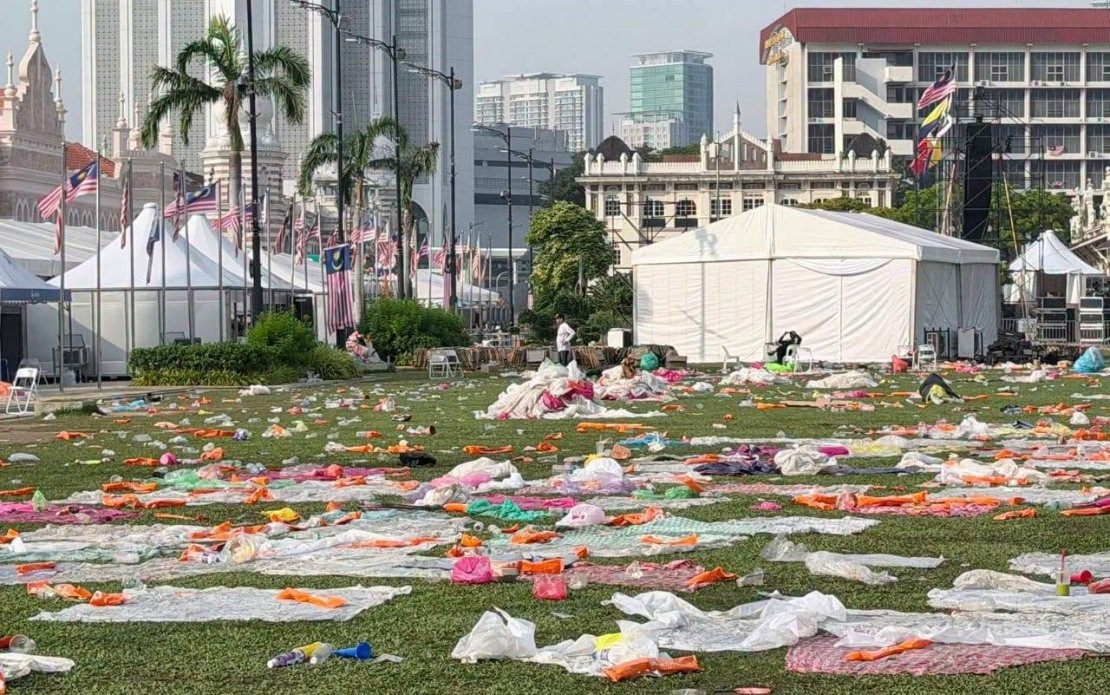
More than 25,000 football enthusiasts descended upon Dataran Merdeka in the early hours of July 20 to watch Spain claim victory over Argentina 1-0 in the 2026 FIFA World Cup final, transforming the historic square into a sprawling open-air stadium. The electrifying atmosphere and celebratory mood that characterized the gathering, however, left behind a troubling legacy: scattered rubbish and debris blanketing the nation's most symbolically important public space. In response, Kuala Lumpur City Hall (DBKL) has deployed its cleaning teams to restore the landmark to its proper condition.
Beyond the immediate logistical challenge of waste removal, DBKL's response carries a pointed message about civic responsibility and public stewardship. The municipal authority emphasized through its official statement that while the exuberance of sports fans celebrating a thrilling match is understandable and welcome, the obligation to maintain shared public spaces transcends the temporary joy of the moment. The organization stressed that the cleanliness and dignity of the capital cannot remain hostage to the habits of visitors, no matter how large the crowds or how legitimate the occasion for gathering.
The condition of Dataran Merdeka after the event serves as a stark illustration of a persistent challenge facing major cities across Southeast Asia and beyond: the disconnect between celebration and collective responsibility. DBKL's statement reflected clear frustration with this pattern, noting that while thousands had come to share in the joy of football and communal cheering, the aftermath revealed indifference to the consequences of their presence. For a location that stands as a potent symbol of Malaysia's independence, history, and national pride, such neglect strikes at a deeper concern about how citizens regard shared heritage and public property.
The municipality's message centered on a fundamental principle: that a great city is not measured solely by the caliber of events it hosts or the numbers of people it attracts, but equally by the conditions those visitors leave behind. This framework challenges Malaysian society to reconsider what civic pride truly entails. Celebrating major sporting events is natural and encouraged, yet this enjoyment should operate within boundaries that respect the communal nature of public spaces. DBKL implicitly argued that freedom to celebrate does not encompass the freedom to transform shared infrastructure into dumping grounds.
For Malaysian readers, the incident underscores ongoing tensions between rapid urbanization, mass gatherings, and environmental consciousness. Dataran Merdeka holds particular significance as the site of Malaysia's independence declaration in 1957, making its stewardship a matter of both practical and symbolic importance. When large crowds leave extensive litter at such venues, it reflects not merely poor individual habits but potentially a broader cultural gap in how Malaysian society values and maintains its public commons. The contrast between the momentary enthusiasm of 25,000 people and the subsequent cleanup burden on municipal workers highlights systemic issues in waste management and public education.
The World Cup final broadcast gathering at Dataran Merdeka reveals how major sporting events can drive unprecedented footfall to public spaces, often without corresponding infrastructure or behavioral management. While DBKL's cleaning response demonstrates municipal capacity to handle crises, the underlying issue demands preventive solutions. Organizers of large public viewing events might consider implementing waste management stations, designated collection points, and volunteer cleanup initiatives that distribute responsibility rather than centralizing it entirely on government agencies. Such approaches have succeeded in other major Asian cities hosting similar events.
DBKL's appeal for the public to regard Kuala Lumpur as a shared home requiring collective care touches on a critical governance challenge. Municipal authorities alone cannot sustain city cleanliness and public space maintenance when citizens view such spaces as temporary venues rather than communal assets. The statement essentially asks Malaysians to adopt a longer-term perspective on public property, recognizing that individual choices during mass gatherings accumulate into consequences borne by maintenance workers and ultimately by all residents through degraded public amenities.
The incident also reflects the growing popularity of public space utilization for entertainment and sports events across Malaysia. As more major global sporting occasions become accessible via live broadcasts in public locations, cities must balance the genuine social benefits of community gathering with the material costs of managing large crowds. Dataran Merdeka's role as a focal point for national celebrations and sporting events is likely to expand, making this cleanup episode a potential catalyst for more thoughtful planning around future mass gatherings.
Looking forward, the challenge for DBKL and other municipal authorities across Malaysia lies in shifting behavior without diminishing public enthusiasm for such events. Educational campaigns emphasizing personal responsibility, partnering with event organizers on waste management strategies, and perhaps implementing positive incentives for clean-up participation could help bridge the gap between celebration and stewardship. The World Cup final gathering demonstrated Malaysia's capacity to bring citizens together around shared interests; the cleanup afterward revealed the infrastructure gaps that accompany such unity.
Ultimately, DBKL's response represents both a practical necessity and a public statement about expectations for civic conduct. By acknowledging the problem directly and appealing to broader principles of national dignity and collective responsibility, the municipal authority has framed the issue in terms that extend beyond routine maintenance schedules. Whether such messaging will influence behavior at future large public gatherings remains to be seen, but it signals that Malaysian city governance is beginning to articulate the connection between individual actions and collective outcomes, a recognition crucial for maintaining public spaces in increasingly urbanized Southeast Asia.

